

Crawlspace Repair Johns Creek Homeowners Ask About: Full Encapsulation or Just a Vapor Barrier?
An honest side-by-side of the big fix and the smaller one — and a real recommendation, including when we’d tell you to skip the big one.
You smelled it first. Weeks before anyone saw a drop of water, there was that faint earthy smell near the laundry room door — the kind you notice, shrug at, and then notice again. Almost every crawlspace repair Johns Creek call we take starts exactly there, with a nose, not a puddle.
Good news: that smell is information, and information is cheap to act on. It also means you’re early, which is the best place to be. So let’s lay out the two real choices side by side, then we’ll tell you which one we’d pick standing in your crawl space.
Option A: what does full encapsulation actually do?
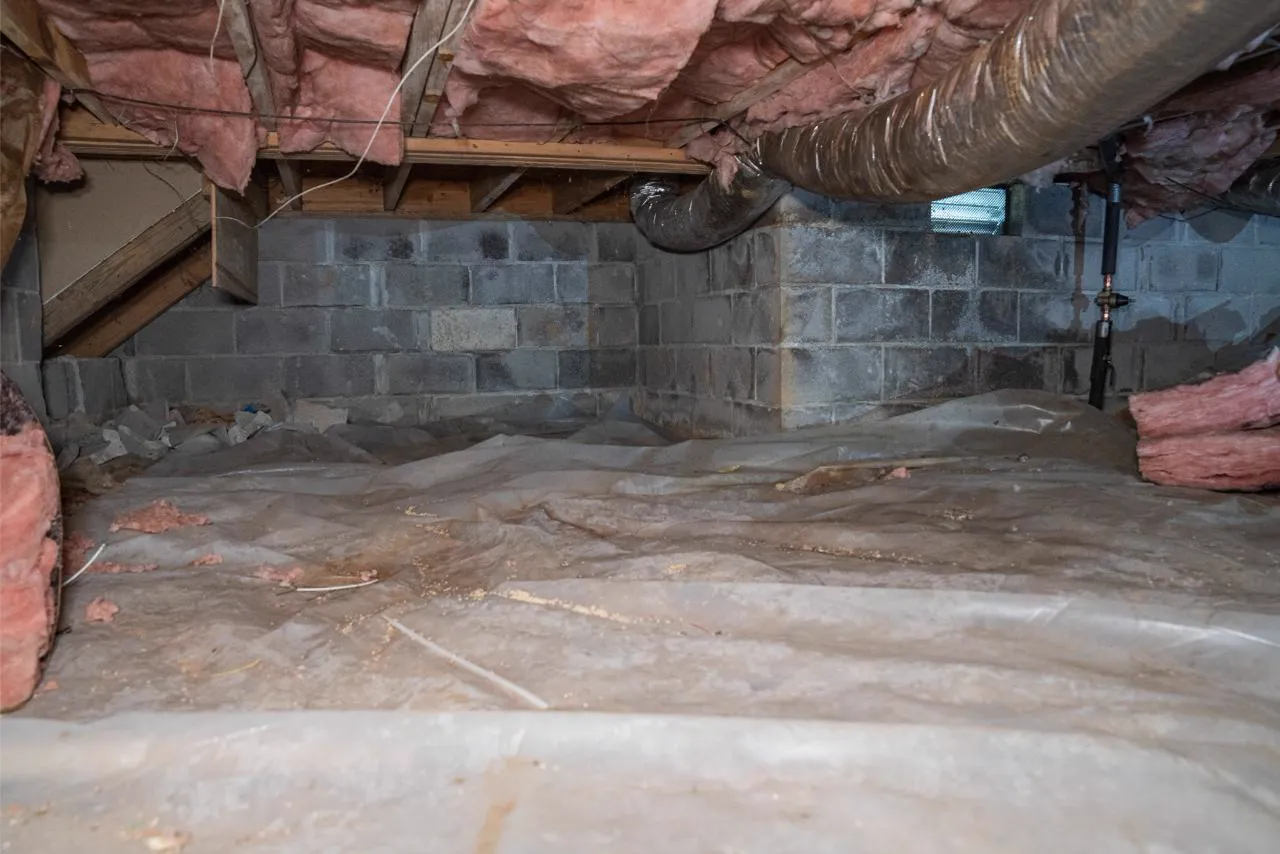
Think of encapsulation as putting your crawl space inside the house instead of leaving it outside. A heavy reinforced liner covers the dirt floor and runs up the block walls, where it gets sealed and fastened. Seams are taped, piers are wrapped, and the vents get closed.
After that, a dehumidifier usually goes in to hold steady humidity. It drains outside or to a pump, so nobody has to empty a bucket in a 30-inch crawl space. Nobody wants that job, including us.
Why does closing vents help? Because open vents were required for decades on a theory that outside air dries things out. In Georgia, though, warm July air meets cool crawl space surfaces and gives up its moisture right there. That’s condensation, not drying, which is why a vented crawl space can feel damp during a drought.
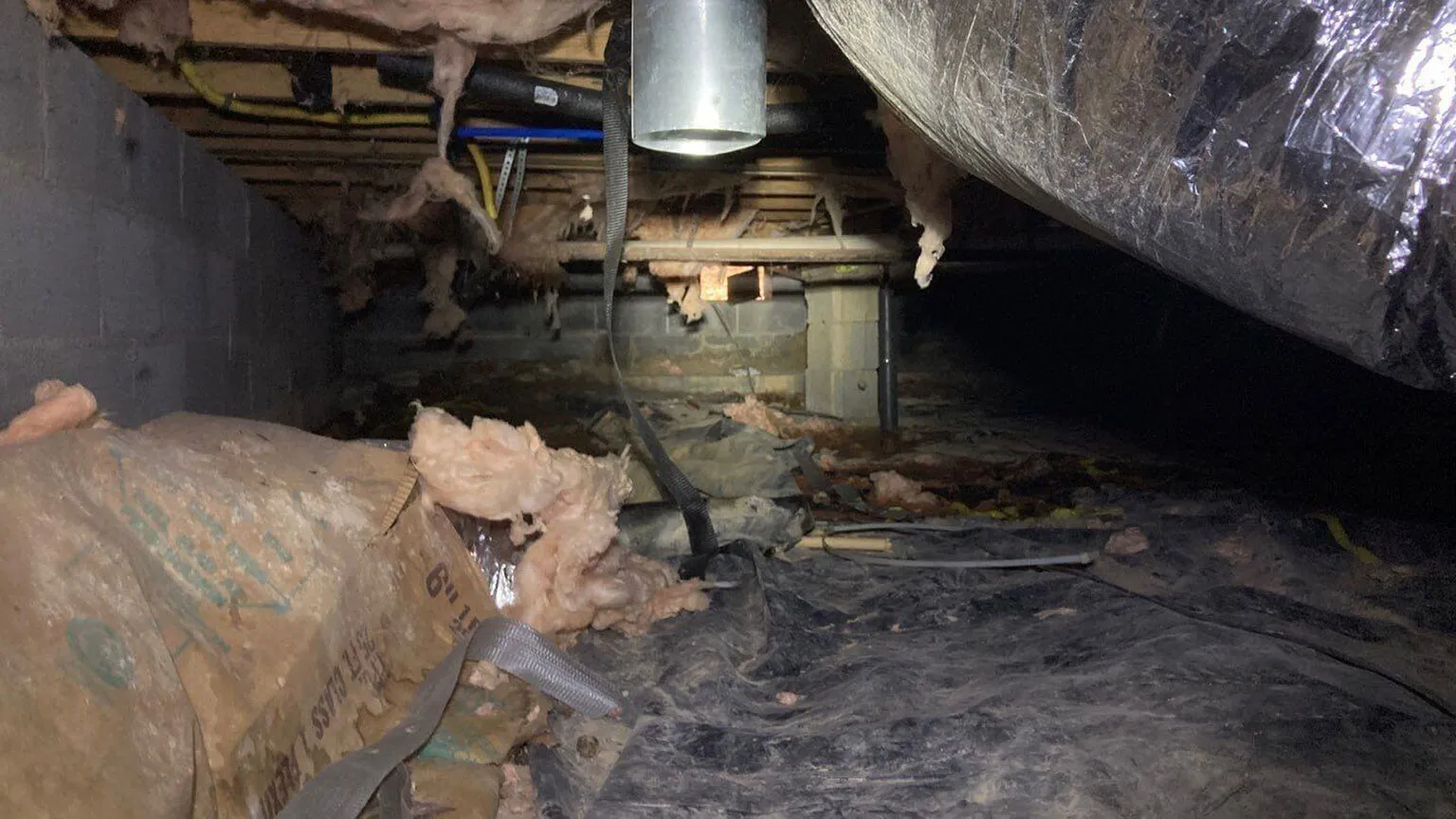
The result is a space you’d walk through in clean socks. Homeowners near Falls of Autry Mill tell us the room above it stopped smelling within about a week.
Worth knowing
Encapsulation is a moisture system, not a drainage system. If water actually flows into the space during a storm, that source gets fixed first — otherwise you’ve built a very nice pond liner.
Option B: is a vapor barrier alone ever enough?
Yes. Sometimes it genuinely is, and we’d rather say that than sell you something bigger. The lighter path is a proper floor vapor barrier plus fixing whatever lets water in, and it works on more crawl spaces than the internet admits.
Here’s what that looks like in practice. A real barrier goes over the dirt — not the flimsy sheeting a builder tossed down in 1996 — overlapped, sealed at the seams, and run up to the walls. Then we chase the water source: gutters, downspouts, grading that slopes toward the house, or a foundation vent sitting below grade.
Drainage does the heavy lifting from there. If groundwater rises into the space, a perimeter drain and sump handle it, which is the same idea as a basement system — our page on crawl space repair walks through those parts in detail.
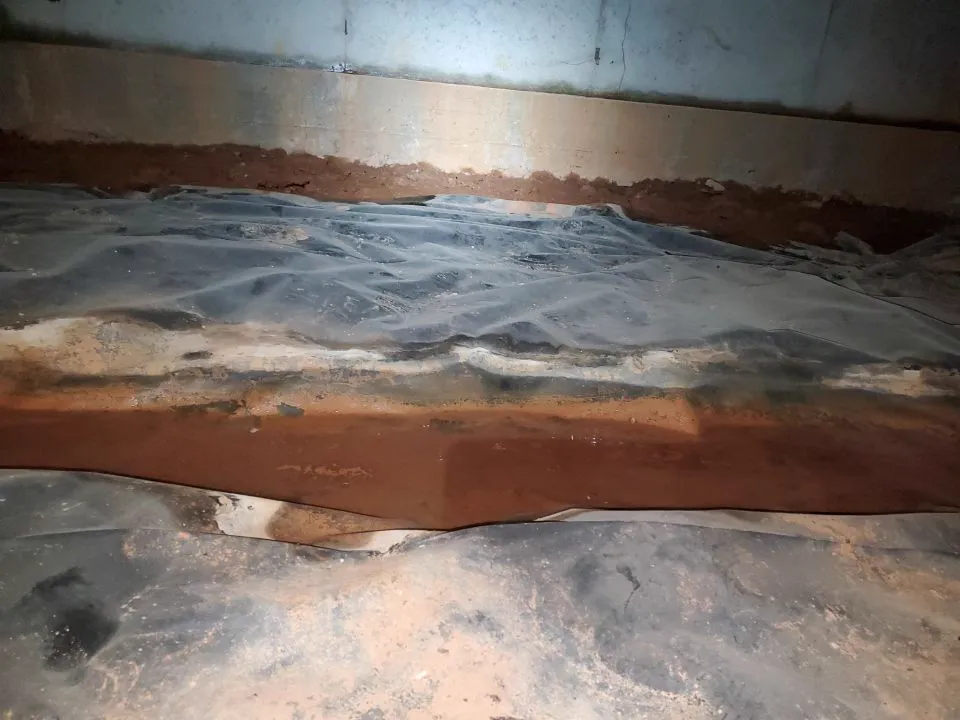
So why doesn’t every house stop there? Because a floor barrier blocks moisture from the dirt, but it does nothing about humid air coming in through vents. On a shaded lot the ground stays cool, the air stays wet, and the numbers never settle. That’s when the bigger option earns its keep.
The part nobody mentions on the estimate
Ready for the thing that changes how people think about all this? Your crawl space isn’t a separate room. It’s the bottom of a chimney, and the chimney is your house.
Air moves upward through a home — building scientists call it the stack effect. Warm air escapes near the roof, so replacement air gets pulled in from the lowest opening available. Building science research shows a large share of the air you breathe on the main floor started its trip down in the crawl space.
People think they’re fixing a dirt room under the house. They’re really fixing the air in the kids’ bedrooms.
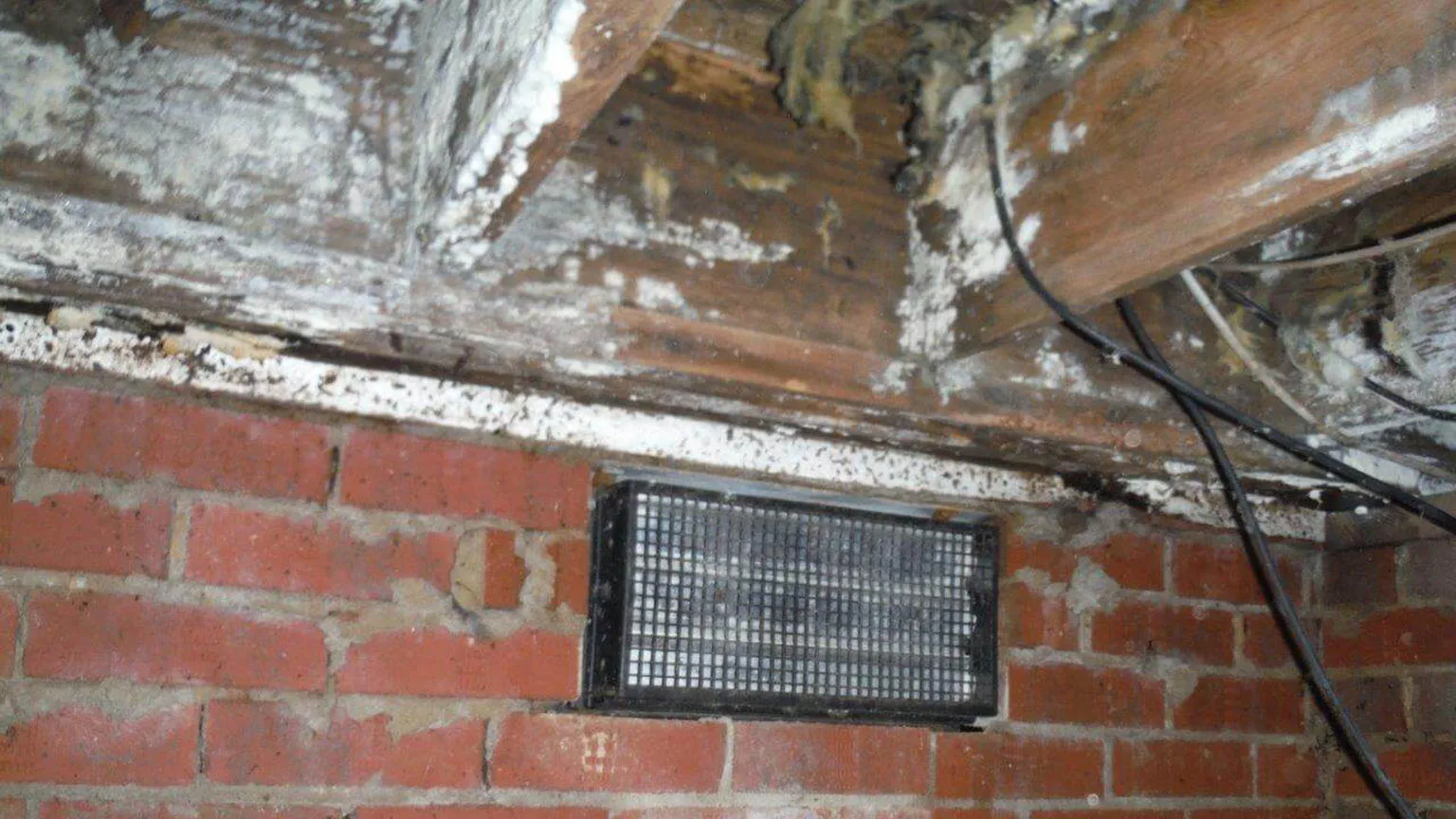
Once you know that, a few mysteries solve themselves. Hardwood cups along the seams in August, and doors stick in summer but fit fine by Thanksgiving. The EPA’s guide on mold and health is worth a read, and the CDC’s page on mold in the home covers the practical side.
Good news, though — this is very fixable, and we handle it every week. Dry the space, and the air riding upstairs is dry too.
Side by side, honestly
Enough theory. Here’s how the two crawlspace repair Johns Creek approaches stack up when we’re down there with a flashlight and a humidity meter.
Full encapsulation
- Heavy reinforced liner on the floor and up the walls
- Vents sealed, so humid summer air stays out
- Usually includes a dehumidifier you can check on an app
- Holds humidity steady year-round, not just after rain
- Costs more up front, and the dehumidifier uses power
- Makes the space clean enough for real storage
Vapor barrier and drainage
- Sealed floor barrier over the dirt, walls left open
- Water source gets fixed: gutters, grading, downspouts
- Often finished in a day, sometimes two
- Costs noticeably less, with no equipment to run
- Won’t control humid air coming through open vents
- Plenty for dry, sunny, well-drained lots
Notice neither column says “better.” Because once we’ve seen your lot and read the humidity, one of these is usually obvious — and the other is a conversation we can skip.
What decides it on a Johns Creek house?
Four things, mostly. They come up on nearly every inspection we run between Abbotts Bridge Road and the river.
The deciding factors
- How much sun does the lot get? Shaded, wooded lots near Autrey Mill Nature Preserve hold moisture far longer than open ones.
- Is water entering, or just humidity? Standing water is a drainage problem. A steady 70-percent reading is an air problem.
- Where do the ducts run? Ductwork or an air handler down there makes sealed-and-conditioned the smarter call.
- How old is the equipment? Sump pumps installed with the house are now 25-plus years old, and pumps don’t last forever.
That last one matters more here than almost anywhere. Johns Creek was largely built in one big wave, which means a whole city’s worth of original moisture systems are aging out on roughly the same schedule. Neighbors compare notes at Newtown Park and realize they’re all having the same year.
Terrain plays a part too. Lots that step down toward the Chattahoochee shed water onto whatever sits below them, so a home in Medlock Bridge may be handling its neighbor’s runoff. If your crawl space stays wet after storms rather than during them, that’s the tell — and it’s the same pattern behind a flooded basement two streets over.

So which one do we recommend?
Of the crawlspace repair Johns Creek homes usually qualify for, we recommend full encapsulation — but only after the water source is handled. Shaded lots, red clay that holds water, ductwork in the crawl space, and finished square footage overhead all point the same direction. On a house in The Standard Club with the air handler down there, it’s not really a close call.
We recommend the lighter route when the space is dry, the lot drains well, and humidity stays reasonable through a muggy stretch. In that case a good barrier plus gutter and grading work does the job, and we’ll say so even though the invoice is smaller.
Sometimes we recommend neither today. If a downspout is dumping against the foundation, we’ll extend it and ask you to call after the next real storm. An afternoon of gutter work has saved more crawl spaces than anyone admits. Curious how the same call goes next door? Our Alpharetta crawl space repair breakdown covers a slightly different mix of lots, and our encapsulation company guide explains what to ask before you sign anything.
Week one, year one, year ten
What does life actually look like after? Here’s the honest timeline, because people ask and nobody answers it well.
Week one: the smell goes first. Humidity drops within a day or two, and by the weekend that laundry-room hallway smells like nothing at all. Nothing is the goal.
Year one: the seasons stop showing up indoors. Floors hold their shape through August, doors latch the same in July as in January, and the HVAC stops fighting damp air. Plus the space becomes storage you’d actually use.
Year ten: the liner is still doing exactly what it did on day one, since there’s nothing to wear out. The dehumidifier gets a filter now and then, which is about as demanding as a coffee maker. When you sell, a documented system and a transferable warranty quietly remove a question from the inspection report.
More importantly, a feeling sticks around. You stop wondering what’s under there, because you saw it and it’s solid — that’s the part homeowners bring up years later, not the liner.
Why homeowners here hire us
Because you’ll get a written scope, proof of insurance, a warranty document, and photos of what we found — before anything gets ordered. Homeowners here research hard and compare line by line, so we write proposals that hold up. We also coordinate exterior work with your HOA when the job touches grading or downspouts.
Same crews, same trucks, every visit. Ask us anything on site, since technical questions are our favorite part of the day.
Where we work around Johns Creek
We’re based in Lawrenceville, about twenty minutes east, so we’re in this part of Fulton County constantly. That includes Johns Creek, Alpharetta, Duluth, Suwanee, Roswell, Milton, Peachtree Corners, Norcross, Cumming and Berkeley Lake. Odds are we’ve already been under a house near yours.
Questions Johns Creek homeowners ask
For a small dry crawl space, a properly overlapped and sealed barrier can help a lot. But thin sheeting tears the first time someone crawls over it, and unsealed seams let moisture right through. If you’re doing it once, use a reinforced liner and seal the seams.
Smell is the earliest sign, and it usually shows up weeks before anything visible. Also look for insulation falling from the joists, cupped floors above, or a musty closet on an upper floor. A cheap humidity meter left down there for a day tells you a lot.
It’s sealing the dirt floor and walls with a heavy liner, closing the vents, and adding a dehumidifier so the space stays dry all year. In short, the crawl space becomes part of the house instead of a damp gap under it.
It depends on square footage, headroom, and whether drainage work is needed first. A clean barrier-only job sits at the low end, while a full sealed system with a dehumidifier sits at the high end. Anyone quoting a flat number by phone is guessing, so we measure first and hand you a written scope.
If the vents are sealed, almost always yes, because the space needs a way to shed moisture once outside air can’t move through it. On a dry, sunny lot with a barrier-only fix, you often don’t. We check readings across a humid stretch before recommending one.
Let’s see what’s really under your Johns Creek home
The inspection is free, the estimate is free, and nobody pressures you afterward. We’ll take photos, show you the humidity numbers, and tell you honestly if the smaller fix is the right one.
(678) 914-5112Serving Johns Creek and all of Metro Atlanta · $500 off projects over $3,500 · Live support 7am–8pm, 7 days a week