

How to Find the Best Crawl Space Cumming Homeowners Can Hire
Why Forsyth County homes behave the way they do, what belongs in a real quote, and the questions that sort a careful crew from a fast one.
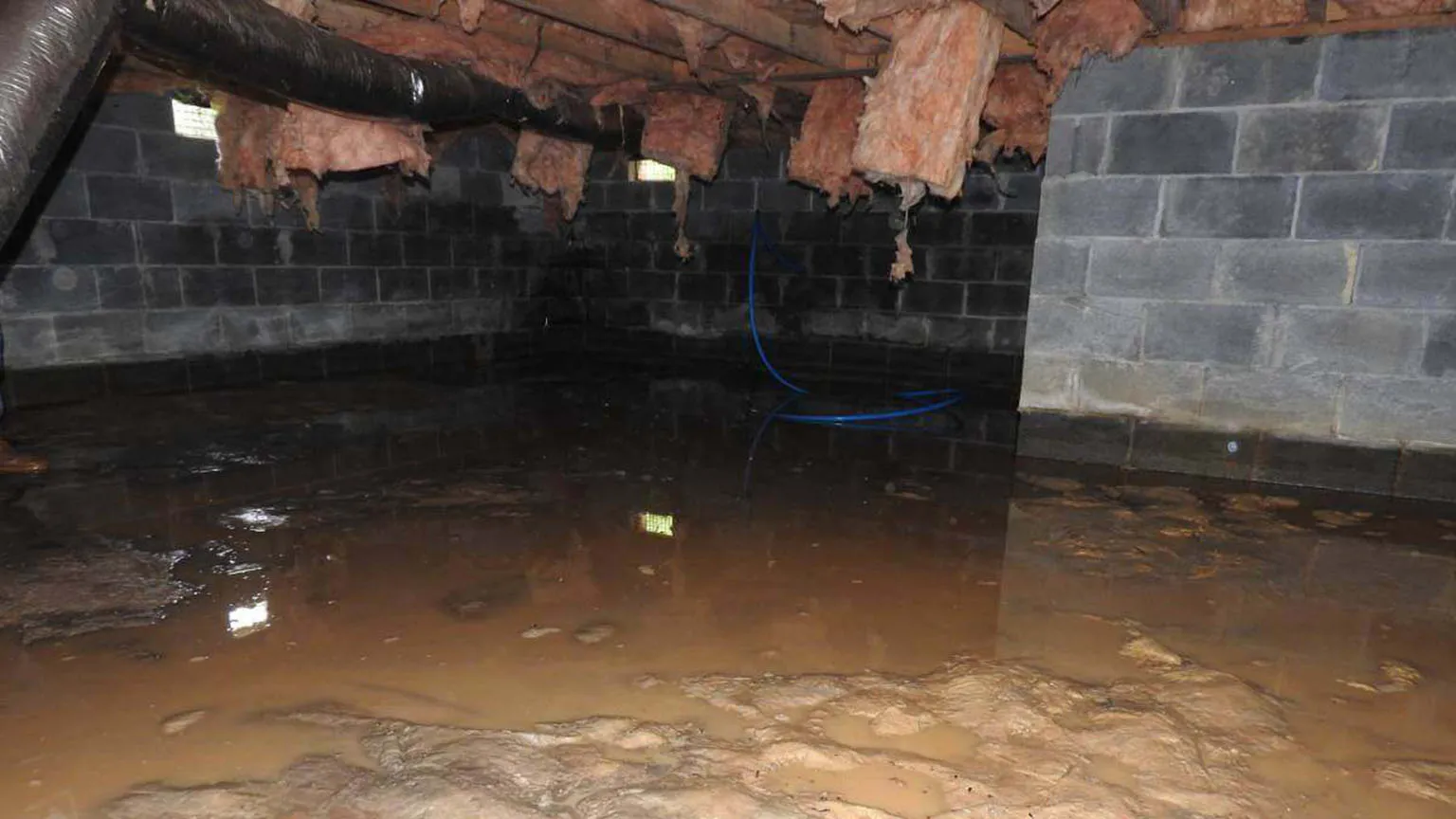
It was the two a.m. storm that did it. Rain on the windows, thunder rolling off toward Lake Lanier, and instead of going back to sleep you laid there thinking about what was under the floor. So if you spent that night hunting for the best crawl space Cumming company you could find, you’re in good company this spring.
Here’s the good news, right up front: this is a fixable problem, and it’s usually smaller than the 2 a.m. version of it. But two companies can quote what sounds like the same job and be selling you completely different things.
Why is a newer house doing this?
Because “new” and “young” aren’t the same thing. A lot of Cumming homeowners are surprised to find moisture in a house that still feels new, and the honest answer is that twenty years is exactly when builder-grade waterproofing starts to give up. Your house isn’t falling apart. Its original moisture system simply hit its expiration date.
Most of this area went up between 1998 and 2018, one of the fastest building runs in the country. So a whole county’s worth of thin plastic sheeting and builder-spec sump pumps are aging out on the same calendar. That’s why your neighbor in Castleberry lost the same night’s sleep.
Your crawl space shouldn’t be the most humid room in the house. In a lot of these homes, right now, it is.
The physics are simple. Warm summer air holds a lot of moisture, so when it slips through a vent into a crawl space sitting near 62 degrees, it cools and drops that water onto your ductwork, joists and dirt. Wood starts supporting mold growth at around 20% moisture content, and in a vented Georgia crawl space in July, framing gets there regularly.
What is Cumming ground actually like?
Uneven, mostly. This side of Forsyth County runs from Lake Lanier shoreline up to the slopes around Sawnee Mountain, so grade changes are dramatic from one street to the next. On a Sawnee Mountain area lot, uphill runoff arrives at your foundation with real momentum behind it.
Then there’s the clay. Red clay swells when it’s wet and shrinks when it dries, which means water travels sideways instead of soaking down. Near the mountain the ground turns rockier, and closer to the lake some lots sit on a genuinely high water table. Same city, three different problems.
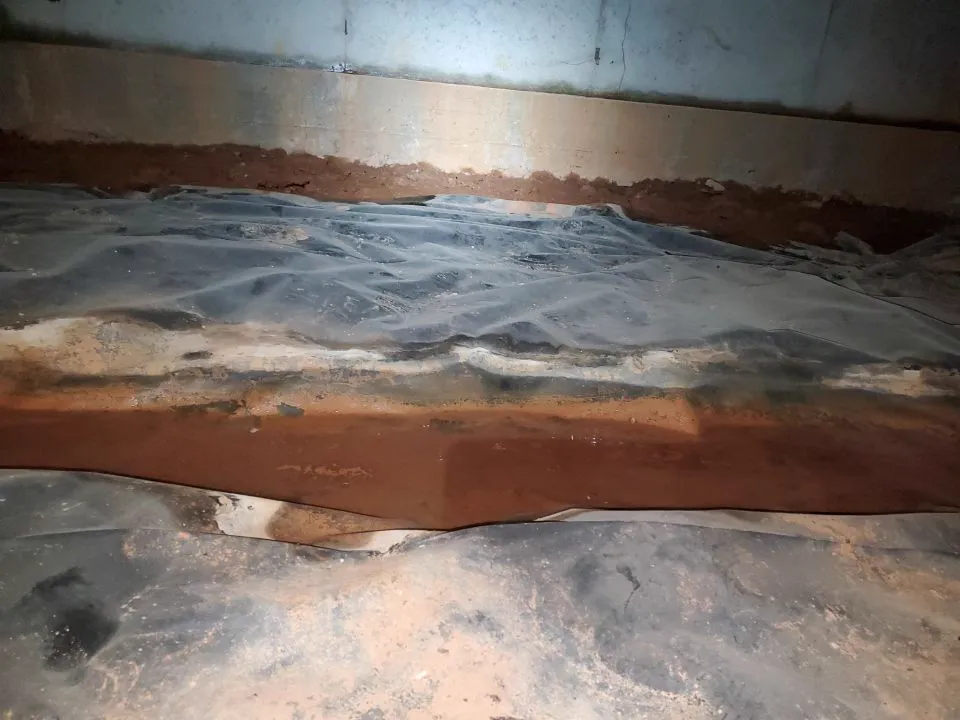
Backfill matters here too. In a newer house the soil pushed back against the foundation is still settling, so the grade slowly tips toward the wall instead of away from it. That same settling shows up as hairline cracks in homes only five to twenty years old, which alarms people far more than it should.
What should a good company do differently here?
Start outside. Any crew worth hiring walks your lot before opening the crawl space door, because gutters, downspouts and grade feed most of what happens underneath. On the sloped lots off McGinnis Ferry Road, we’ve solved whole problems with a redirected downspout and a swale.
Water comes next, in that order, every time. If a corner puddles after long rain, a liner laid over it just builds a swimming pool with a lid on it. So drainage, a basin and a sump go in first.
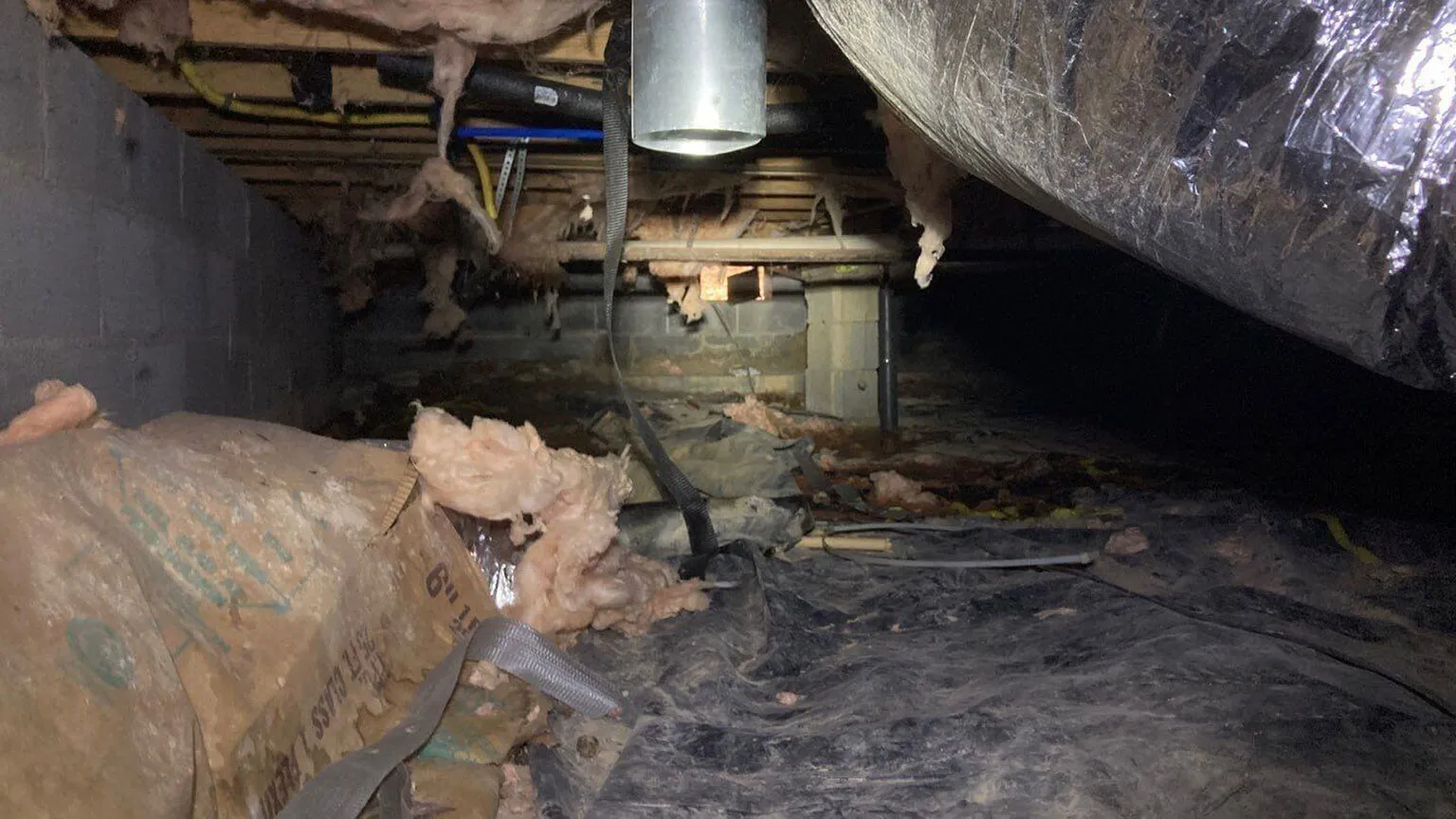
A good crew should also tell you which of the three Cummings you live in. Lakeside water table, mountain-slope runoff and flat new-construction backfill each want a different answer, and a company that quotes all three identically hasn’t really looked. That’s the difference between a plan and a package.
Worth knowing
Liner thickness matters more than color. A thin sheet tears the first time someone crawls in to service a duct, while a reinforced liner takes knees, tools and years. So ask for the thickness in mils, then compare that one line across every quote you’ve got.
What happens after the crew leaves?
Now for the part almost nobody asks about. Most articles stop at “seal it up and you’re done,” and plenty of jobs stop there too. But a sealed crawl space still needs its air managed, since you just removed the vents.
This is where a dehumidifier earns its keep. Not a hardware-store unit humming on an extension cord, either. A proper crawl space unit gets sized to your square footage, drains on its own, and holds humidity steady through a Georgia August without anybody thinking about it.
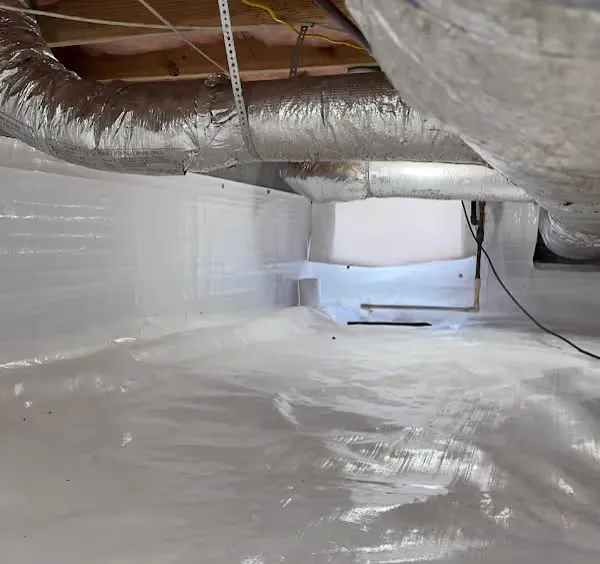
Insulation is the other half. Once the vents close, it belongs at the perimeter walls and rim joist instead of drooping between the floor joists. Better yet, the payoff lands on your power bill, since your ducts stop running through a hot, swampy box all summer.
How do you read the estimate?
Line by line, with one question in your head: does this describe my crawl space? A real scope names square footage, materials and equipment, because specifics win. A weak one says “encapsulate crawl space” and a number.
What should be spelled out in writing
- Liner thickness and reinforcement. In mils. This is the biggest quality gap between two quotes that look alike.
- Where the liner stops. Floor only, or sealed up the stem walls and around every pier.
- Vent treatment. Sealed and insulated, or just covered from the outside with a grate.
- Water first. Interior drain, sump, basin and discharge point, if the inspection found water.
- The dehumidifier. Model, capacity, and how it drains. Sizing should match your footage, not a guess.
- Insulation plan. What comes out, what goes in, and where it ends up.
- Warranty, in plain words. Coverage, length, and whether it transfers to a buyer.
- Exterior work. Downspouts, grading and the discharge line.
About price: a firm number over the phone is a guess, and you’d be the one paying for it. Small dry spaces sit at the low end, while a big footprint with drainage and a sized dehumidifier sits well above. Most Cumming jobs land between, so you want a written scope instead of a “starting at.”
What should you ask, and what should worry you?
Five questions do most of the sorting. Ask how the liner attaches to the walls and piers. Then ask its thickness, whether vents get sealed or merely covered, how the dehumidifier was sized, and whether the warranty follows the house. Whoever proves to be the best crawl space Cumming has for your home will answer all five without hedging.
Red flags are easier to spot than people expect. Pressure to sign today is one. A discount that expires the moment the visit ends is another, and so is any talk about your home coming apart, which is a sales line rather than a diagnosis.
Watch for a crew that won’t go all the way in, too. If nobody crawled to the far corner, nobody knows what’s back there. Also worth a pause: a company that never mentions the outside of your house.
What if it isn’t what you think it is?
Sometimes it isn’t. We had a homeowner in James Creek who was sure the crawl space was flooding, because every heavy rain pushed a wet-basement smell into the hallway. He’d already priced a full drainage system and made his peace with the number.
The floor turned out to be dry. What we found was a rim joist soaked through on one side, fed by a downspout dumping straight against the foundation, plus a dryer vent that had come loose years ago and been quietly steaming into the space ever since.
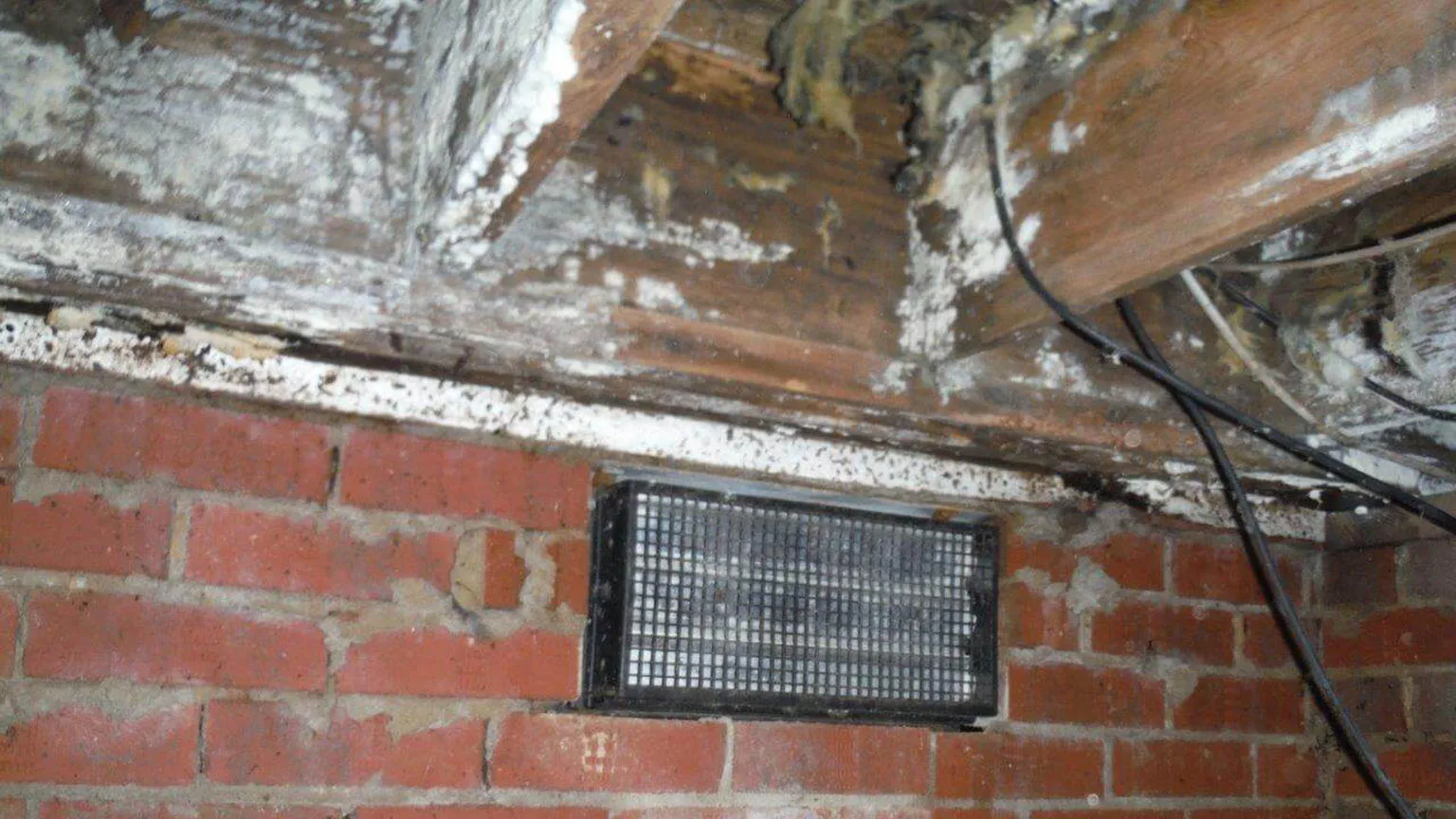
So the fix was smaller than the fear. Reroute the downspout, reconnect the vent, clean the wood, seal the space, set a sized dehumidifier. He kept the money he’d budgeted for drainage, and the hallway smell was gone in two weeks.
That’s why the inspection matters more than the sales pitch. Air moves upward through a house, so a fair share of what you breathe in the den started under the floor. The EPA’s overview of mold and health and the CDC’s guide to mold in your home both explain why damp air gets noticed upstairs first.
Why we might be the right fit
We’ve been doing this for more than twenty years, and Cumming sits about thirty minutes north of our Lawrenceville shop. Between jobs near Cumming City Center and homes over by Central Park, we’re up GA-400 most weeks, so odds are good we’ve already worked under a house built the same year as yours.
Our promise is boring on purpose. Stop the source, protect the structure, explain the plan, build it to last. We’ll also say plainly when the fix is smaller than you feared.
Want to compare notes first? Our local guide to crawl space encapsulation walks through symptoms and options, and the full crawl space repair systems we install are laid out step by step. Folks down the road get the same breakdown for Decatur best crawl space work. If the lower level worries you more, start with our piece on flooded basement repair, since seepage after a long spring storm is the other call we get here.
Where we work around Cumming
Our shop sits in Lawrenceville, so GA-400 and this whole corner of the map are a short drive. We work throughout Cumming, Alpharetta, Milton, Suwanee, Buford, Gainesville, Dawsonville, Johns Creek and Duluth, plus the wider Forsyth area. Anywhere along McGinnis Ferry Road or up toward the lake, we’ve usually got a truck close by.
Questions we get around town
It helps a little, but it doesn’t seal anything. Store plastic is thin, it tears the first time somebody crawls in, and it only covers the dirt while your walls and piers keep passing moisture through. A reinforced liner sealed up the walls is what actually changes how the space behaves.
Your nose usually tells you first, especially in a closet or a room over the crawl space. Other tells are cupping hardwood, floors that feel cold in winter, and insulation drooping out of the joists. If you can look inside, damp or darkened wood at the rim joist is the clearest sign of all.
It’s a heavy liner sealed across the dirt floor, up the walls and around the piers, with the seams taped and the vents closed. Any standing water gets drained first. After that the space stays dry and conditioned, so it’s part of your house instead of a damp hole under it.
It depends on square footage, whether water has to be drained first, and the size of the dehumidifier. Small dry spaces land at the low end, while a large footprint with drainage and a sump sits well above that. We give you a written scope after the inspection instead of a phone guess.
In our climate, almost always. Once the vents are sealed, the space needs its air managed, so a unit sized to the square footage keeps humidity steady all year. It should drain on its own, too, because nobody wants to remember a bucket.
Let’s go look under your Cumming home
The inspection is free, the estimate is free, and nobody pressures you afterward. We’ll show you photos of what’s actually down there, explain what it takes to fix, and say so plainly if the answer is simpler than you expected.
(678) 914-5112Serving Cumming and all of Metro Atlanta · $500 off projects over $3,500 · Live support 7am–8pm, 7 days a week