

Foundation Settling Duluth Homeowners Notice First — and What Actually Fixes It
Read the cracks, tell dormant from active, and understand the repair before anybody quotes you a number.
There’s a room in your house you’ve quietly stopped using. Maybe the door sticks so hard you have to shoulder it, or a crack crawled up one corner and the whole space started to feel off. So you shut it and moved on. That slow surrender of square footage is usually the first sign of foundation settling Duluth homeowners bring to us — long before anybody says the word “foundation” out loud.
Good news? You’re not dealing with something rare. Around here it’s one of the most ordinary calls we get, and it’s very fixable. So let’s walk through the cause, how to tell a resting crack from a moving one, and what an honest repair involves.
What’s actually moving under your house?
Short answer: the dirt, not the concrete. Georgia’s red clay is what soil scientists call expansive — it swells when it takes on water, then shrinks back when it dries out. That seasonal push and pull under a footing is the single biggest driver of foundation problems in this region.
Picture the ground under your house breathing. In through a wet March, out through a bone-dry August. Concrete handles weight just fine, but it can’t handle support that keeps changing shape underneath it. So when one section of footing loses a little bearing and the section beside it doesn’t, the house comes along for the ride.
Duluth adds a wrinkle of its own. The Chattahoochee wraps the north and west edge of the city, so river-adjacent lots often sit over sandy pockets mixed into the clay, with groundwater that rises and falls by season. Out toward Chattahoochee Run, two houses on one street can behave completely differently because of what’s four feet down. Neither owner did anything wrong — their dirt just got dealt a different hand. If the science interests you, the University of Georgia Extension publishes plain-language material on how our soils behave.
What are the cracks trying to tell you?
Cracks are how a house talks, and the pattern matters far more than the length. Here’s the translation guide we use on every inspection.
- Thin vertical cracks in a poured wall. Usually curing shrinkage from the concrete’s first year — common, and almost always cosmetic.
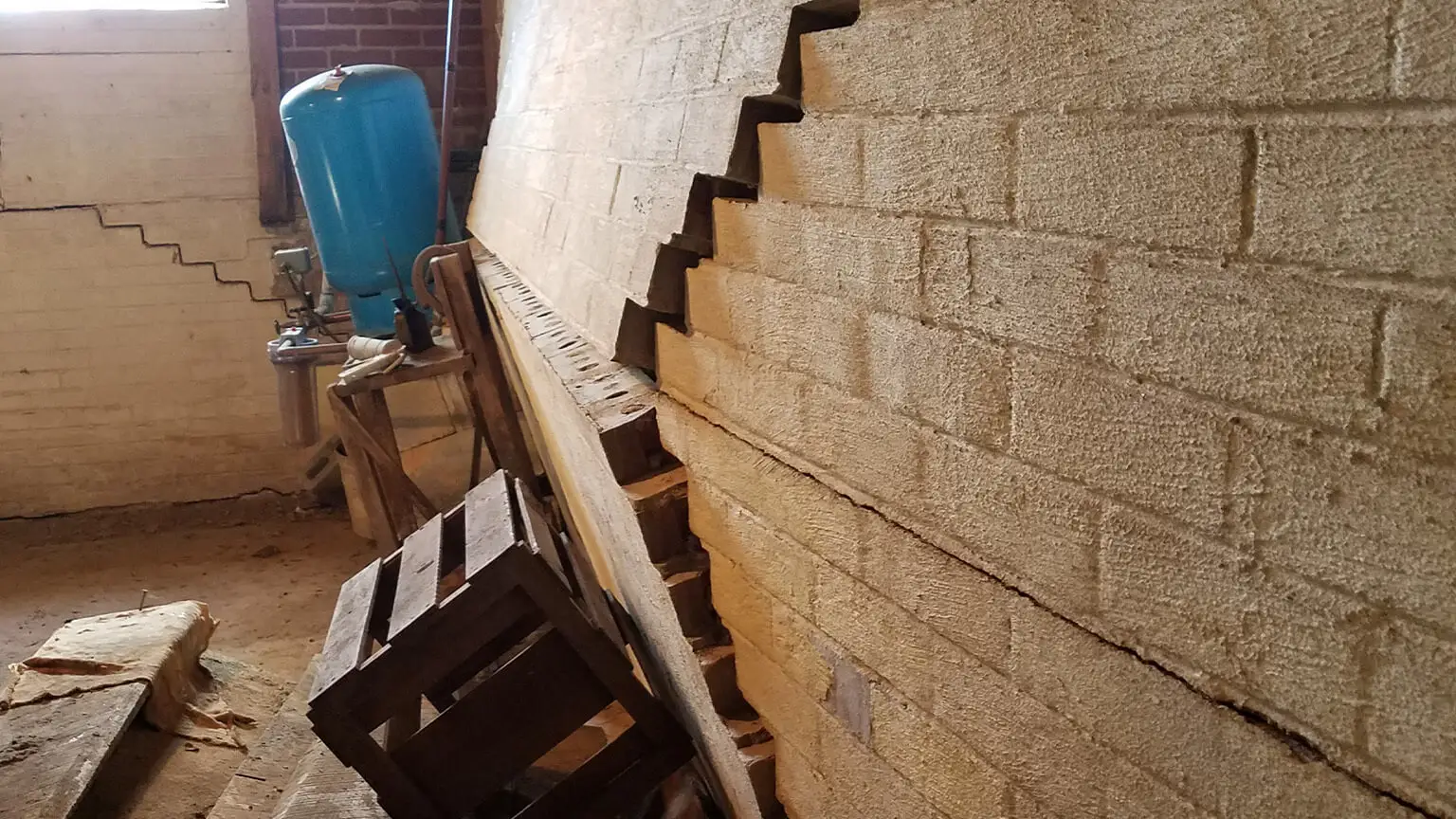
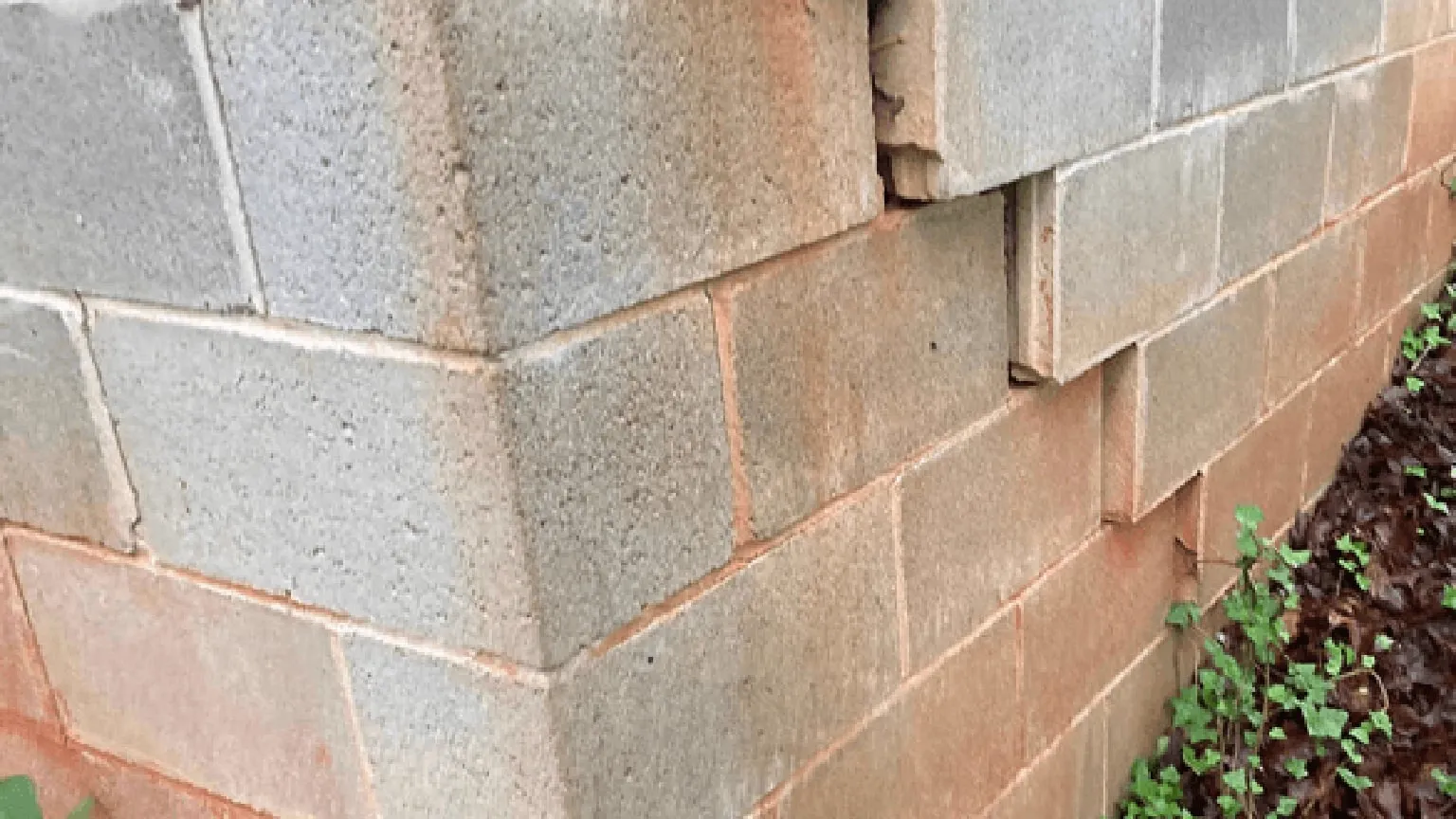
- Stair-step cracks along mortar joints in block or brick. The classic settlement signature: one part of the house dropped more than the part beside it.
- A horizontal crack across a block wall. Not settlement at all. Soil is pushing inward from outside, so it’s a different problem with a different fix.
- Diagonal cracks off window and door corners. Openings are the weak spots in any wall, so stress shows up there first.
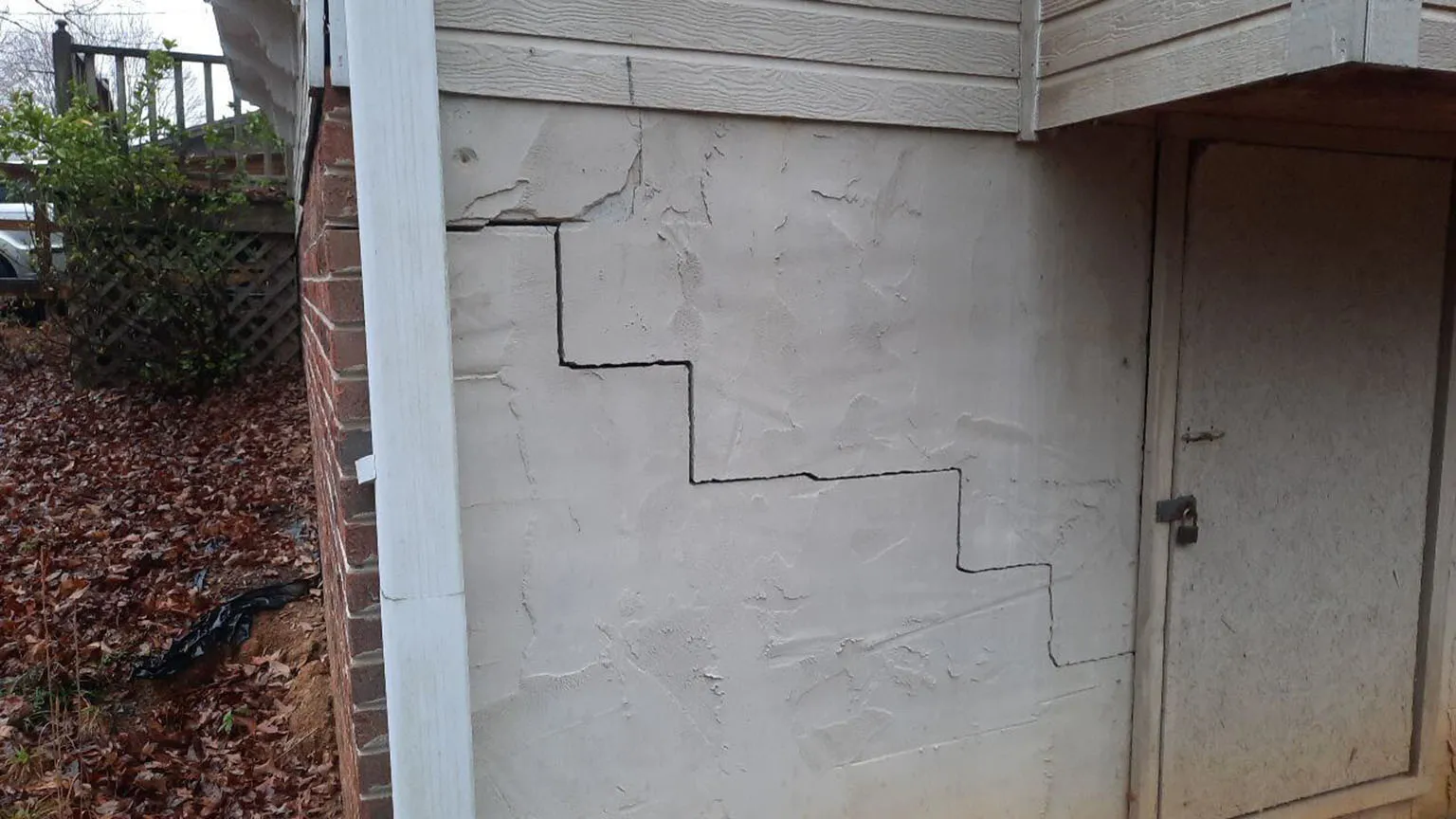
The house mentions it in other ways, too. Doors and windows start sticking. A gap opens at the top corner of a door frame. Floors lean toward one wall, brick veneer pulls away from trim, and nail pops show up in the drywall overnight.
Here’s the part nobody tells homeowners, though. Not every crack is a problem. Most houses in Gwinnett carry some cosmetic cracking, and modest movement in the first years after construction is normal. So a crack by itself isn’t a verdict — it’s information.
Dormant or active — how do you tell?
You can answer this yourself, for free, with a pencil. Mark each end of the crack, write the date beside it, then measure the width at its widest point. Check again every six to eight weeks.
Why so long? Because you need one wet stretch and one dry one to learn anything real. A dormant crack holds the same width all year and may need nothing more than sealing. An active crack creeps past your marks, and that’s the one worth a professional look.
So what makes it worth acting on? A crack that widens over several months, doors that get harder to close season after season, a floor sloped enough that a marble rolls, or a gap you can slip a coin into. Any one of those says the movement is still happening.
And if it’s left alone? Plainly: movement tends to continue in the same direction as long as the soil keeps cycling, so patch work done today usually reopens next year. Nothing dramatic happens overnight. Still, the cost of waiting is rarely the concrete — it’s the trim and flooring you end up redoing twice.
What question separates a diagnosis from a sales pitch?
Ask whoever inspects your home this: what changed the moisture around my footing? Then listen. A real diagnosis names a cause — a downspout dumping beside the wall, a footing drain that silted up in the nineties, a grade built up until it tilts back toward the house, a slow leak, a thirsty tree, or three dry summers in a row.
Good news
If nobody can tell you what changed the moisture, you haven’t been diagnosed yet — you’ve been quoted. Ask again. A straight answer costs nothing, and any honest crew will happily give you one.
Why does it matter so much? Because stable soil moisture around the footing is what stops the clay cycling in the first place. Piers hold the house steady, but drainage keeps the ground from arguing with it. Skip that half and you’ve treated the symptom.
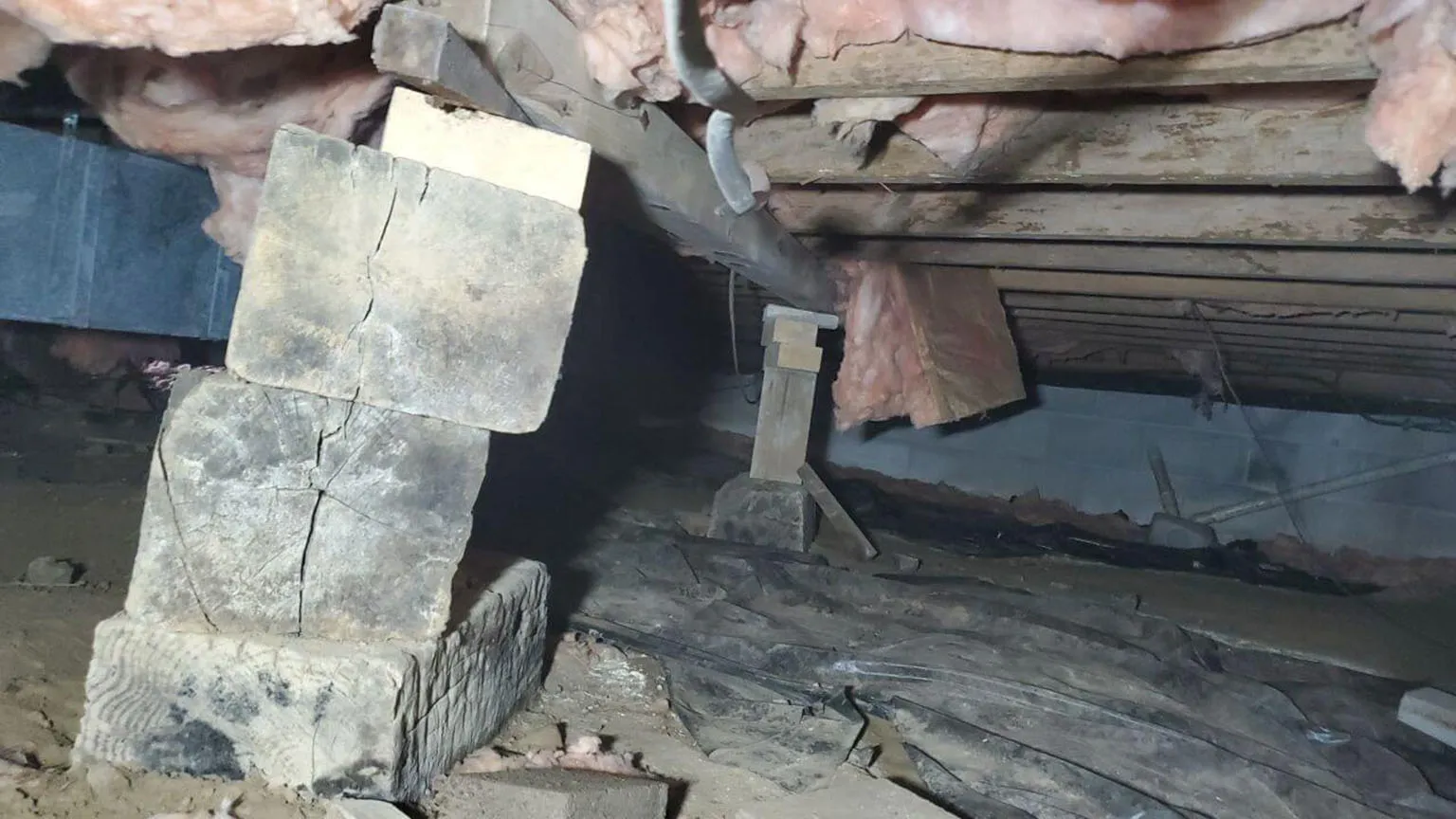
We also run into the homegrown version pretty often — stacked block and scrap lumber wedged under a sagging girder in a crawl space, usually by a previous owner who meant well. It’s a shim sitting on soil that never stopped moving. Real support carried down to ground that ignores the weather is what keeps that girder where you put it.
What does the repair actually look like?
Simpler than most people expect. Nearly every foundation settling Duluth repair comes down to one idea: move the home’s weight off the moody top layer of clay and onto something that holds still. Four common tools do that, and the right one depends on your soil, your access and how much of the house is involved.
- Helical piers. Plated steel shafts turned into the ground like a giant screw until they reach load-bearing soil, then bracketed to the footing. Good where access is tight.
- Push or resistance piers. Steel driven straight down using the weight of the house itself, until it hits firm bearing. Suited to heavier homes.
- Slab piers. Same idea, sized for an interior slab that dropped — a garage floor, a sunroom addition.
- Drainage corrections. Regrading, longer downspouts, a new footing drain. Less glamorous, but it’s what stops the soil cycling again.
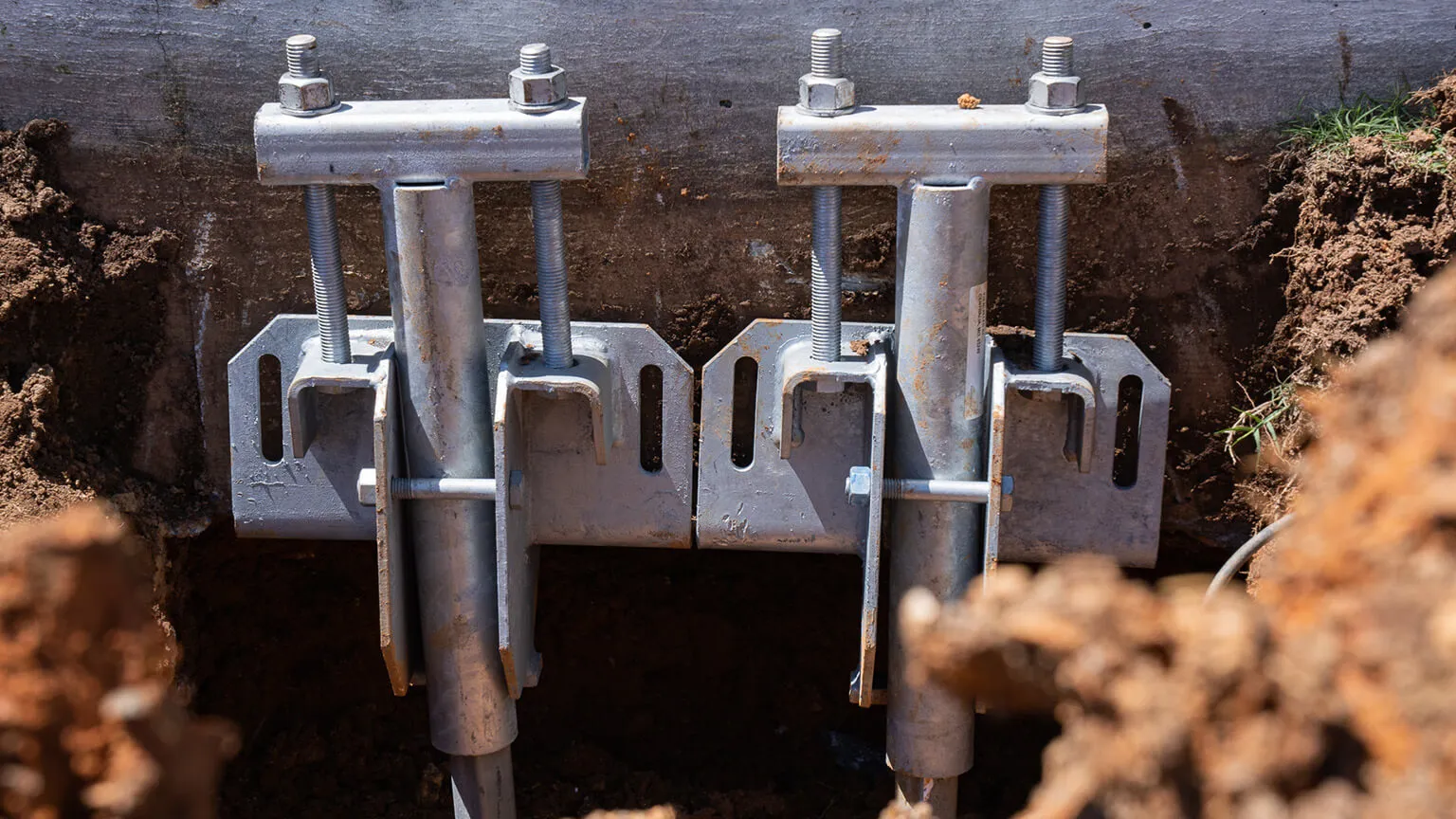
One distinction is worth knowing before anybody quotes you. Stabilizing means stopping further movement, and it works essentially every time. Lifting means bringing the house back toward level, which depends on how it was built and how long it sat. Sometimes we recover most of it. Sometimes chasing that last half inch risks new cracks upstairs, and we’ll say so.
Cost? It moves with pier count, depth to good bearing, how hard the area is to reach, and whether drainage is in the scope. So we walk it before we price it. Our breakdown of foundation repair cost lays out every factor, the methods live on our foundation repair page, and if it’s really one wall rather than the footing, foundation crack repair may be the shorter road.
Piers stop the house from moving. Drainage stops the reason it moved. Do one without the other and you’re only half done.
What should you do every year once it’s fixed?
Here’s the part almost nobody hands you, and it’s why repaired homes stay repaired. None of it takes a weekend.
- Clean gutters twice a year. Spring, then again after the November leaf drop. Clogged gutters are the top way homeowners accidentally water their own footing.
- Walk your downspouts. Each one should discharge at least six feet out. Extensions cost less than dinner.
- Check the grade after winter. Soil should fall away from the house, roughly an inch per foot for the first six feet.
- Aim irrigation away from the foundation. A sprinkler soaking one corner all summer rebuilds the exact moisture difference you paid to remove.
- Re-measure your marked cracks yearly. Same pencil, same ruler, thirty seconds.
- Look after the first big storm each season. Basement corners, crawl space, the low side of the yard.
Then picture the payoff. Doors latch with one hand again. The floor reads level. That room you’d been avoiding turns back into an in-law suite, a home office or a teenager’s hideout — and here that matters, because Duluth basements are working basements. When one goes sideways, it isn’t storage. It’s somebody’s bedroom.
Better yet is the feeling underneath it: you didn’t ignore it, you understood it, and you handled it. That’s a good thing to know about your own house.
Why does hiring somebody local matter here?
Because Duluth isn’t one housing market, it’s several. Most of the foundation settling Duluth calls we take come from subdivisions built between 1985 and 2005, where full basements are standard and the original footing drains are old enough to vote. Meanwhile, the historic streets near the Southeastern Railway Museum are a different animal — older homes, shallow crawl spaces, often no vapor barrier.
We’ve worked homes along the Bunten Road corridor, over near Abbotts Bridge, and on streets a few minutes off Peachtree Industrial Boulevard. Our shop sits fifteen minutes away in Lawrenceville, so the crew doing the work is the crew that picks up in year six. We’ve eaten lunch at McDaniel Farm Park between jobs more times than we can count.
Expect a written scope, proof of insurance, a real warranty and a clean site — that’s simply the standard. For neutral background on structural safety, the International Code Council keeps solid homeowner resources. And if family one exit north sees the same thing, we cover Suwanee foundation settling too.
Where we work around Duluth
Duluth is a quick run from our Lawrenceville shop, so we’re out this way most weeks. We also serve Johns Creek, Suwanee, Berkeley Lake, Peachtree Corners, Norcross, Lawrenceville, Sugar Hill and Snellville, plus the wider Gwinnett area. If you’re along PIB or over toward Pleasant Hill, odds are we already have a truck close by.
Questions Duluth homeowners ask us
Often, yes. If one corner is moving and the rest of the house is steady, we can stabilize that section now and revisit the rest later. We’ll tell you which part is actually moving and which part can safely wait, and both go in the written scope.
Yes, and you get the terms in writing before work starts. Pier systems typically carry long-term coverage on the steel and the installation. Ask us to explain what’s covered in one plain sentence — a warranty that takes a paragraph isn’t helping you much.
We dig only where a pier goes, so it’s a modest hole at each bracket rather than a trench around the house. Sod and plants get set aside and put back. Grass recovers within a season, and your dog will be more excited about the dirt than you are.
It’s rarely an emergency, but it is a different problem from settlement and it should be looked at rather than watched. Inward lean means soil pressure, so the repair involves bracing or anchoring plus fixing the drainage behind it. Call us and we’ll come look at no charge.
Movement that’s still happening is the deciding factor. Mark and measure your cracks over a few months, then notice whether doors and floors get worse season to season. If the measurements hold steady, sealing may be all you need. If they grow, a structural repair earns its keep.
Let’s take a look and tell you straight
We’ll read the crack pattern, check the drainage around your Duluth home, and tell you whether the movement is finished or ongoing. Inspection free, estimate free, no pressure at the end — including when the honest answer is “keep an eye on it.”
(678) 914-5112Serving Duluth and all of Metro Atlanta · $500 off projects over $3,500 · Live support 7am–8pm, 7 days a week