

Flooded Basement Repair Norcross Homeowners Can Trust: Cost, Process and Warranty
Water out, source found, and the work that keeps it from coming back.
What does it cost to fix a basement that floods, and how long does the work take? Most jobs run two to four days on site, and the price follows how much water comes in and where it enters — not the size of your house. That’s the short answer on flooded basement repair Norcross homeowners go looking for at six in the morning, shop vac in hand.
Here’s the better news. Water problems have causes, and causes have fixes. We’ve worked around Gwinnett for over twenty years, so below is the honest version: the work, the price drivers, and what you get in writing.
Is your basement flooding, or seeping?
Let’s back up a second, because these are two different problems that end the same way — with you standing in water. Seepage is slow. It sweats through a wall, leaves a dark line near the floor, and announces itself with a musty smell.
Flooding is bulk water. It arrives fast and in volume, so something is either pushing it in or failing to carry it away. That makes the list of causes short: pressure in the soil, a sump pump that quit, a blocked drain line, or a window well with no working drain — basically a bucket built into your foundation.
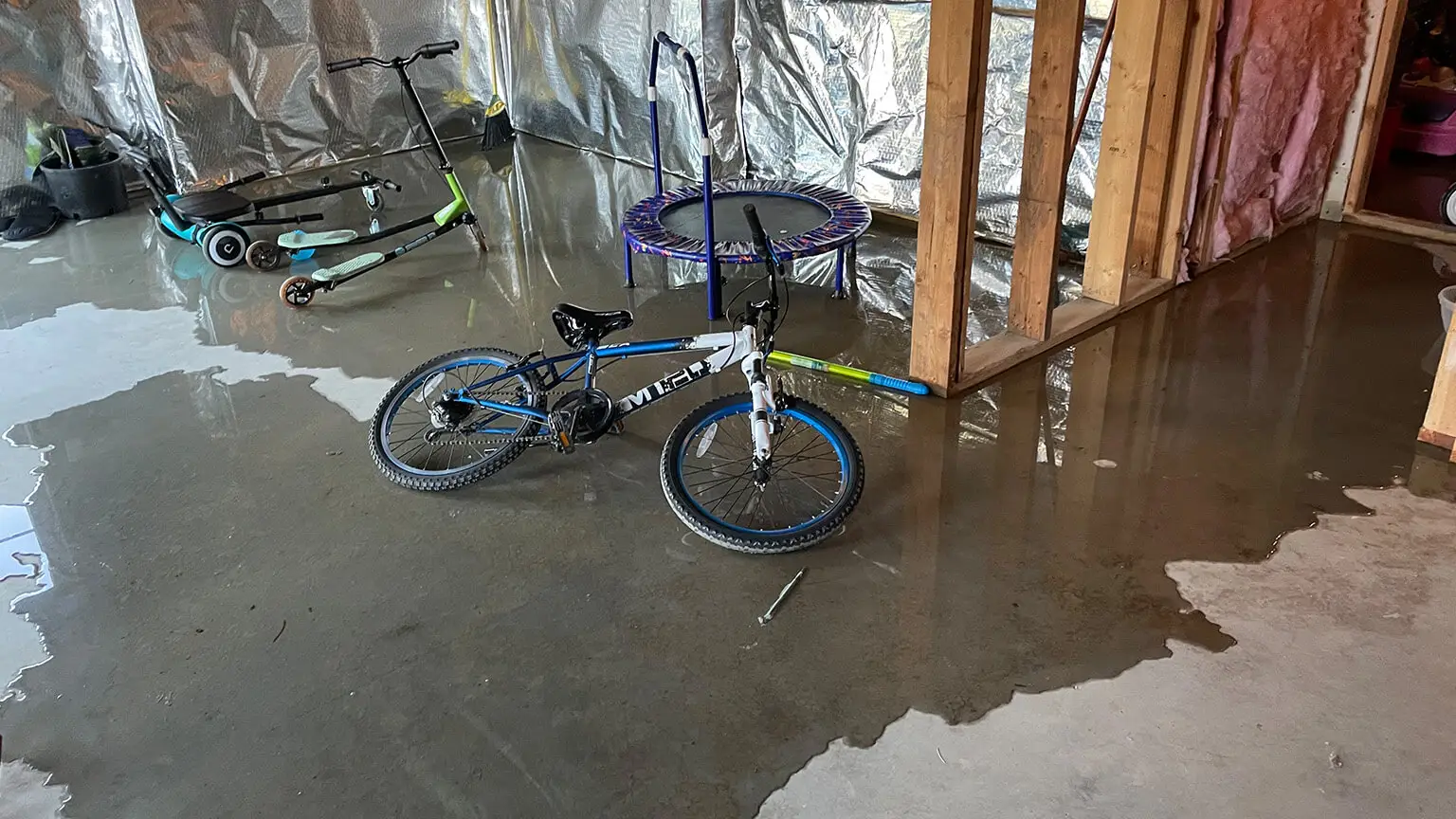
Where does it get in? Usually not through a crack. The most common entry point is the cove joint — the seam where your wall meets the floor slab. Those two pieces of concrete were poured at different times, so they were never one solid piece to begin with.
Georgia red clay makes that seam work harder. Clay holds water instead of draining it, so after a long rain the soil against your wall stays soaked for days while pressure builds. On the 1960s and 1970s block basements around Rockbridge and the Indian Trail corridor, that water works into the hollow cores of the block and pushes out at the bottom of the wall.
Good news
This doesn’t mean your foundation is in trouble. A flooding basement and a moving wall are two separate conversations, and we’ll tell you which one you’re having before anybody talks money.
So a wet vac is a cleanup tool, not a repair — it gets your Saturday back, but repair changes where water goes. If yours is more puddle than pond, our guide to standing water basement causes covers that end of the range.
What does a real repair look like?
What happens between your phone call and a dry floor? About six steps, and none of them are a mystery.
Before anything else
Don’t step into standing water while the power is on. Shut the basement circuits off at the panel first. If the panel itself sits in the wet area, call your utility and wait.
- Water out. Pumps and extractors first, because that’s what stops the damage from spreading.
- Wet organics out. Carpet pad, cardboard, soaked drywall along the base of the wall. Those hold moisture longest, so they go early.
- Dry it down. Air movers plus real dehumidification, run until the readings say dry — not until it feels dry. The CDC’s guidance on mold cleanup after flooding explains why speed matters here.
- Find the source. We walk outside first — grading, downspouts, window wells, where roof water lands. Then we walk inside: cove joint, block cores, sump, any old floor drain.
- Build the drainage. A narrow channel opens at the perimeter, then perforated pipe goes into clean stone below the slab, so water is caught before it reaches your floor instead of after.
- Close it up and test it. Fresh concrete over the channel, wall liner where needed, discharge routed well away from the house — then we run water through it while you watch.
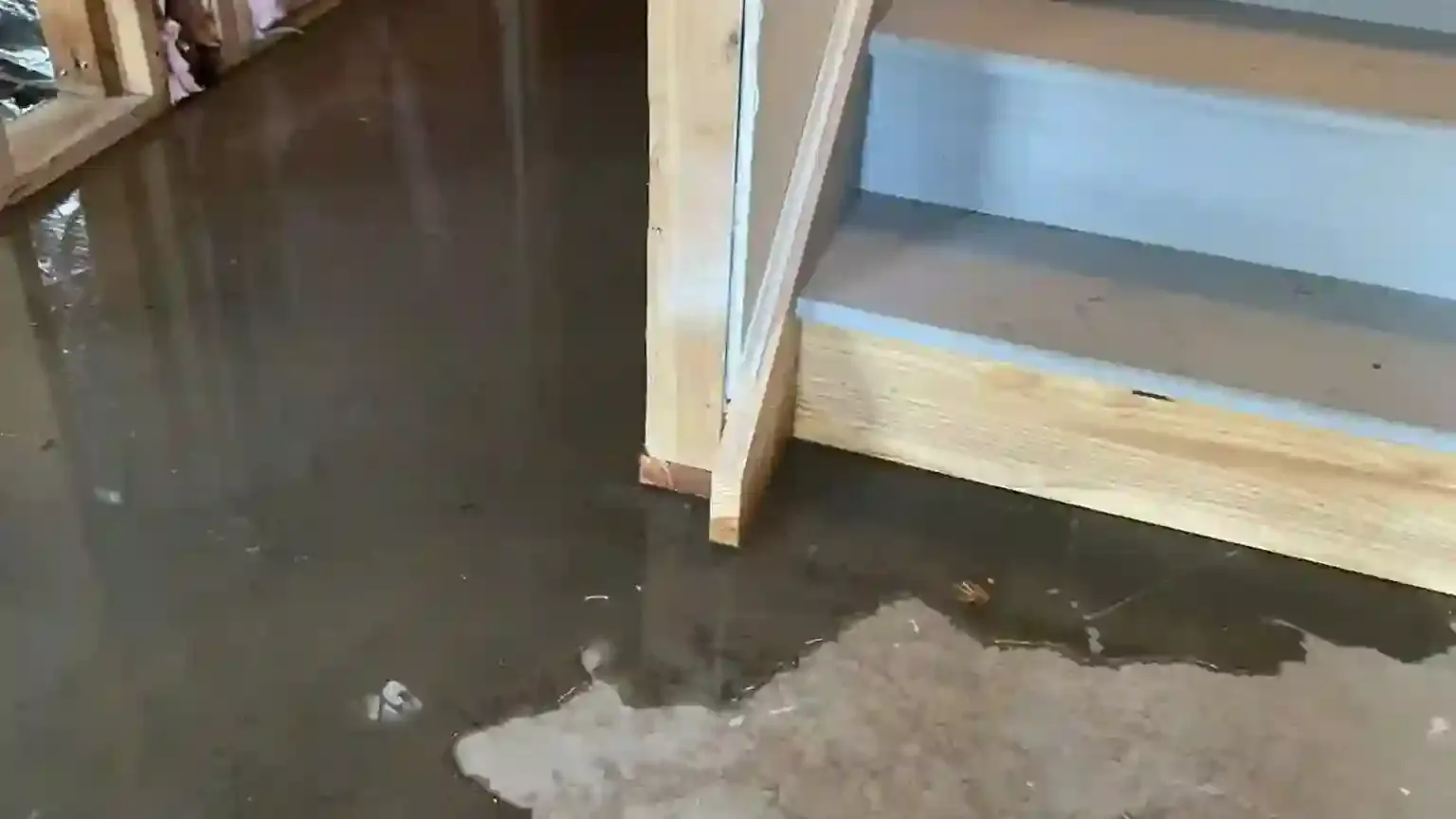
Now, the sump pump, since that’s the piece homeowners ask about most. Pumps don’t fail randomly — they fail in five predictable ways. Power drops mid-storm, so a battery backup handles that. A float sticks against the basin wall. The pump is undersized. There’s no check valve, so it re-pumps the same gallon all night. Or the discharge line clogs. Every one of those has a fix.
Twenty years in, the lesson is simple: you don’t beat water by blocking it. You beat it by giving it an easier path than the one through your house.
But here’s the part most companies skip
Ready for the piece that rarely shows up in a sales pitch? If your basement floods only in heavy rain, you almost certainly have a surface water problem rather than a groundwater problem. That matters to your wallet, because surface water is usually the cheaper fix.
Surface water is roof water and yard water. A downspout dumping four feet from the wall, a flowerbed topped off until it slopes back toward the house, a window well packed with leaves. Fix those and plenty of basements stop flooding — and we’d rather say that than sell you a system you didn’t need.
There’s a second thing we run into constantly on older Norcross streets. Old drain and sewer lines leak underground and keep the soil at the footing wet all the time. As a result the ground never dries out between storms, so an ordinary rain is the one that shows up in your basement.
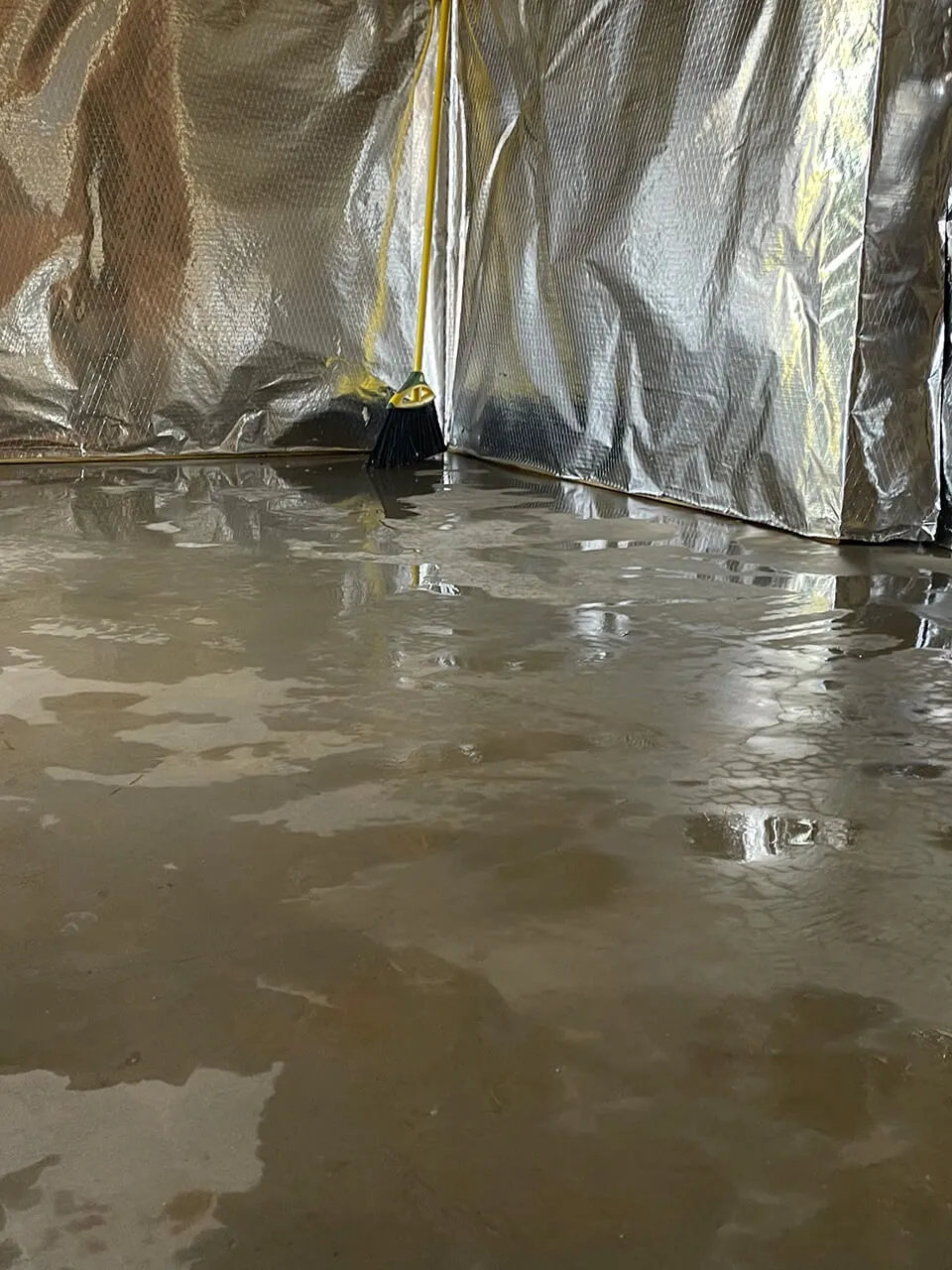
Which brings up what makes this city different. Norcross has houses from three different centuries — brick and stone near Thrasher Park, block basements from the sixties and seventies, poured walls from the nineties, crawl spaces mixed in everywhere. Each one needs a different answer, so a real inspection beats a phone quote every time. For a neutral primer, FEMA’s building science library is worth a scroll.
So what does it cost?
Straight answer: it depends on the volume of water and how much wall is involved. Anyone quoting a flat number over the phone is guessing. Still, here’s what we weigh when we write your estimate.
What moves the number up or down
- How much perimeter needs drainage. One wall versus a full perimeter is the biggest factor.
- Outside corrections. Regrading, buried downspout lines and a window well drain sit at the low end — often the whole answer.
- Sump and backup. A new basin, a sized pump, a check valve and a battery backup add cost. The backup runs during the storm that kills the power.
- Access. An open basement is straightforward. A finished one with built-ins means careful work first.
- Drying and tear-out. Water standing one hour is a different scope than water standing three days.
- Wall condition. If a wall is cracked or moving, foundation repair comes first. Drainage against a moving wall is money spent twice.
Small drainage corrections land at the low end. A full perimeter system with a new sump, a backup and careful work around a finished space sits at the high end. Most flooded basement repair Norcross projects fall in between, and after we walk your house you get a written number with the scope spelled out.
What’s included? Labor, materials, the concrete we replace, hauling and the warranty. What isn’t? Rebuilding finished walls we opened, replacing ruined flooring, and structural work, which is priced on its own. Better you hear that now than find it in fine print.
On the warranty: you get it in writing before work starts, and it transfers if you sell. Ask us to explain it in one sentence — if a company can’t, that warranty isn’t doing much for you.
Week one, year one, year ten
What does life look like after the crew drives off? Let’s walk it forward.
Week one. The floor is dry and the new concrete cures a shade darker than the old slab. A dehumidifier hums in the corner. The damp smell fades, and by day five most folks notice the basement smells like nothing at all. That’s the goal — nothing is a great smell.

Year one. The first real spring storm rolls through and you go look. The pump cycles, the floor stays dry, and after the third or fourth storm you stop checking. A homeowner near the Summerour area told us the best part wasn’t the dry floor — it was moving the holiday boxes back off the guest bed.
Year ten. The drainage still works, because stone and pipe under a slab have nothing to wear out. The pump has a service life, so plan on replacing one around year ten — a scheduled expense instead of a surprise. And you’re calling the same local number you called the first time.

Why does hiring local matter?
Because a warranty is only worth as much as the company behind it. Our shop is in Lawrenceville, twenty minutes northeast of you, and the same crews have done this work for over twenty years. If something needs a look in year six, you’re calling the people who did the job.
Local also means we know your housing stock. We’ve worked block basements off the Indian Trail corridor, older streets near Lillian Webb Park, and sloped lots draining toward the Chattahoochee. If you’re between I-85 and historic downtown, odds are good we’ve been under a house on your street.
Want to compare notes first? Every system we install is laid out on our basement waterproofing page, and we cover the same ground for Loganville flooded basement repair if you’ve got family a few exits east.
Where we work around Norcross
We’re based in Lawrenceville, so Norcross is a short run down the highway. We work throughout Peachtree Corners, Duluth, Lilburn, Doraville, Tucker, Berkeley Lake, Suwanee and Snellville, plus the wider Gwinnett County area. If you’re near Jimmy Carter Boulevard or over toward Buford Highway, there’s usually a truck close by.
Questions Norcross homeowners ask us
Roughly 24 to 48 hours on wet organic material like carpet pad, cardboard or paper-faced drywall. That’s the window worth beating, so getting water out and air moving on day one matters most. Bare concrete and block are more forgiving.
Shut the basement circuits off at your panel before you step into standing water. Then photograph everything for your records and call for extraction. Once the water is gone, the rest is a plan instead of an emergency.
That pattern points to surface water rather than groundwater. Think roof water, downspouts ending too close to the wall, grading that tilts back toward the house, or a window well with no drain. It’s good news, because surface water is usually the cheaper fix.
It depends on your policy, and standard homeowners policies commonly exclude surface flooding. Coverage for sump pump failure or water backup is usually a separate endorsement you add. Check your declarations page or call your agent before assuming either way.
Start the same day if you can. Standing water goes first, then wet organic materials, then dehumidification until moisture readings come back down. Most basements dry in three to five days with the right equipment running.
Let’s find out where water is really getting into your Norcross basement
The inspection is free, the estimate is free, and nobody pressures you at the end. We’ll show you the entry point, explain the plan in plain words, and tell you honestly if the fix is smaller than you expected.
(678) 914-5112Serving Norcross and all of Metro Atlanta · $500 off projects over $3,500 · Live support 7am–8pm, 7 days a week