

What Flooded Basement Repair Lilburn Homes Need — and What It Costs
The physics, the process, the price drivers, and the part where you stop watching the radar.
Water doesn’t show up in your basement because something snapped. It shows up because the ground outside is full, and full ground has to push somewhere. See it that way, and the flooded basement repair Lilburn homeowners go looking for stops being a mystery. It’s a pressure problem, and pressure problems have known answers.
That’s the reassuring part. We’ve been solving this around Gwinnett for more than twenty years, so we can tell you the fix is usually smaller than people brace for. Here’s the honest walkthrough.
Is this flooding, or is this seepage?
Worth sorting out early, because they’re two different problems. Seepage is slow and quiet — a damp band along the bottom of the wall, a musty smell, maybe a chalky white bloom on the block.
Flooding is bulk water arriving fast. Something is letting a big volume through at once, and it’s nearly always one of four culprits: pressure in saturated soil, a sump that quit mid-storm, a drain line blocked or crushed, or a window well with no working drain under it.
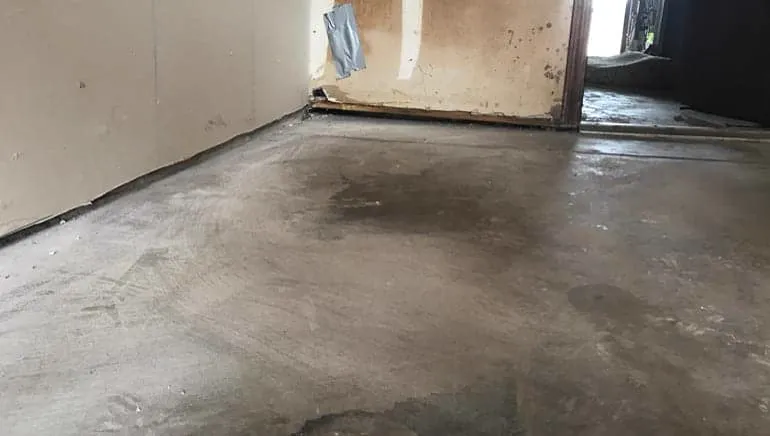
Here’s a number that explains a lot. One inch of water across a 1,000-square-foot basement is more than 600 gallons. So if a wet-vac felt hopeless last time, that wasn’t you being slow.
So what does the repair involve?
Three jobs, stacked. Dry the space out properly, shut down the path the water used, then give the next round somewhere better to go.
Usually that path is the cove joint — the seam where your wall meets the floor slab. Note the word seam, not crack. It was built that way on purpose, and under pressure it becomes the easiest opening in the house. That’s why folks hunt for a crack all afternoon and come up empty.
Good news
Water at the cove joint rarely says anything alarming about your foundation. Far more often it says the drainage around your footing has aged out — and drainage gets replaced.
Then there’s our soil. Georgia red clay drains slowly, so a long rain parks water right against the wall instead of moving it along. Pressure climbs, and on the hollow block basements common here it pushes straight through the block cores. Mature roots pitch in too, nudging walls and cracking old drain lines.
What happens once work starts?
Every flooded basement repair Lilburn job follows a similar shape, so you can picture yours before a truck pulls up:
- Water out, then dry. Extract the standing water, pull soaked organics — carpet pad, cardboard, the bottom of the drywall — and set dehumidification. Speed counts, since mold can take hold on damp organics in about 24 to 48 hours.
- Trace the source. We read the yard first: slope, gutters, downspouts, where roof water lands. Inside comes second. Often the real trouble sits out by the flower beds.
- Cut the perimeter channel. A slim strip of slab comes up along whichever walls need it. Noisy and dusty, typically a day or two.
- Set drainage under the floor. Perforated pipe bedded in washed stone, lower than your slab, so water gets intercepted on the way up rather than mopped up after.
- Send it to a sump. The line feeds a sealed basin and the pump carries that water well away. Discharging beside the foundation just puts it back in line for another lap.
- Button it up. New concrete over the channel, wall liner if it helps, floor swept. Broken slab leaves with us.

What would we ask if this were our own house?
Good question to sit with, and there are three answers we’d insist on first.
Where exactly is it coming in? Not “the basement” — the specific wall, joint or well. Anyone who can’t point at a spot is estimating from a template.
Is the sump the cause, or the messenger? Pumps fail in boringly predictable ways: power drops mid-storm, a float sticks, the unit was undersized from day one, there’s no check valve so half the water slides back down, or the discharge line outside packs with silt. A new pump on a clogged discharge line is an expensive paperweight.
In twenty years we’ve almost never seen a sump quit on a calm Tuesday. It quits during the one hour you needed it.
And what’s happening outside? Gutters, downspout extensions, the grade against the house, plus whether that original footing drain still moves water at all. Under the old canopy here, fall leaves pack yard drains solid by November.
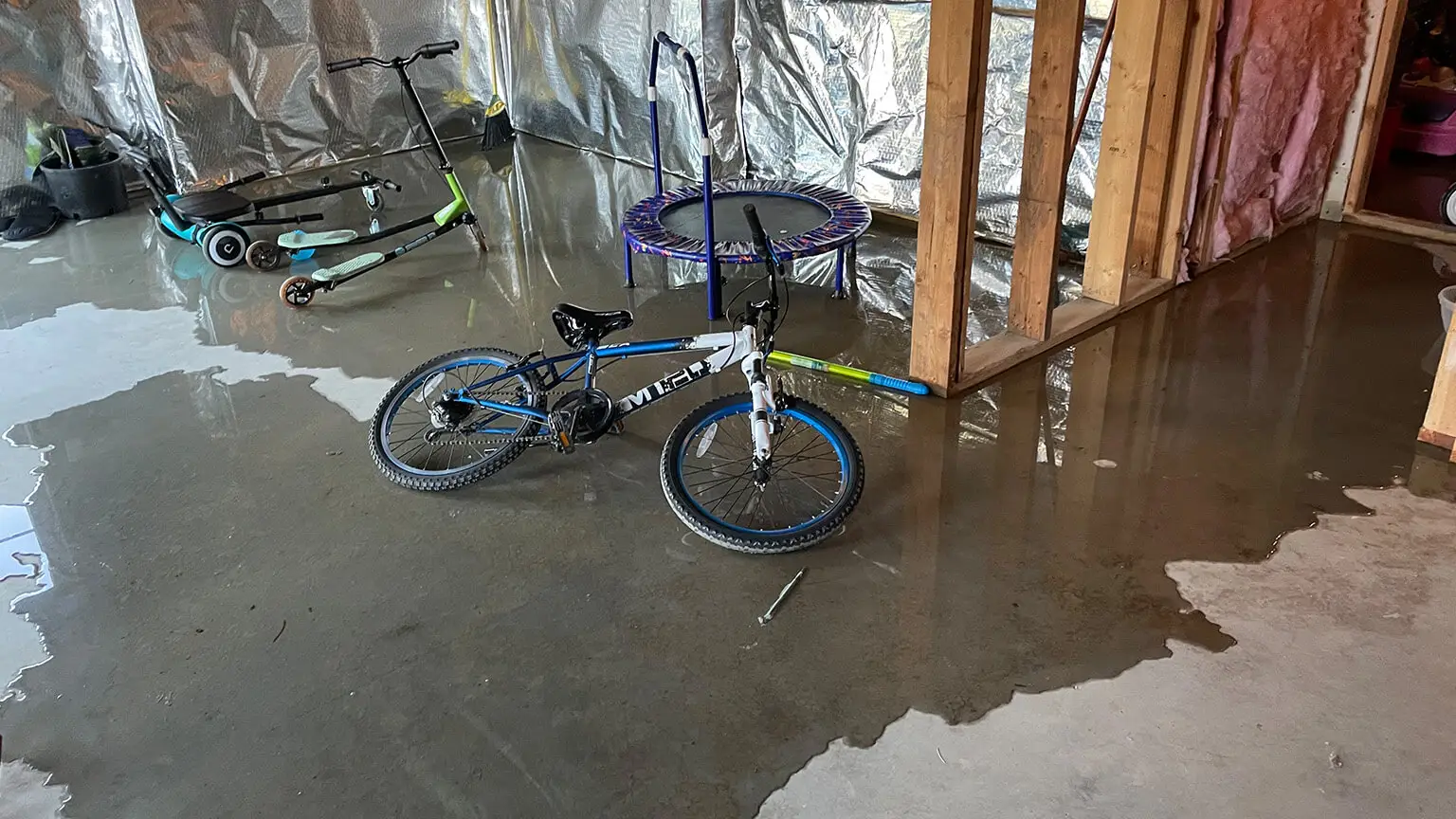
One safety point, plainly stated. Do not walk into standing water while power is still on at that level. Shut the circuit off at the panel first, and if the panel itself sits in the wet zone, call an electrician or your utility. The National Weather Service flood safety page covers the basics in a few minutes.
What should this cost?
Honest answer: the number tracks how much wall is involved and how easy that wall is to reach. Nobody prices it accurately from a phone call. Still, you deserve to know what we’re weighing.
What moves your number
- How much wall. One problem wall and a full perimeter are different projects. This drives the estimate more than anything else.
- How finished the space is. Open storage is quick. Framed walls and built-ins mean careful prep before the real work.
- Your sump situation. A sound basin keeps the total down. A pump that arrived with the house in 1984 does not.
- Yard conditions. Grade, gutters and a collapsed footing drain sometimes carry most of the blame — a lighter ticket, and we’ll gladly say so.
- Wall condition. Bowing or horizontal cracking gets handled before drainage, or you end up paying twice.
- Backup power. A battery backup adds to the total, and it runs during the outage that caused the flood.
Modest drainage corrections sit at the low end. A full perimeter with a fresh sump, backup power and careful work around a finished room sits at the top. Most flooded basement repair Lilburn projects land in between, and you get a written scope with the price on it before anybody picks up a hammer.
Included: labor, materials, replacing the concrete we cut, hauling debris, and a written warranty we read through with you. Not included: rebuilding finished walls we opened, replacing ruined flooring, and structural repair, which carries its own price. Better to hear that out loud now than find it in small print later.
On insurance we’d rather be useful than optimistic. Standard homeowners policies commonly exclude surface flooding, and sump failure coverage is usually a separate endorsement you add on purpose. Please check your own policy, since the details vary. FEMA’s building science resources are a decent neutral start.
How does this play out in a real house?
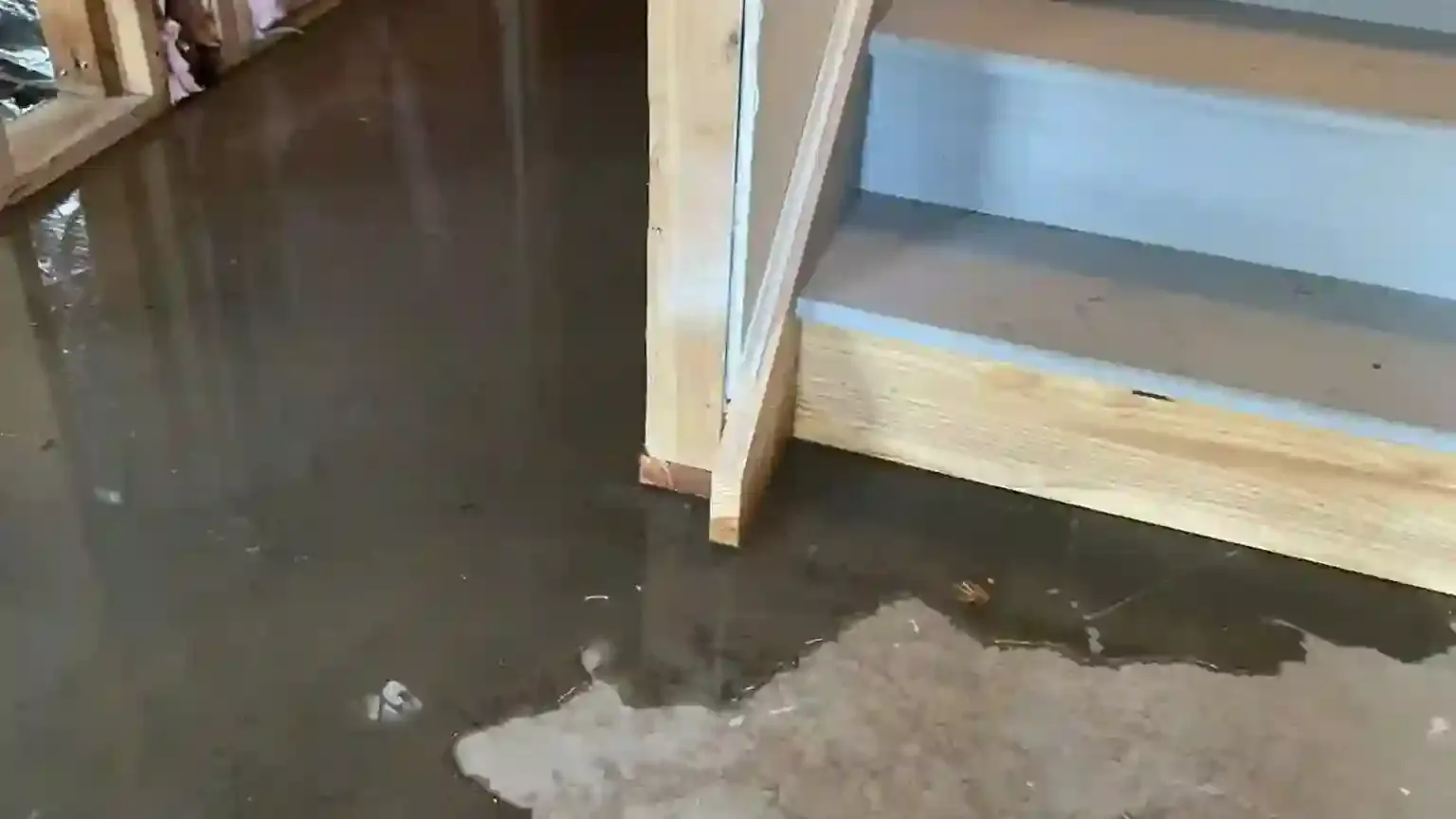
A family off Killian Hill called us in April, after one of those rain stretches that parks over Gwinnett. Their downstairs was finished — guest room, laundry, a second kitchen for grandparents living with them — and an inch of water covered most of the slab.
Two other companies had already been out. One pitched digging up the whole back of the house. The other recommended sealing the walls, which would have photographed beautifully and lasted until the next thunderstorm.
What we found was simpler. The 1970s footing drain uphill had silted shut years ago, and a maple root had snapped the discharge line, so the sump was pumping water into a puddle six feet from the wall. The yard leaned toward the house too, which we see constantly on the older streets near Arcado.
Three days sorted it: a perimeter channel on two walls, a right-sized sump with a check valve and battery, a new buried discharge run, plus regrading and longer downspouts outside. Nothing exotic.
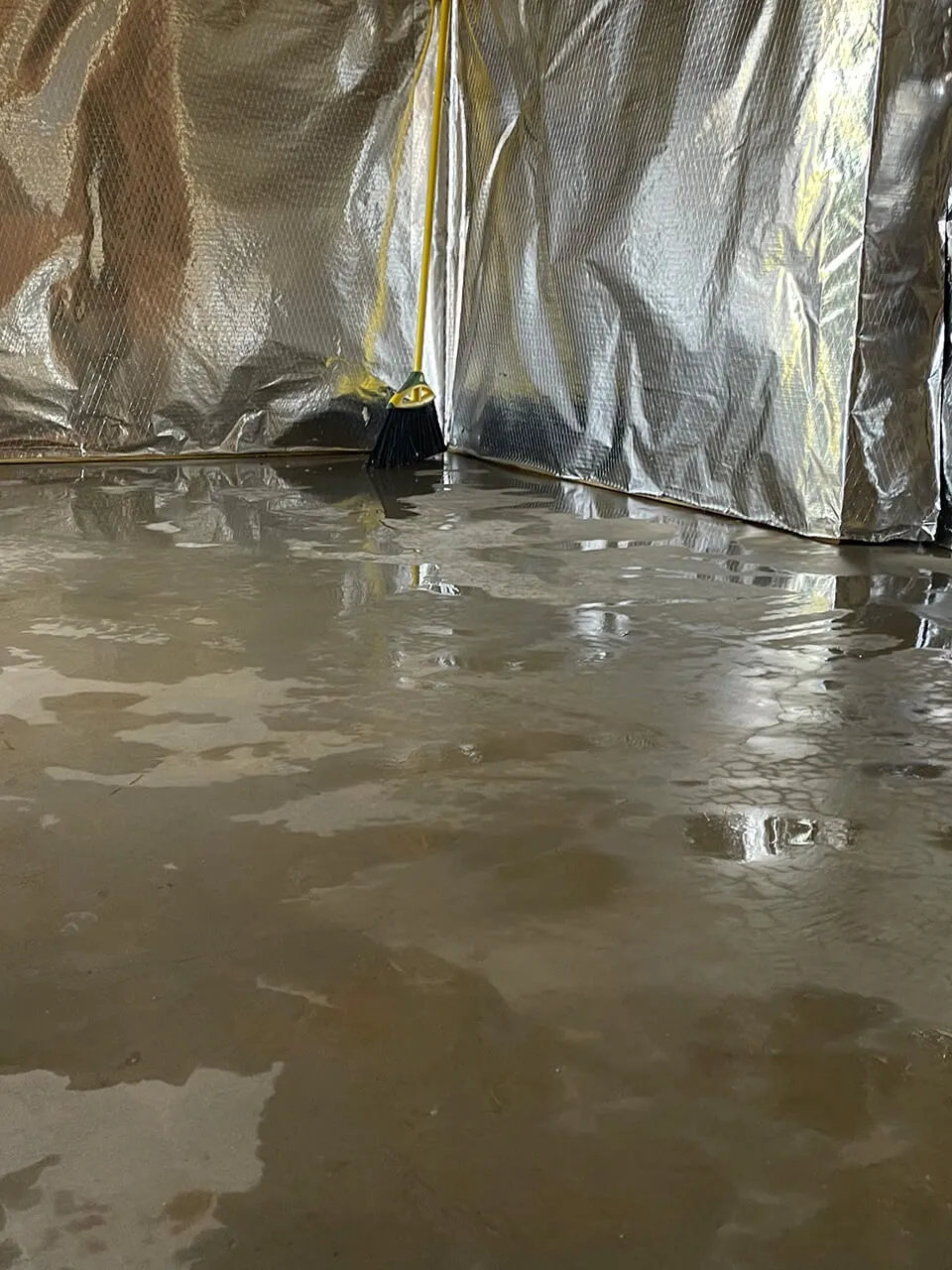
They checked in after a soggy July to say the second kitchen never got so much as a damp corner. That’s really the point of all this — a downstairs nobody worries about, and a weather app you get to ignore.
Why does hiring local matter here?
Mostly because a warranty is worth whatever the company behind it is worth. Our shop sits about fifteen minutes northeast in Lawrenceville, and we’ve been at this over twenty years with the same crews. If year seven brings a question, you’re calling the people who did the work.
Knowing the housing stock helps too. Lilburn homes mostly went up in the seventies and eighties, when waterproofing meant a coat of tar and hoping for the best. Fifty years is a long time to hope, so we’ve spent plenty of mornings in block basements around Sweetwater and on the streets near Lilburn City Park. Off Lawrenceville Highway (US-29), or backed up to the Camp Creek Greenway? Good chance we’ve worked your block already.
Not sure what you’re dealing with yet? Our rundown on standing water basement causes walks through the symptoms, and our basement waterproofing page lays out each system we install. Seeing cracks or bowing as well? Start with foundation repair, because that has to lead. Family a few exits down I-85 with the same trouble? We cover Norcross flooded basement repair as well.
Where we work around Lilburn
Lilburn is an easy run for our crews, and we cover ground well beyond it: Snellville, Norcross, Tucker, Stone Mountain, Duluth, Grayson, Loganville, Berkeley Lake and Lawrenceville, plus the wider Gwinnett County area. Near Five Forks or Rockbridge? There’s usually a truck close by.
Questions Lilburn homeowners ask us
For a small puddle, absolutely. For real flooding, an inch across 1,000 square feet is over 600 gallons, so a vac is outmatched. Materials and air hold moisture after the visible water is gone, which takes real extraction and a dehumidifier.
On damp organics like carpet pad, cardboard and paper-faced drywall, growth can begin in roughly 24 to 48 hours. That isn’t cause for alarm, just a reason to act today instead of next weekend. Pull the water and the soaked organics, then run a dehumidifier until things test dry.
Cut power to that level at the panel before stepping into standing water. Once it’s safe, photograph everything for your records, then start pulling water and wet materials out. After that, call us and we’ll walk the house with you.
Red clay sheds water slowly, so a long rain saturates the soil and holds it against your walls. When the ground can’t take any more, that pressure finds the cove joint and the hollow cores in block walls. Between storms it eases and the floor dries, so the problem seems to vanish.
That depends on your policy, so read yours or call your agent. Standard homeowners coverage commonly excludes surface flooding, and protection against sump pump failure is usually a separate endorsement. Either way we hand you itemized documentation, since that’s what adjusters ask for.
Let’s find out where water is getting into your Lilburn basement
Free inspection, free estimate, and a straight conversation at the end of it. We’ll show you the entry point and the smallest fix that solves it — often less work than homeowners expect.
(678) 914-5112Serving Lilburn and all of Metro Atlanta · $500 off projects over $3,500 · Live support 7am–8pm, 7 days a week