

Basement Flooding Cost Loganville Homeowners Can Actually Plan Around
Why one flood becomes two bills, what moves each, and how to spend once instead of every spring.
Most homeowners believe a flooded basement carries one price tag. Pump it out, dry it, write one check, move on. Honestly, that’s only half of it — and it’s the half that does nothing to stop it happening again next spring. So if you’re pricing out the basement flooding cost Loganville homeowners really face, you’re looking at two jobs that got shoved together on one bad weekend.
Good news? Separate them and budgeting gets much easier — plus you stop paying for the same afternoon twice.
What are the two jobs, exactly?
Job one is recovery: water out, wet material out, and the structure dried to a normal moisture reading. Job two is prevention — finding how the water arrived, then building something that sends it elsewhere.
They’re priced separately because they’re separate work. A dry-out wraps in a few days, while the permanent fix gets scheduled once we know the cause. Skip job two and you’ll meet job one again — a bit like mopping while the faucet runs.
Here’s a number that reframes job one. One inch of water across a 1,000-square-foot basement is more than 600 gallons, so the shop vac feels hopeless about four minutes in.
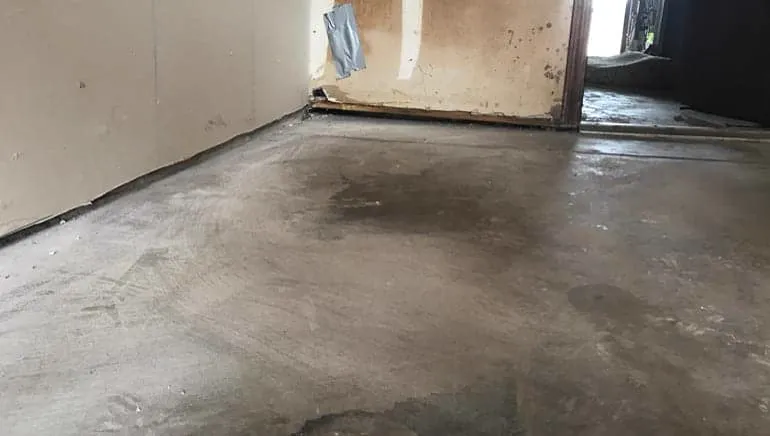
One note on timing: mold can begin on wet organic material in roughly 24 to 48 hours, and drywall, carpet pad and cardboard count. That’s not cause for alarm — it just means day one usually costs less than day five, since less has to come out.
Where does the water actually come in?
Usually not through a dramatic crack. In fact, the most common entry point is the cove joint — the seam where the wall meets the floor slab. Those two pours never truly bond, and the seam runs the whole perimeter.
After a long soak, red clay holds water against the foundation and pushes. That force is called hydrostatic pressure, and it drives water up through the cove joint even when the walls look perfect. So water appearing out of the floor is exactly what we’d expect.
The fix isn’t a stronger wall. Instead, interior drainage catches water below the slab and carries it to a sump before it reaches your floor. In other words, we give it an easier exit than your basement — and water takes the easy route.
The Loganville wrinkle
Plenty of homes out here sit on crawl spaces, and a wet crawl space doesn’t stay down there. Damp air rises straight into the house you live in, so a musty hallway is usually a moisture problem under the floor, not a cleaning problem.
What moves the number up or down?
Straight answer: nobody prices this over the phone. Still, the basement flooding cost Loganville homeowners pay tracks six things more than anything else.
The six things that set the price
- How much water came in. A damp corner and four inches across the slab need different equipment.
- How long it sat. A few hours is cleanup, while several days means more material leaves.
- How much wet organic material has to go. Carpet, pad, drywall and cardboard get removed rather than dried, since they hold water long after the air feels dry.
- Whether drainage is part of the permanent fix. One wall versus a full perimeter is the biggest factor on job two.
- Whether a sump is involved. Some homes have a serviceable basin, while older setups need a new pit, pump and discharge line.
- What’s happening outside. Sometimes regrading and moving two downspouts handles most of it — a much smaller invoice.
That’s the honest shape of basement flooding cost Loganville quotes: small exterior corrections at the low end, full perimeter drainage with a new sump and backup power at the top, and most jobs between. You get one written number, scope spelled out.
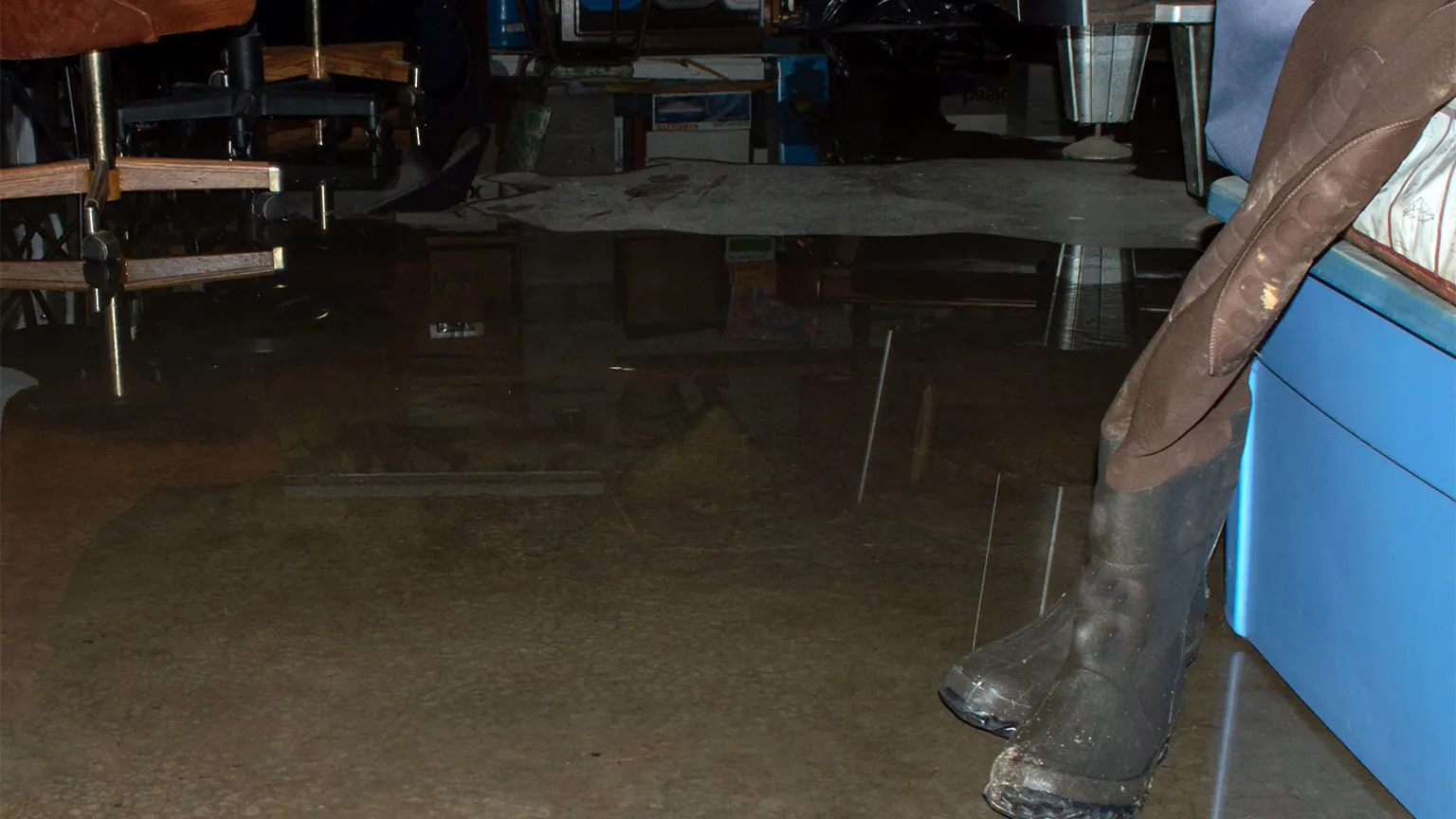
Geography matters too. Newer subdivisions along the Highway 81 corridor sit on graded lots with full basements, so pressure builds fast against fresh backfill. Meanwhile the bigger properties around Grand Rivers and Windsor Creek let water sheet across the yard first, which sometimes shrinks the job.
Want the question that separates a diagnosis from a guess?
Ask this: where is the water getting in, and how did you determine that?
A real answer sounds specific. It names the wall, the joint or the failed discharge line, and points at evidence — stain height, efflorescence, a moisture reading, which way water tracked. A guess sounds like a product menu.
If nobody can show you where the water came in, they’re picking a system and hoping it lands on the right wall.
Ask where the water goes after the pump, too. Discharging beside the foundation just puts it back in line for another try. For a neutral read, FEMA’s building science guidance on protecting property from flooding makes the same points.
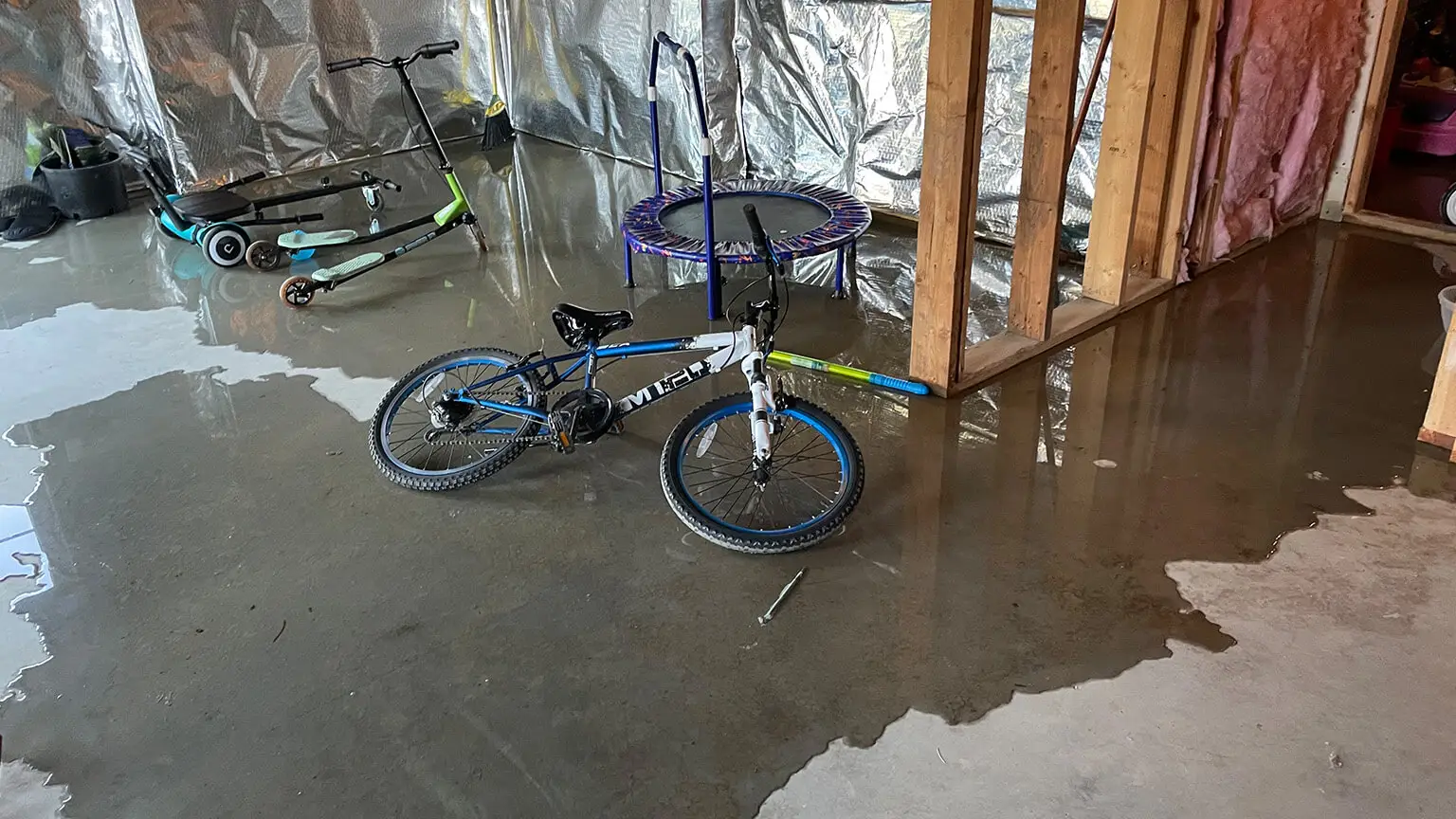
Why do sump pumps quit at the worst moment?
Because they fail in predictable ways, and every one is fixable. The most common is simple: power goes out during the storm, the exact hour you needed the pump. A battery backup solves that, so it’s the upgrade we recommend most.
After that, the list is short. Floats stick against the pit wall, and pumps get undersized for the water a house collects. A missing check valve lets the discharge drain back into the basin, so the pump cycles itself to death, while a clogged line leaves it running with nowhere to send anything.
What does the work look like, start to finish?
- Free inspection. We walk the outside first — grading, downspouts, where the lot drains — then the inside. Plenty of jobs get smaller here.
- Water out. Real extraction equipment, not the vacuum from the hardware aisle.
- Wet material out. Carpet pad, soaked drywall and ruined boxes cost more to dry than to replace.
- Structural drying. Air movers and dehumidifiers run until the readings say dry, not until the floor looks it.
- The written scope. Linear feet, materials, sump location, discharge point, price.
- Drainage installed. Perforated pipe in clean washed stone below slab level, tied to the sump, then fresh concrete.
- Live test. We run the system with you standing there.
On timing, a dry-out usually runs three to five days with equipment on site. Interior drainage takes one to three days, longer in a finished basement, and new concrete wants a few days before you load it.
Your prep list is short. Clear about four feet along the affected walls, move fragile things off nearby shelves, and make sure we can reach an exterior door — we’ll handle the heavy items. For help with the drying stage, our rundown of basement drying options covers what each method does well.
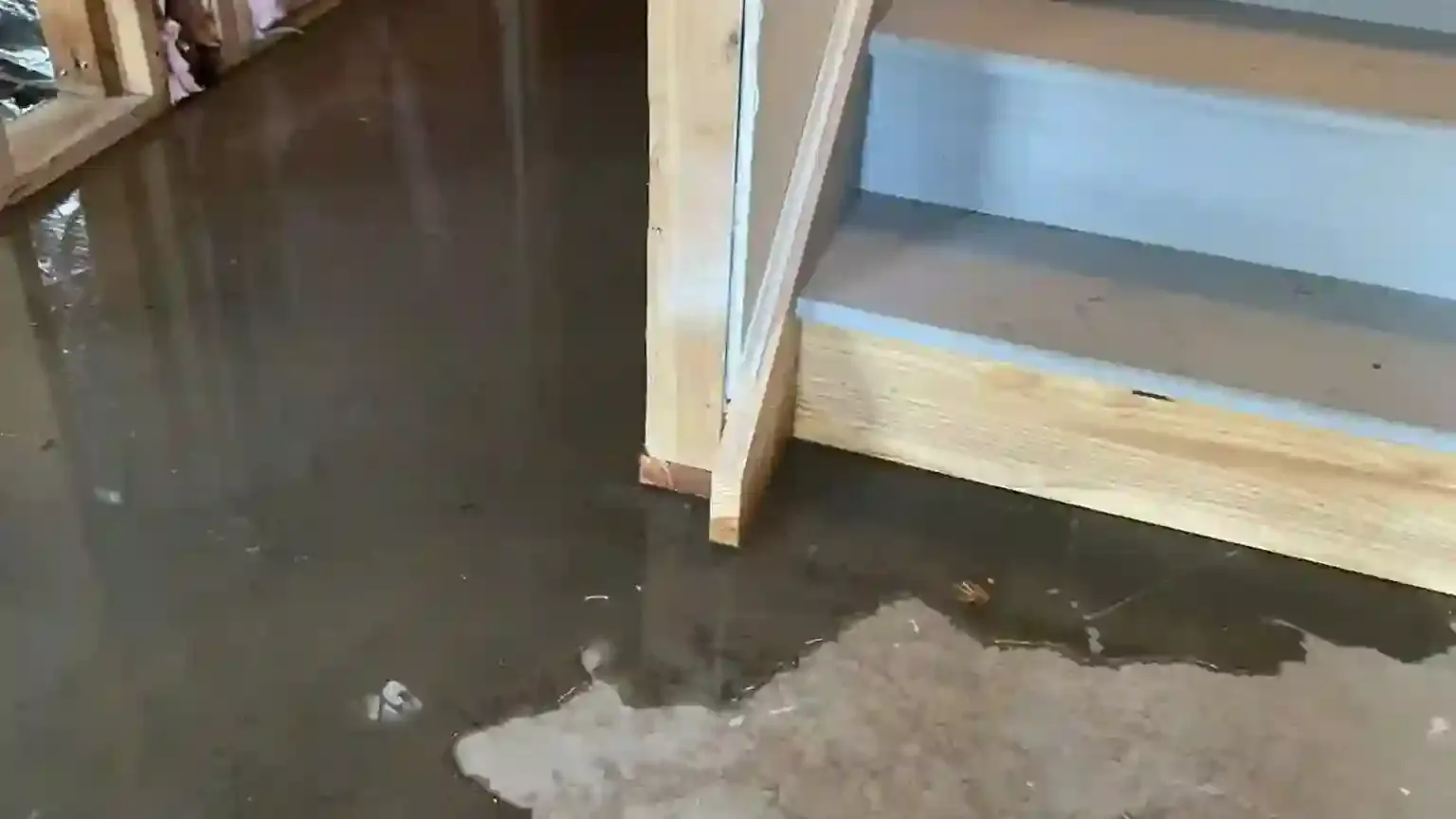
What can you handle yourself — and what about insurance?
Quite a bit. Extending downspouts six to ten feet out, cleaning gutters twice a year, regrading soil away from the foundation and testing the sump with a bucket are all real wins, and together they solve a fair share of minor water complaints.
What DIY can’t reach is anything below the slab. You can’t set drain tile without opening concrete, and no bucket of coating outperforms saturated clay. That’s not a skill gap — the water isn’t where the product goes.
Insurance deserves the same honesty. Standard homeowners policies commonly exclude surface flooding, and sump pump failure coverage is usually a separate endorsement you add on purpose. Read your own policy or call your agent before assuming. For cleanup guidance, the CDC’s mold information after a flood is the plain-English version.
What do week one, year one and year ten look like?
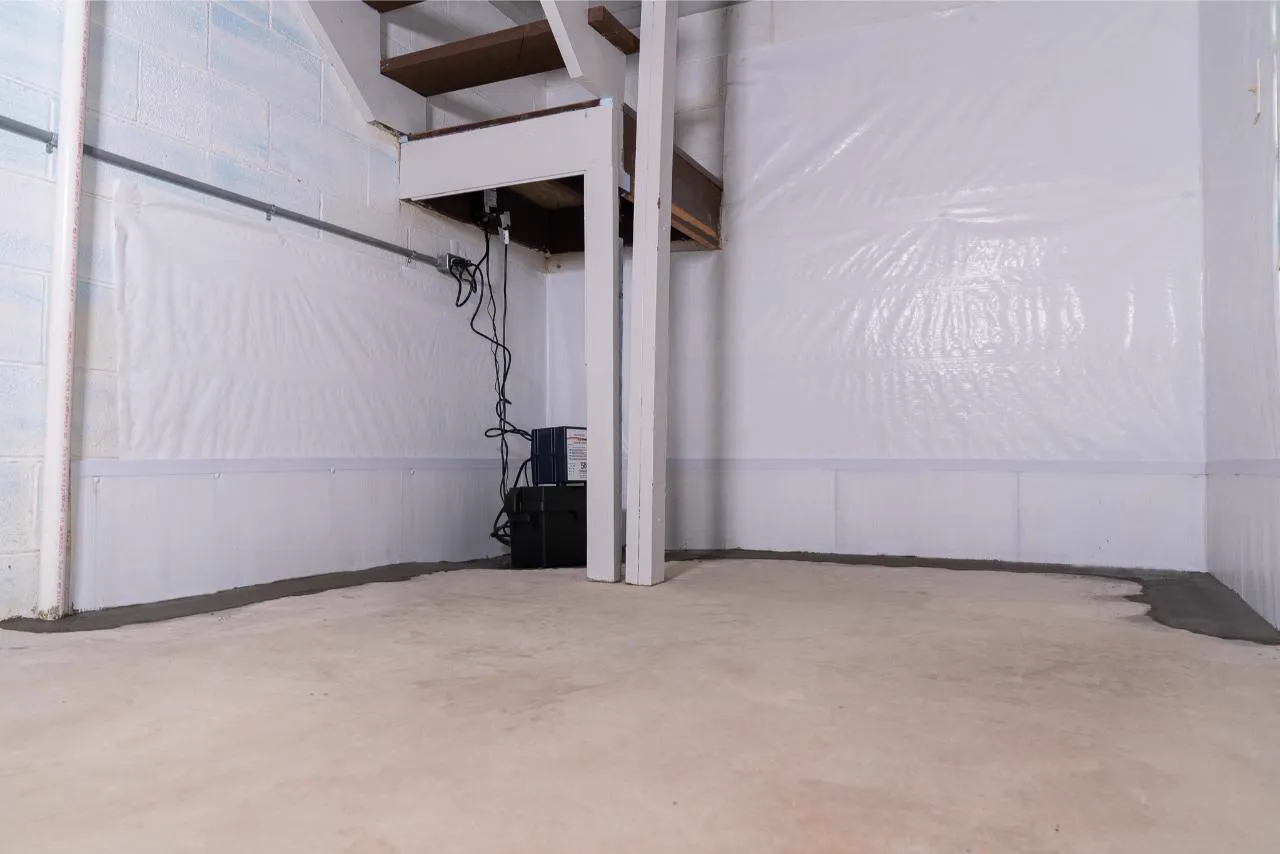
Week one: the basement smells like nothing at all. Air movers come out, the floor is solid, and the pump was tested in front of you. Most folks call that week quiet — a strange compliment, and the right one.
Year one: spring storms roll through and nothing happens. You check the radar out of curiosity instead of dread, while the dehumidifier you emptied every other day sits idle.
Year ten: stone and pipe under a slab have nothing to wear out, so the system still works. The pump is on its second unit by then, since pumps are the moving part. If it needs attention, you’re calling the same crew that installed it.
How do you know it was done right?
Ask for four things and you’ll sort careful work from fast work: moisture readings before and after the dry-out, photos of the stone and pipe before concrete goes back down, a warranty you can read without a translator, and a live test of the pump.
Comparing quotes across county lines? Our breakdown of Tucker basement flooding cost uses the same math on different terrain. Seeing stair-step cracks too? That’s a foundation repair conversation first, since waterproofing over a moving wall is money spent twice. Our full range of basement waterproofing systems is on the service page.
Where we work around Loganville
Our shop is twenty minutes northwest in Lawrenceville, so we’re through here often — the neighborhoods off Rosebud Road, the ballfield crowd at Bay Creek Park, and the older homes near Loganville City Hall. We also cover Snellville, Grayson, Monroe, Between, Bay Creek, Dacula and Lawrenceville, plus the wider Walton and Gwinnett Counties area. Either side of the county line, odds are a truck is nearby.
Questions we get from Loganville homeowners
Because the wall and the slab were poured separately, so the seam between them never fully bonds. That seam is the cove joint, and saturated clay pushes water up through it under pressure. Your walls can look perfect while water still arrives at the floor.
Water can’t be stopped, but it can be redirected for good. Interior drainage collects it below the slab and routes it to a sump before it reaches your floor, which is why these systems carry warranties. Add a battery backup and you’re covered during the storm that takes the power out.
It splits into two numbers: the dry-out and the permanent fix. The dry-out depends on how much water came in, how long it sat, and how much wet material has to go. The permanent fix depends on linear feet, whether a sump is needed, and how much of the answer is outside. You get one written number after we walk it.
Occasional water still brings another dry-out each time. Twice a year usually points at one trigger, like a downspout dumping at the wall or a discharge line running back toward the house. Sometimes that’s an afternoon of outside work rather than a system, and we’ll say so.
For a small spill, sure. For a real flood, one inch across a 1,000-square-foot basement is more than 600 gallons, and a household fan won’t pull moisture out of framing or block. Since mold can start within roughly 24 to 48 hours, drying equipment is about speed as much as power.
Let’s find out what your basement actually needs
The inspection is free, the estimate is free, and nobody pressures you at the end. We’ll show you where the water got in and what each half of the job costs in Loganville — even when the honest answer is smaller than expected.
(678) 914-5112Serving Loganville and all of Metro Atlanta · $500 off projects over $3,500 · Live support 7am–8pm, 7 days a week