

Basement Drying Options Lilburn Homeowners Choose Between — and How to Pick
Shop vac and fans, or a professional dry-out? Here’s how each works, what moves the price, and when the smaller one is honestly enough.
How long has it been wet down there? Honest answer: longer than almost anyone guesses. Water shows up first as a cool spot in the carpet or a smell nobody can place, and that can run for weeks before it ever puddles. So the basement drying options Lilburn homeowners compare are usually being compared late, with the clock already running.
That’s not a scolding — a basement is just the one room nobody visits on a Tuesday. But it changes the math, because the right choice depends more on when the water arrived than on how deep it got.
Good news, though: there are only two real paths, and both are legitimate. Dry it yourself with a shop vac, fans and a rental dehumidifier, or bring in professional structural drying.
Why does the clock matter more than the equipment?
Here’s the thing most people never get told. Mold can begin growing on wet building materials within roughly 24 to 48 hours. That’s why drying speed beats horsepower — a modest setup running on hour three beats a monster rig running on day five. So our first question isn’t “how much water?” It’s “when did it start?”
Lilburn adds a wrinkle. Most homes around Old Town Lilburn and the streets off Indian Trail went up in the seventies and eighties, back when waterproofing meant a coat of tar and hoping for the best. Fifty years is a long time to hope. Plus those original footing drains are often crushed or silted solid, so water arrives slowly instead of all at once — the sneaky kind.
Before you go down there
Never step into standing water while the power is on. Kill the circuit at the panel first, and if the panel sits in the wet area, stay upstairs and call an electrician. The National Weather Service flood safety guide covers the rest of the basics.
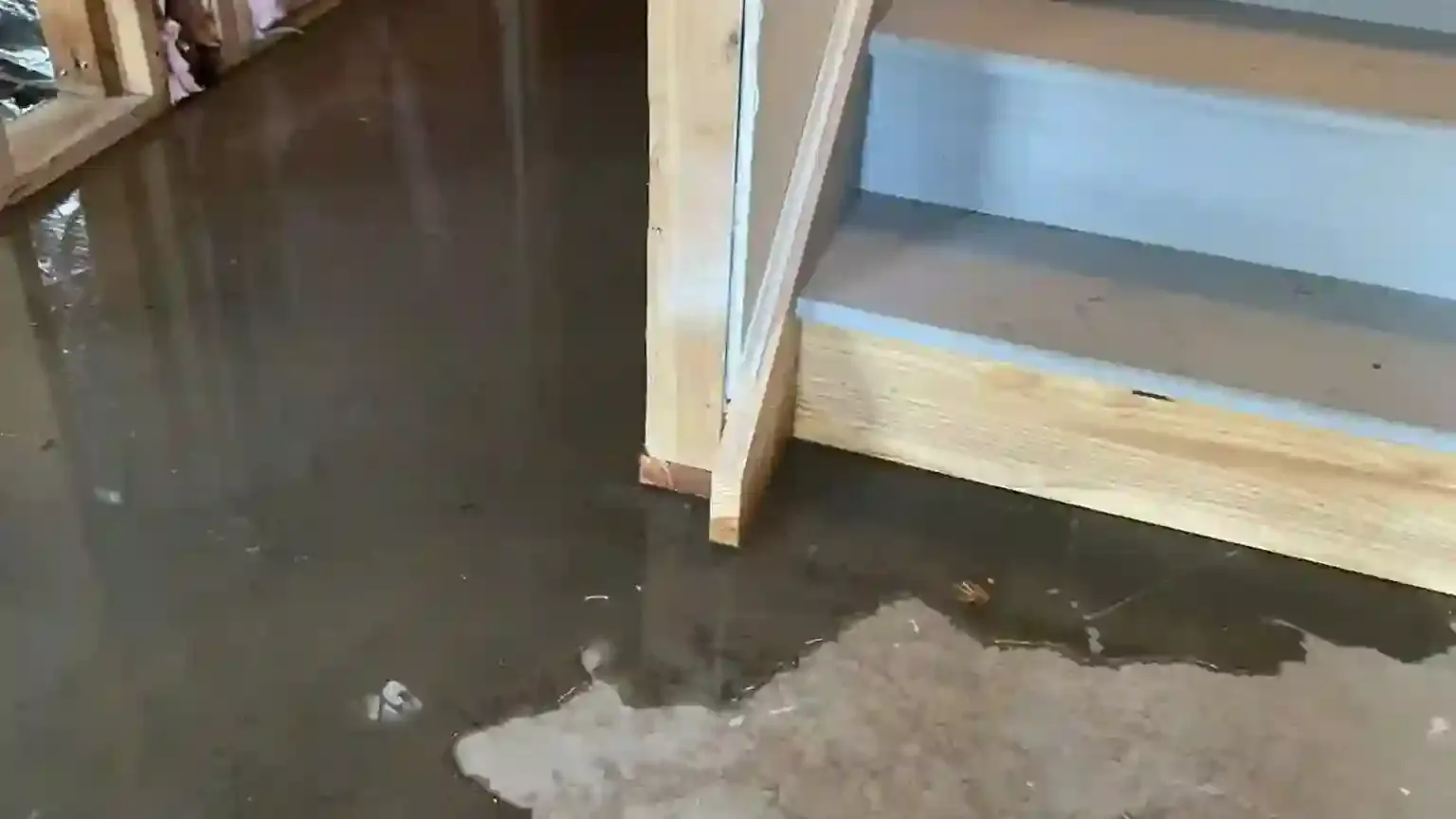
Option A: what does drying it yourself look like?
Picture a Saturday. You pull the standing water out with a wet-dry shop vac, working in passes until it stops filling. Then you get air moving — box fans low along the walls, not aimed at the middle of the room, because the edges are where water hides. After that a rental dehumidifier runs for days with the windows shut, since open windows in a Georgia summer just import more moisture.
When it wins: clean rainwater, small area, caught fast, bare slab, nothing soft in the way. Plenty of Lilburn basements are exactly that.
What it costs: a rental fee, your weekend, and a bump on the power bill. It’s the cheapest path by a wide margin.
The trade-off: you’re drying what you can reach. A rental unit pulls a fraction of what a commercial one does, and box fans move air across a surface rather than through a wall. So the floor can feel bone dry while the drywall is still soaked.
Option B: what is professional structural drying?
Same goal, different tools, one big difference: measurement. It starts with extraction — pumps that move water out fast, including what’s under the carpet and down in the seams. Then air movers go in at set angles and spacing, so air scrubs across every wet surface instead of swirling in circles.
Next, commercial dehumidifiers hold the whole room at a target humidity for days. And the part that matters most: documented moisture readings. Meters go into the drywall, framing and slab on day one, then the numbers get logged daily until the materials hit dry standard. Without that log you’re guessing, and “it feels dry” has fooled better people than us.
When it wins: a lot of water, water that sat, finished walls with soft material behind them, or anything from a sewer line.
What it costs: more, and the number rides on square footage, how long the equipment stays, and how much wet material comes out. A small unfinished area for two days sits at the low end. A finished basement needing demolition and rebuild sits much higher.
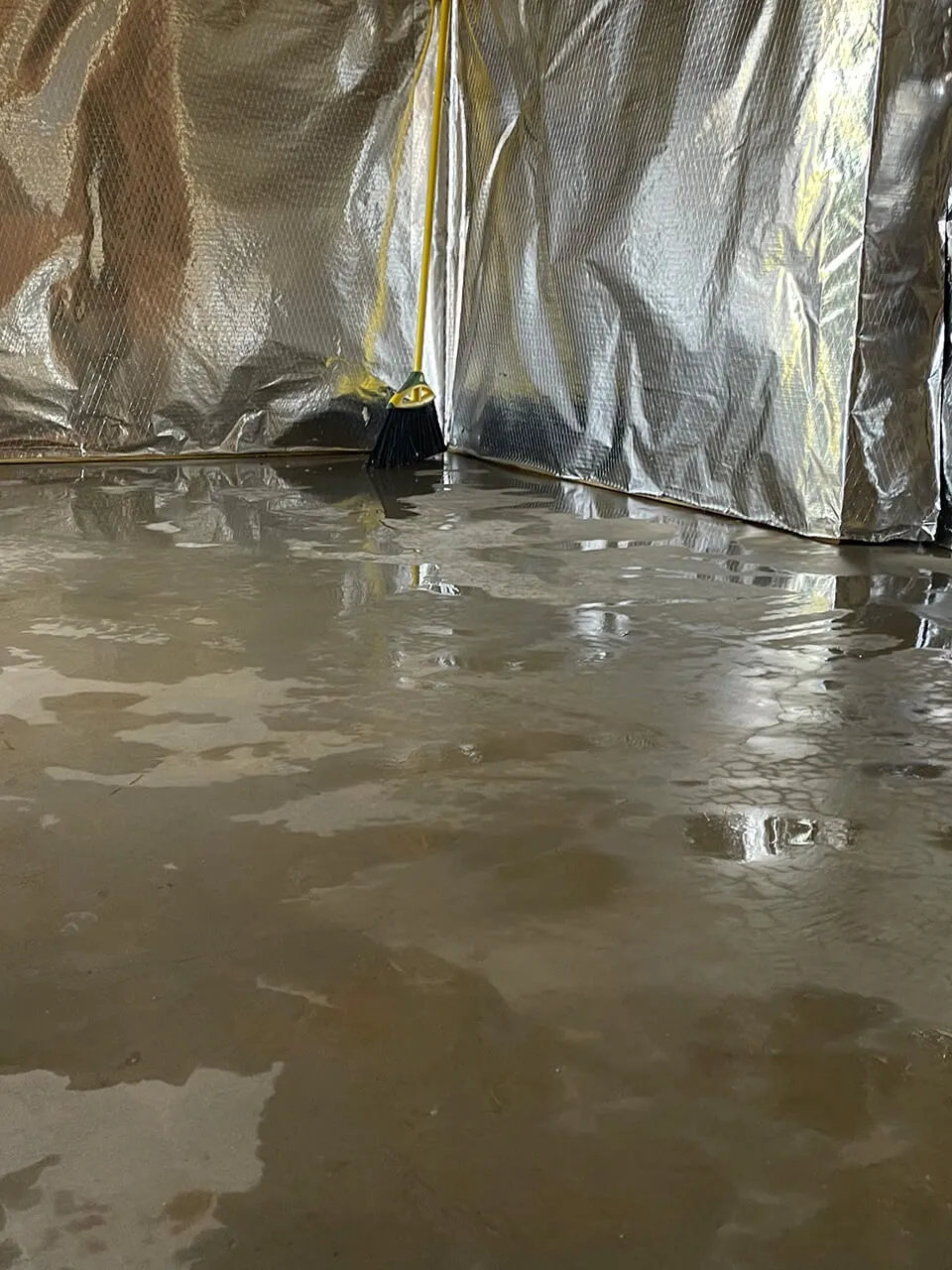
How do they compare, straight across?
Do it yourself
- Lowest cost — a rental plus your time
- You can start within the hour, which counts
- Great on clean rainwater and small spills
- Fine on bare slab with nothing soft down there
- No readings, so “dry” is a judgment call
- Can’t reach wall cavities or under a pad
Professional structural drying
- Extraction pulls water out in hours, not days
- Air movers placed on purpose, not by guess
- Commercial dehumidifiers hold the whole room
- Daily moisture readings you get to keep
- Handles sewer water and contaminated cleanup
- Higher cost, plus scheduling around a crew
Notice neither column says “better.” Both are legitimate basement drying options Lilburn homeowners use every spring — one is cheap and available right now, the other is fast and provable.
What is the water actually trying to do?
Flip the whole thing around. Water isn’t attacking your basement; it’s following the easiest path down, then looking for somewhere to sit. Given the choice, it picks the spot with the least air movement — under the carpet pad, behind the baseboard, inside the wall cavity. In other words, it hides exactly where a box fan can’t go.
It also travels sideways. Drywall wicks water upward like a paper towel in a glass, and fiberglass insulation holds it like a sponge while showing nothing on the surface. So the wall looks fine and stays wet.
Twenty years in, here’s the mistake we see most: the surface gets dried and the cavity never does. Dry the material, not the air above it.
Why does wet organic material have to come out?
Because some things don’t dry in place. Carpet pad is the big one — it holds water under a carpet that feels perfectly dry. The bottom edge of drywall is second, and batt insulation in a finished wall is third.
Good news, though: removal is tidier than it sounds. Usually it’s a clean cut a foot or two up the wall, the wet section out, the framing dried and logged, then new board and trim. We’ve done that in Cedar Creek basements plenty of times.
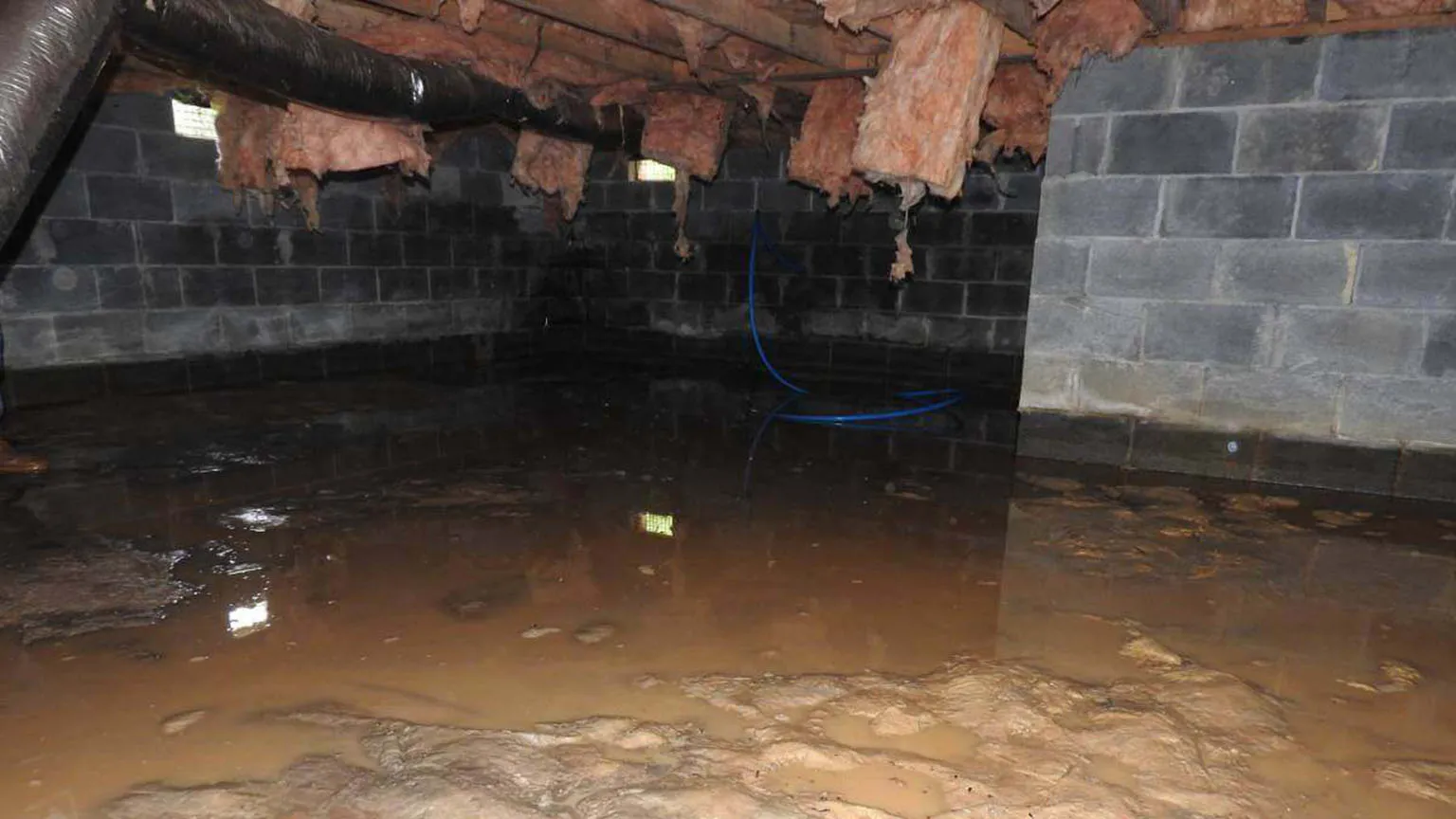
So what actually decides it?
Four questions, and you can answer every one yourself in about five minutes.
The deciding factors
- How much water? An inch across a small area is a shop-vac afternoon. Past the ankle has gone places you can’t reach.
- How long did it sit? Under a day and you’re in good shape. Past two days, wet material starts changing.
- Anything soft behind a finished wall? Carpet pad, insulation, the base of the drywall. If yes, something has to come out.
- Where did it come from? Clean rainwater is a drying problem. A sewer backup is a cleaning problem first, and that one isn’t DIY at any size.
Answer those four and the choice usually makes itself. In fact, most homeowners know by question three.
What would we actually tell you to do?
You asked for a recommendation, so here it is. Of the basement drying options Lilburn homes need, the smaller one wins more often than you’d think: clean rainwater, under a day old, unfinished area, nothing soft on the floor — dry it yourself.
We’d call for professional drying when any one of these is true: the water sat past about two days, it covered finished space, it reached wall cavities, or it came from a sewer line. One is enough.
Here’s the part people don’t expect a waterproofing company to write down, though. Sometimes you need neither. We’ve walked homes near Lions Club Park where the whole event was one downspout dumping three feet from the block wall — an afternoon with an extension and a shovel.
Drying is only half the conversation, either way. It handles the water already inside, while stopping the source is a separate job. Homes on higher ground in Hickory Hills often just need better surface drainage, and lots sloping toward the Yellow River usually need a real interior system.
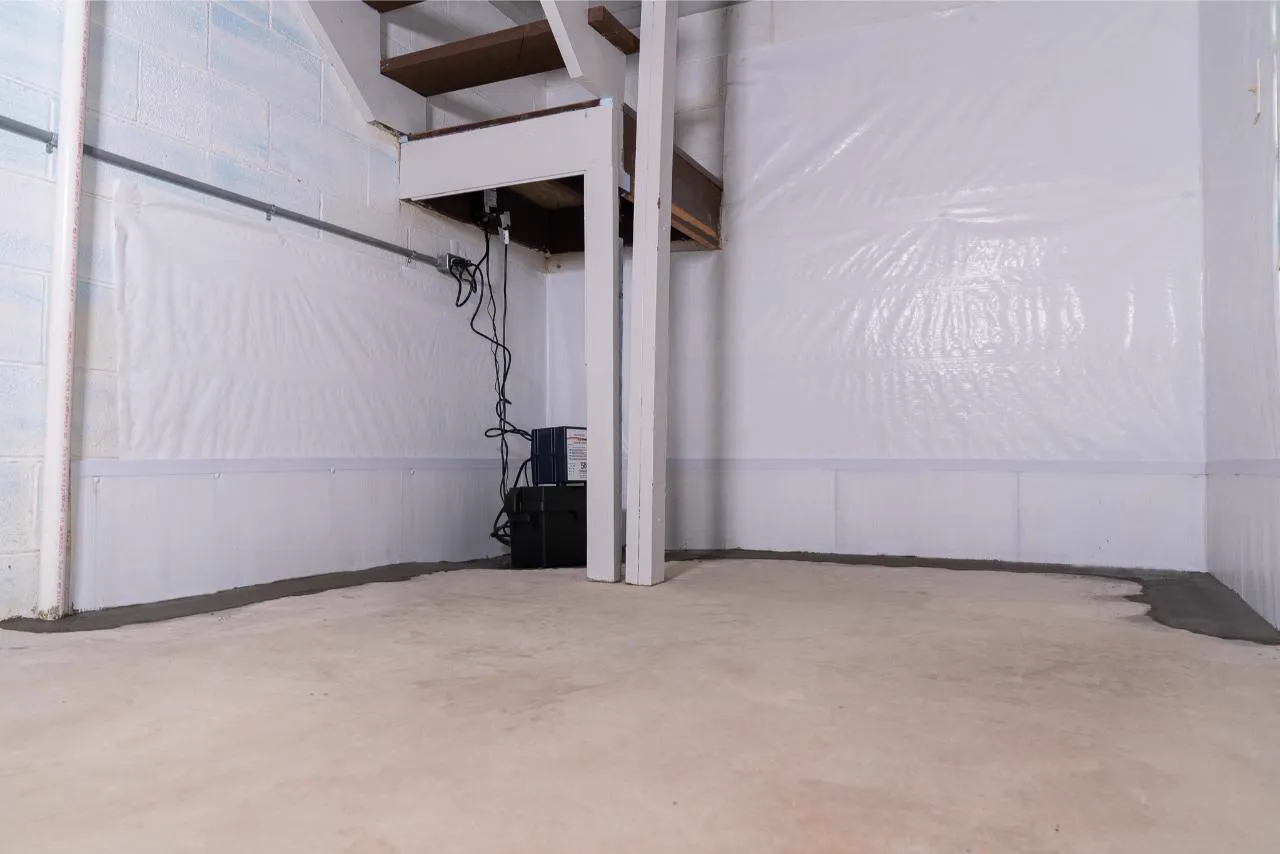
What should you do every year once it’s dry?
Now the list nobody hands you at the end of a job. Ten minutes twice a year keeps a dry basement dry, and it puts you in charge instead of the weather.
- Test the sump pump in February. Pour a bucket into the basin and watch it kick on, while nothing’s riding on it.
- Walk the discharge line. An outlet buried under leaves turns a good pump into a paperweight.
- Clean the gutters twice. Under Lilburn’s hardwood canopy, October fills a gutter fast, and overflow lands against the foundation.
- Check downspout extensions. Each should carry water six feet out. Mowers knock them loose constantly.
- Look at the grade. Soil should fall away from the house, and clay settles, so top up low spots with dirt.
- Feel the base of the walls in March. Cool and dry is the goal. Cool and damp means call while it’s small.
Better yet, do it the same weekend you change smoke-alarm batteries. FEMA’s building science resources explain the reasoning behind each step.
Why does hiring local matter for this?
Because drying is a timing business. We’re fifteen minutes up the road in Lawrenceville, so we can be in your basement the same day instead of the same week — same crews, same trucks, same folks in year six.
Want to read further? Our guide to the best basement drainage setups covers what stops water in the first place, and our page on basement waterproofing walks through the systems we install. Neighbors one town over can read Norcross basement drying options. Seeing stair-step cracks in the block too? Start with foundation repair — that one comes first.
Where we work around Lilburn
We’re based in Lawrenceville, about fifteen minutes northeast, so we’re in Lilburn constantly. We also cover Snellville, Norcross, Tucker, Stone Mountain, Duluth, Grayson, Loganville and Berkeley Lake, plus the wider Gwinnett County area.
Questions Lilburn homeowners ask us
When the soil gets saturated, the water table can rise above your slab and push upward. The seam where the wall meets the floor is the weakest point, so water uses it first. That is why it shows up as a wet edge around the room instead of one obvious leak.
Yes, when the source gets solved instead of the symptom. That means moving surface water away from the house and giving groundwater a managed path out through a working drain and a sump. Drying alone will not do it.
It depends on how much wall is involved, whether a sump is needed, and how much finished space has to come out first. Simple drainage corrections sit at the low end, and a full perimeter system under a finished basement sits at the high end. You get a written scope, never a phone guess.
Twice a year is still a pattern, and patterns tend to widen as older drains silt up. The good news is that occasional seepage is usually the least expensive version to fix, since it has not spread into finished materials yet.
Sometimes, and we will say so plainly. For clean rainwater caught within a day, on a bare slab with nothing soft on the floor, a shop vac, fans and a rental dehumidifier will do the job. Once water sits past about two days, reaches finished walls, or comes from a sewer line, you need extraction, commercial dehumidification and moisture readings.
Let’s figure out what your Lilburn basement actually needs
The inspection is free, the estimate is free, and nobody leans on you at the end. We’ll show you where the water gets in, say honestly whether this is a weekend job or a crew job, and hand you the plan either way.
(678) 914-5112Serving Lilburn and all of Metro Atlanta · $500 off projects over $3,500 · Live support 7am–8pm, 7 days a week