

Flooded Basement Repair Decatur Homeowners Can Actually Use
The work, the price drivers, and the honest version of what you’re buying.
Here’s the part almost nobody hears first: a basement that floods only in heavy rain usually has a surface water problem, not a groundwater problem. That matters to your wallet, because surface water is generally the cheaper fix. So before you brace for the worst, know that flooded basement repair Decatur homeowners actually need is often smaller than the internet led them to believe.
Good news up front: this is fixable, and it’s work we’ve done every week for more than twenty years. Below is the straight version — the job, the price drivers, what’s included, and how the warranty works.
Why does the rain timing matter so much?
Because it tells us where to look. Water that shows up within an hour of a downpour is almost always coming off the roof, the yard, or a window well — stuff on the surface. Groundwater, on the other hand, moves slower and shows up a day or two later, after the soil has soaked through.
That one clue can be the difference between regrading a corner of the yard and building a full drainage system. So when we ask “how long after the rain starts?”, we’re not making small talk. We’re trying to spend less of your money.
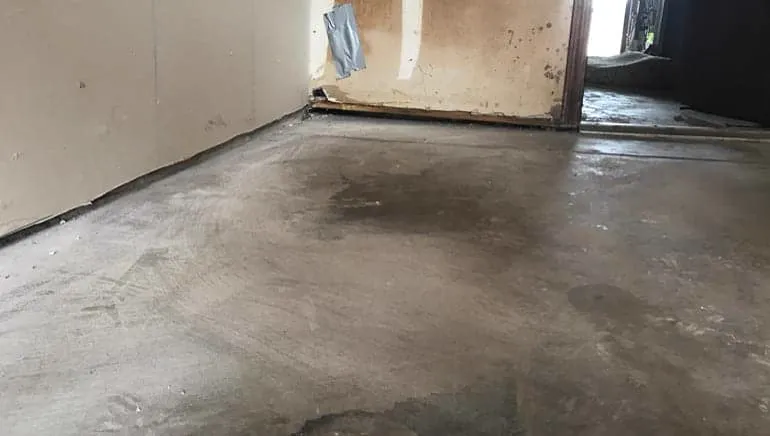
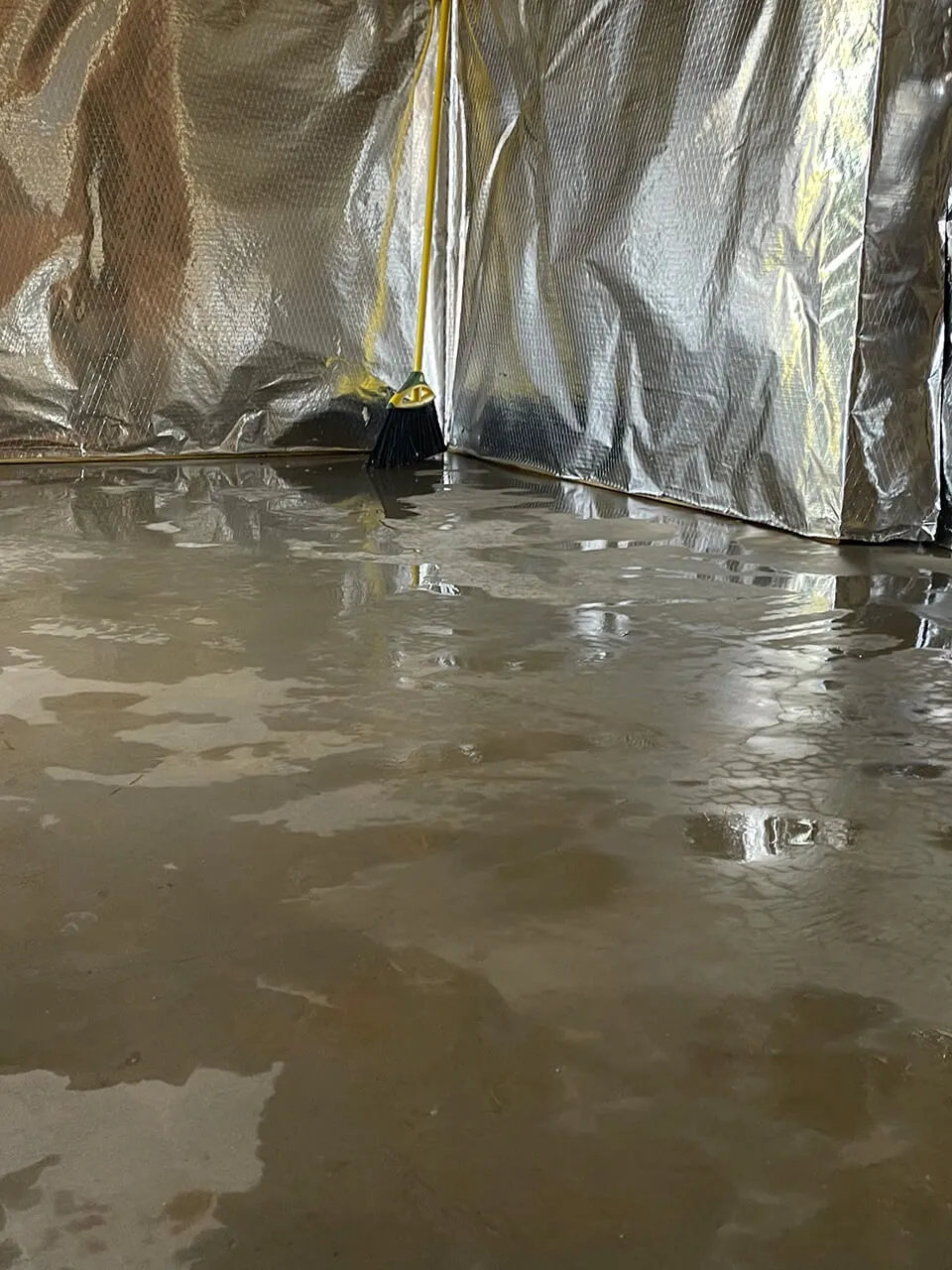
One more thing worth separating: flooding and seepage are not the same problem. Seepage is a damp patch or a slow weep. Flooding is bulk water — real volume, moving fast — and that points at pressure under the slab, a sump that quit, a blocked drain line, or a window well with no working drain of its own.
Please do this first
If there’s standing water down there, don’t step in it while the power is on. Kill the circuit at the panel first, then go look. It takes thirty seconds and it settles the question.
So what does the repair actually involve?
In plain words: we stop the water from getting in, then we give the water that still shows up an easy path out. Two halves, and most homes need some of each.
A real job runs like this. First we walk the outside — grading, downspouts, window wells, where roof water lands. Then we read the stains inside, and you get a written scope before anyone touches a tool.
- Get the standing water out. Pump it, then pull up soaked carpet, pad and anything else organic. Wet cardboard is not storage anymore.
- Dry it properly. Air movers plus a real dehumidifier, not a box fan and hope. Mold can start in roughly 24 to 48 hours, so speed here is the whole ballgame.
- Fix the outside causes. Extend downspouts, correct grade, add a window well drain. Cheap moves that carry a lot of weight.
- Open a channel where it’s needed. A narrow strip of slab comes up along the affected walls. Dusty, loud, usually a day or two.
- Set drainage below the slab. Perforated pipe in clean stone, placed below floor level, so water is caught before it reaches your floor instead of after.
- Route it to a sump and close up. New concrete, wall liner where it makes sense, and the mess hauled off. A pile of broken slab by the driveway isn’t a finish.
Notice nobody painted anything. Waterproof coatings have their place, but paint can’t beat pressure. It’s a raincoat on a submarine.
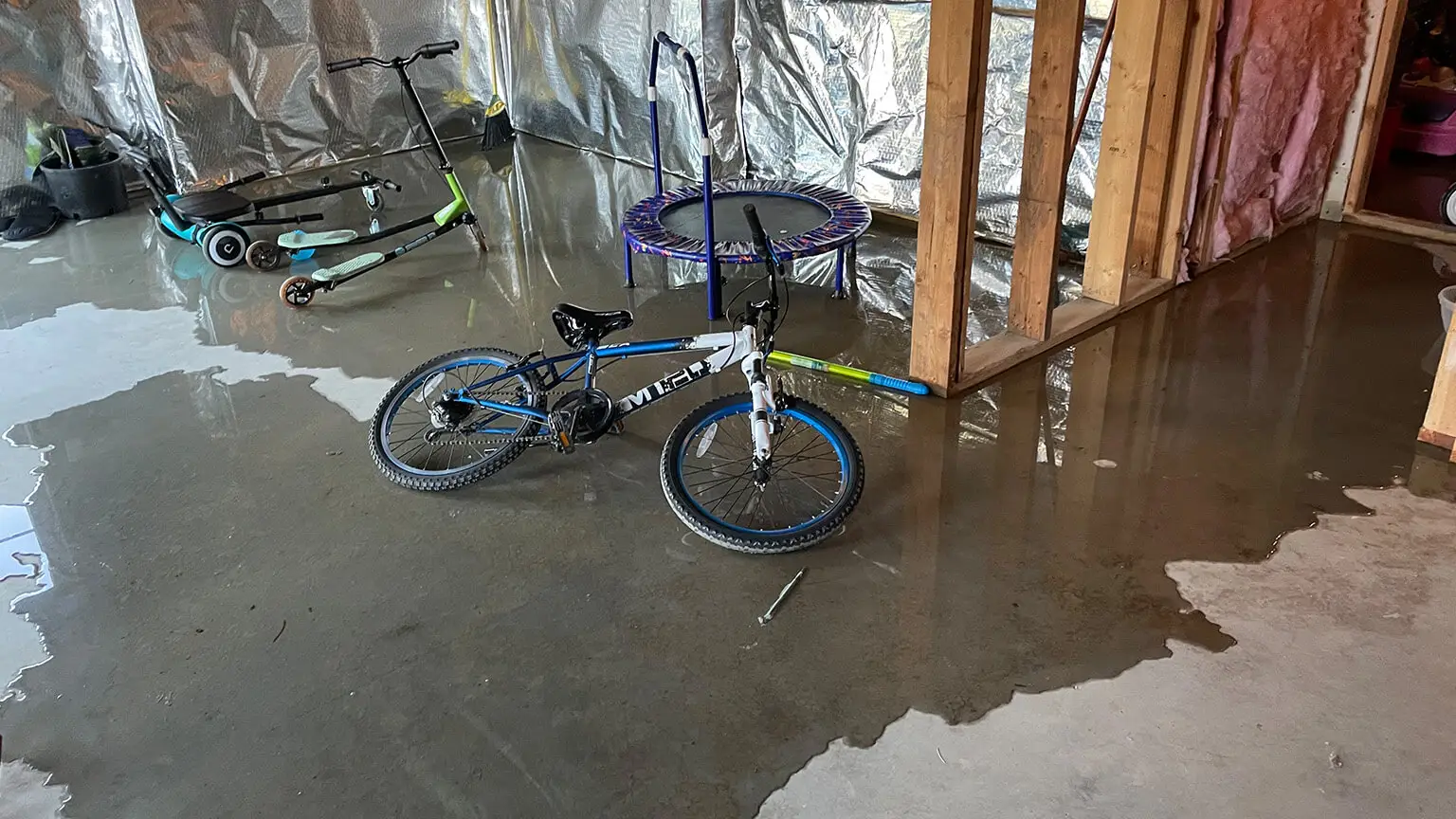
While things are drying, it’s worth reading the CDC’s guidance on mold cleanup after flooding. It’s short, calm and practical, and it lines up with how we handle materials on site.
What does this look like from the water’s side?
Flip it around and stop thinking like a homeowner. Think like the water. Water isn’t out to get your house — it’s just heavy, lazy, and always looking for the easiest way down.
In Decatur, that trip usually starts on the surface. Rain runs off a century-old roof, hits soil that’s been re-landscaped a hundred times, and slides toward the low spot. The original grading is buried under decades of mulch, beds and raised borders — so the yard now quietly tilts back toward the house.
Then the water hits our famous red clay, which does not drain, it holds. After a long soaking rain, that saturated clay presses against the wall, and the pressure has to go somewhere. Hollow block cores fill up. Stone and brick foundations weep through tired mortar joints.
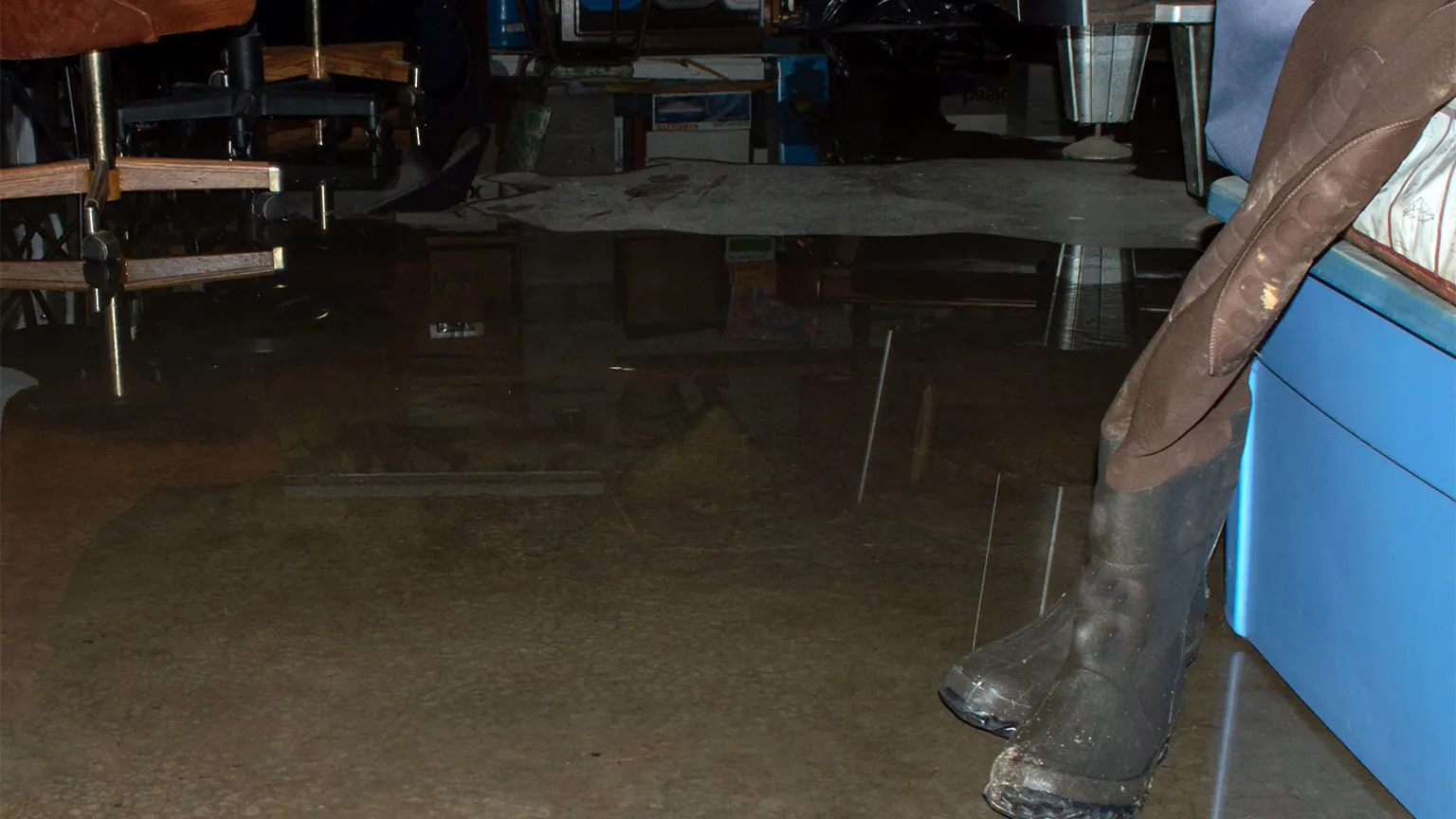
Finally the water finds the cove joint — the seam where the wall meets the floor slab. That’s the most common entry point under pressure, and here’s why: it isn’t a crack, it’s a seam. It was never sealed to begin with. So patching compound won’t help, but a drainage path below the slab will, permanently.
Twenty years in, the thing that changed how we work is simple: we stopped trying to block water and started routing it.
Sump pumps fail in predictable ways too, which is oddly comforting. Power goes out mid-storm. A float sticks. The pump was undersized from day one, or there’s no check valve, so the same water drains back and gets pumped twice. Or the discharge line is clogged out in the yard where nobody looks. Every one of those has a fix.
What does flooded basement repair cost around here?
Honest answer: it depends on how much wall is involved and how hard it is to reach. Anyone quoting a flat number sight unseen is guessing, and you’d be paying for that guess. Still, here’s exactly what we weigh.
What moves the number up or down
- How much of it is outside. Grading, downspouts and window wells sit at the low end of the range, and we’ll happily tell you when that’s all you need.
- Linear feet of wall. One wall versus a full perimeter is the single biggest factor.
- Foundation type. A stone or hand-laid block wall in an old bungalow takes more care than poured concrete. Old masonry is a big part of the flooded basement repair Decatur homes need, so careful costs a little more.
- Access. Partial basements, low headroom and finished rooms all add labor before the real work starts.
- The sump. New basin, new pump, check valve, battery backup — backup power runs during the exact storm that knocks the power out.
- Damage already done. Drying and removal is its own line, priced separately so you can see it.
What’s included in our number: labor, materials, the concrete we replace, haul-off and the warranty. What isn’t: rebuilding finished walls we opened, replacing ruined flooring, and structural repair, which is quoted on its own. Better you hear that now than find it in fine print later.
The warranty is written, transferable to the next owner, and we explain it in a sentence before you sign. If a system we installed lets water through, we come back. That’s the whole promise, and our shop is thirty-five minutes up the road in Lawrenceville — so in year seven you’re calling the same people.
How did this go for a house in Winnona Park?
A homeowner in Winnona Park called us last spring after a two-day soaker. Classic Decatur bungalow, partial basement, dirt-floor section in the back, and about an inch of water across the finished half. They’d already had one company out that wanted to excavate the entire foundation.
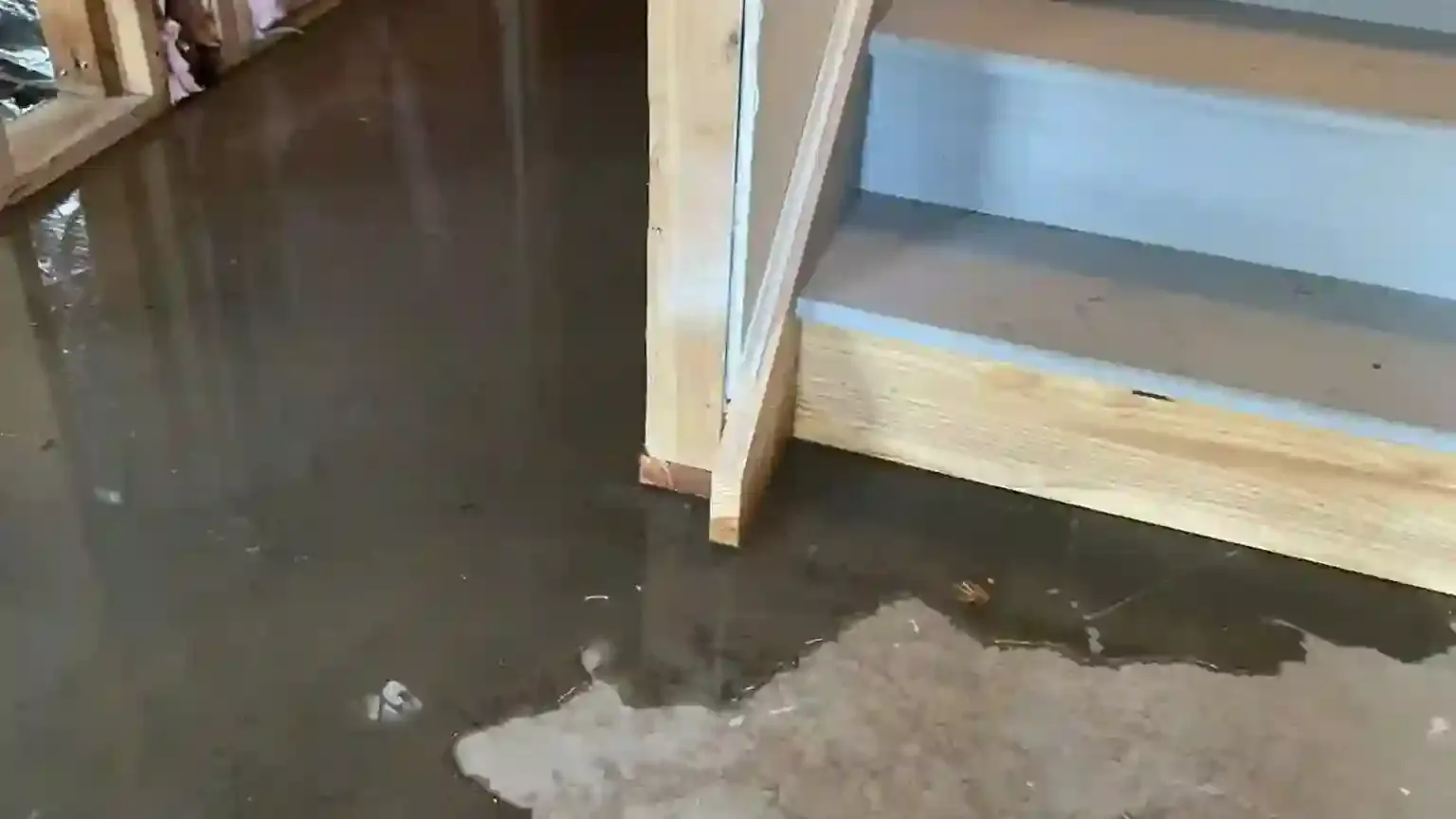
What we found was less dramatic. Two downspouts dumped straight against the wall, a hundred years of added soil had tipped the grade back toward the house, and the old sump had a stuck float. The fix: buried downspout lines, a regrade along one side, a new pump with a check valve and battery backup, and a perimeter channel on the two walls that actually needed it. Three days, which is a fairly typical flooded basement repair Decatur project start to finish.
A Decatur bungalow was built before basement waterproofing existed as a trade. These houses have stood a hundred years, and the fix has to respect that instead of fighting it — which is why we didn’t dig up the whole yard. They texted in July after a storm rolled through: dry, first time in six years.
That’s the actual product. Not pipe and stone — a basement that stays a basement, and a forecast you can ignore. If you like watching radar anyway, the National Weather Service flood safety pages are a solid read. Now you’ll just be watching for fun.
Why hire someone local for this?
Because old houses don’t follow the script, and most volume crews avoid them. We know how the stone foundations behave over near Agnes Scott College, we’ve worked the tight lots in the MAK Historic District, and we’ve been under plenty of homes in Great Lakes and the streets running off Ponce de Leon Avenue. Anywhere between there and Emory University, odds are we’ve already been in a basement on your block.
Sorting out what you’re dealing with? Our guide to standing water basement problems covers the symptoms, and every system we install is laid out on our basement waterproofing page. Comparing notes with family up in Gwinnett? We cover Lawrenceville flooded basement repair the same way. If you’re also seeing stair-step cracks or a sticking door, start with foundation repair instead.
Where we work around Decatur
We’re based in Lawrenceville, so Decatur is a straight shot down the road. We work throughout Avondale Estates, Tucker, Brookhaven, Atlanta, Stone Mountain and Clarkston, plus Scottdale, Chamblee, Doraville and the wider DeKalb County area. If you’re anywhere near the Square, we’ve probably got a truck close by.
Questions Decatur homeowners ask us
Usually because it’s surface water, not groundwater. Rain runs off the roof and yard faster than the soil can take it, so it stacks up against the foundation and pushes in. That’s good news for your budget, since the fix is often grading, downspouts and a window well drain rather than a full system.
Sometimes, but standard policies commonly exclude surface flooding, and sump pump failure is usually a separate endorsement you have to add. Water from a burst pipe is often treated differently than water from outside. Call your agent and read your own policy — that’s the only answer that counts.
Quickly. Mold can begin in roughly 24 to 48 hours, so the order is standing water out, wet organics out, then dehumidification. Carpet pad, cardboard and soaked drywall should go rather than dry in place.
Because of the cove joint, the seam where the wall meets the slab. It was never sealed, so once saturated soil builds pressure under the floor, that seam is the easiest opening. Patching it doesn’t work, but a drainage path below the slab relieves the pressure for good.
Yes, when the actual source is addressed instead of covered up. Below-slab drainage and a properly sized sump have no real wear parts except the pump itself, which you’d plan to replace around the ten-year mark. Keep the outside working too, and the basement stays dry.
Let’s find out what’s really going on under your Decatur home
The inspection is free, the estimate is free, and nobody pressures you at the end. We’ll show you where the water gets in and what it takes to stop it — even if the answer is simpler and cheaper than you expected.
(678) 914-5112Serving Decatur and all of Metro Atlanta · $500 off projects over $3,500 · Live support 7am–8pm, 7 days a week