

How to Choose the Best Basement Drainage Cumming Homeowners Can Count On
Which drainage system fits your lot, what a real scope looks like, and the questions that sort the crews out.
Most folks shopping for the best basement drainage Cumming has to offer start with the same belief: pumping the water out is the fix. Get a stronger pump, get it dry, move on. That’s a fair guess, but it’s backwards. A pump handles water that’s already inside. Drainage decides whether it gets in at all — and that’s the permanent half of the problem.
Here’s the thing: one inch of water across a 1,000-square-foot basement is more than 600 gallons. So no, the shop vac wasn’t going to win that fight, and you’re not bad at this. Good news, though — the fix is very knowable, and picking the right crew is mostly about knowing what to listen for.
What makes Cumming homes their own thing?
Start with when they were built. Much of this area went up between 1998 and 2018, so plenty of Cumming homeowners are shocked to find water in a house that still feels new. But twenty years is exactly when builder-grade waterproofing gives up. The tar coating outside was never meant to be forever, and neither was the original sump pump.
Then add the ground. Forsyth County sits on red clay, and clay holds water against a wall like a wet sponge pressed to a window. After a long rain, that soil doesn’t drain — it stores. Near Lake Lanier some lots carry a genuinely high water table too, while slopes toward Sawnee Mountain send runoff straight at a foundation.

One more local wrinkle matters, and it’s the sneaky one. When a builder digs a basement, the dirt goes back in loose. Over ten or fifteen years that backfill settles, so the yard quietly tips back toward the house. Walk the perimeter of plenty of South Forsyth new construction and you’ll find a shallow trough hugging the foundation. That trough is a bathtub with a house in it.
Walkouts change the math again, and they’re everywhere here. One wall sits fully buried while another barely is, so pressure isn’t even around the room. That’s why the best basement drainage Cumming crews install is never a copy of your neighbor’s system.
What are the actual drainage options?
There are four, and they solve four different problems. An interior perimeter drain is a channel cut into the slab edge that catches water and carries it to a sump. An exterior footing drain intercepts water in the soil before it ever reaches the wall. Regrading re-slopes the ground so the yard sheds away from the house. Downspout extensions move roof water out past the backfill zone.
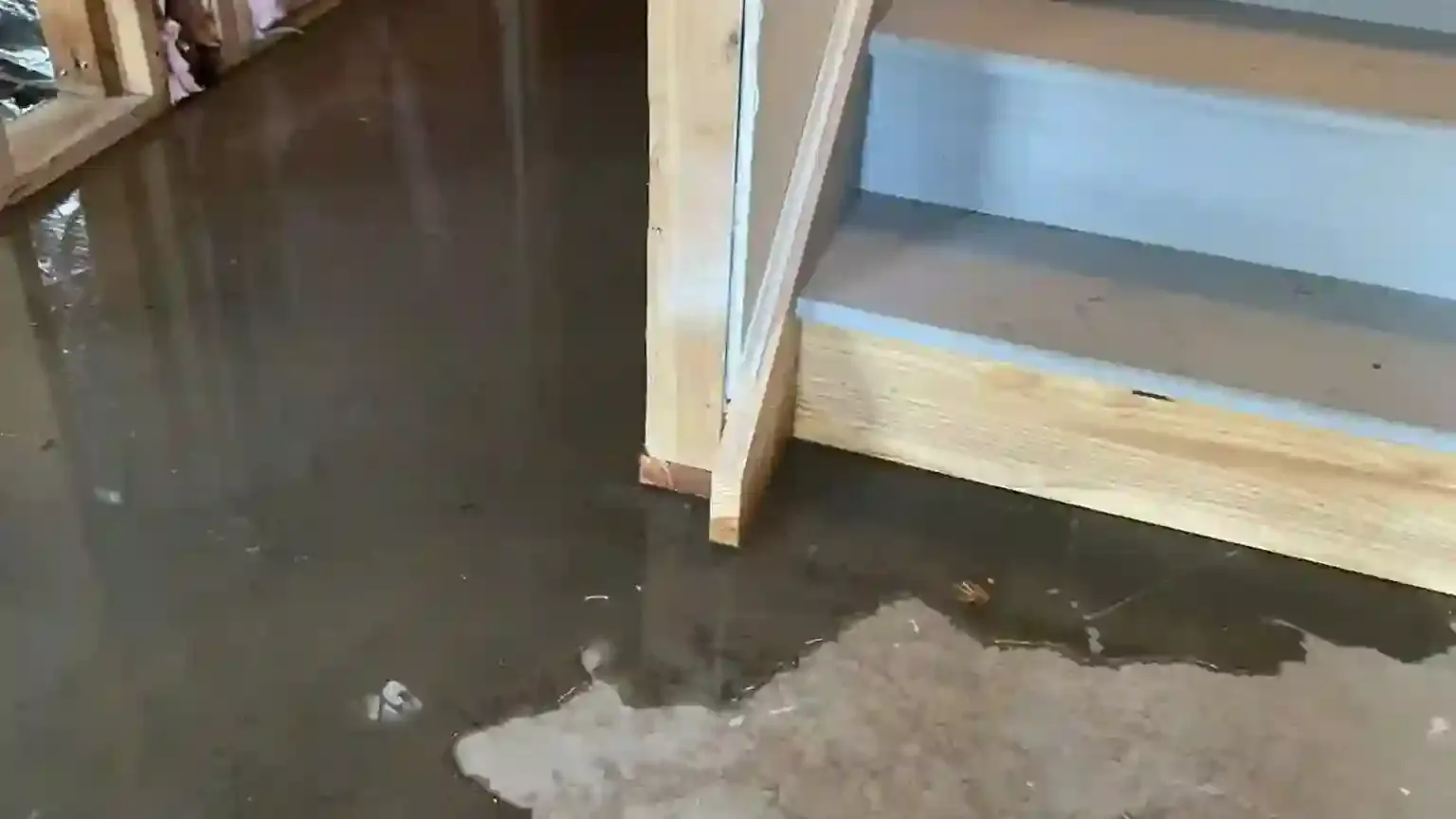
Now the part that decides which one you need: where is the water coming in? In most Cumming basements it’s the cove joint — the seam where the wall meets the floor. Water in the soil pushes sideways, finds that seam, and rises through it. An interior perimeter drain relieves exactly that pressure, which is why it fits so many homes here.
Good news
Water at the cove joint almost never means your foundation is failing. It usually means the soil outside is holding water it should be shedding — a different conversation, and a much smaller number.
Water staining high on a wall tells a different story, though. That’s usually roof water and grade, not groundwater — so the cheapest correct fix might be outside your house entirely. A company worth hiring will say that out loud, even though it’s the smaller ticket.
Real talk: what actually makes it last?
Ready for the part nobody puts in the brochure? The trench isn’t what fails. What fails is the water’s exit — the pump, the discharge line, and where that line lets go. We’ve seen a beautiful two-year-old system with a wet floor, because the pipe dumped six feet from the wall and the water came back around for another lap.
Sump pumps fail in a short, predictable list, too. Power goes out mid-storm. A float sticks against the basin wall. The unit is undersized. There’s no check valve, so water in the pipe drains right back down. Or the discharge line clogs with silt. That’s the whole list, honestly, and every item on it is preventable.
A drainage system is only as good as the last ten feet of pipe. That’s where the money quietly gets wasted.
So ask about a battery backup. It’s a fair question rather than an upsell, since the storm that floods a basement is often the same storm that drops the power. Then ask them to walk you out to where the discharge ends. If the answer is a shrug, keep shopping.
Picture what “done right” feels like. Heavy spring rain rolls through, GA-400 is a mess of taillights, and your basement is boring. No towels, no checking the corner at midnight. That’s the whole product.
How do you read a drainage estimate?
Line by line, the way you’d read a car repair invoice. A real scope names the system, the linear feet, which walls, the depth relative to the slab, the pump size, whether there’s a check valve and backup, and where the discharge goes. A weak one says “drainage system” and a total — which is a guess in a nice folder.
It should also explain the choice. Why an interior perimeter drain instead of regrading and downspouts? Good crews answer that in plain words, because they picked the route from evidence. When a company installs one product only, every house starts to look like a customer for it.
Ask these before you sign anything
- Where is the water entering, and what proves it? The answer should include something found outside.
- Why this system over the cheaper option? If they considered no cheaper option, they didn’t diagnose.
- How many linear feet, along which walls? Vague coverage becomes a vague price.
- Does the drain sit below the slab? Below floor level is a system. Above it is a gutter.
- Where does the discharge end? Walk out and look at the spot together.
- Check valve? Battery backup? Both are small money and big insurance.
- Is the warranty in writing and transferable? Ask what voids it, in one sentence.
Red flags get easy after that. Be careful with a firm price quoted over the phone before anyone has seen your house, or a discount that dies at midnight, because honest pricing doesn’t need a countdown. Watch too for an inspection that never leaves the basement, a scope with no measurements, or a crew that never asks about your gutters.
On cost, we’ll be straight. A grading correction with two extended downspouts sits at the low end, while a full perimeter system with a new sump and battery backup in a finished basement sits at the high end. Linear feet, access, slab thickness and finished space are what move the number.
The rooms this quietly affects
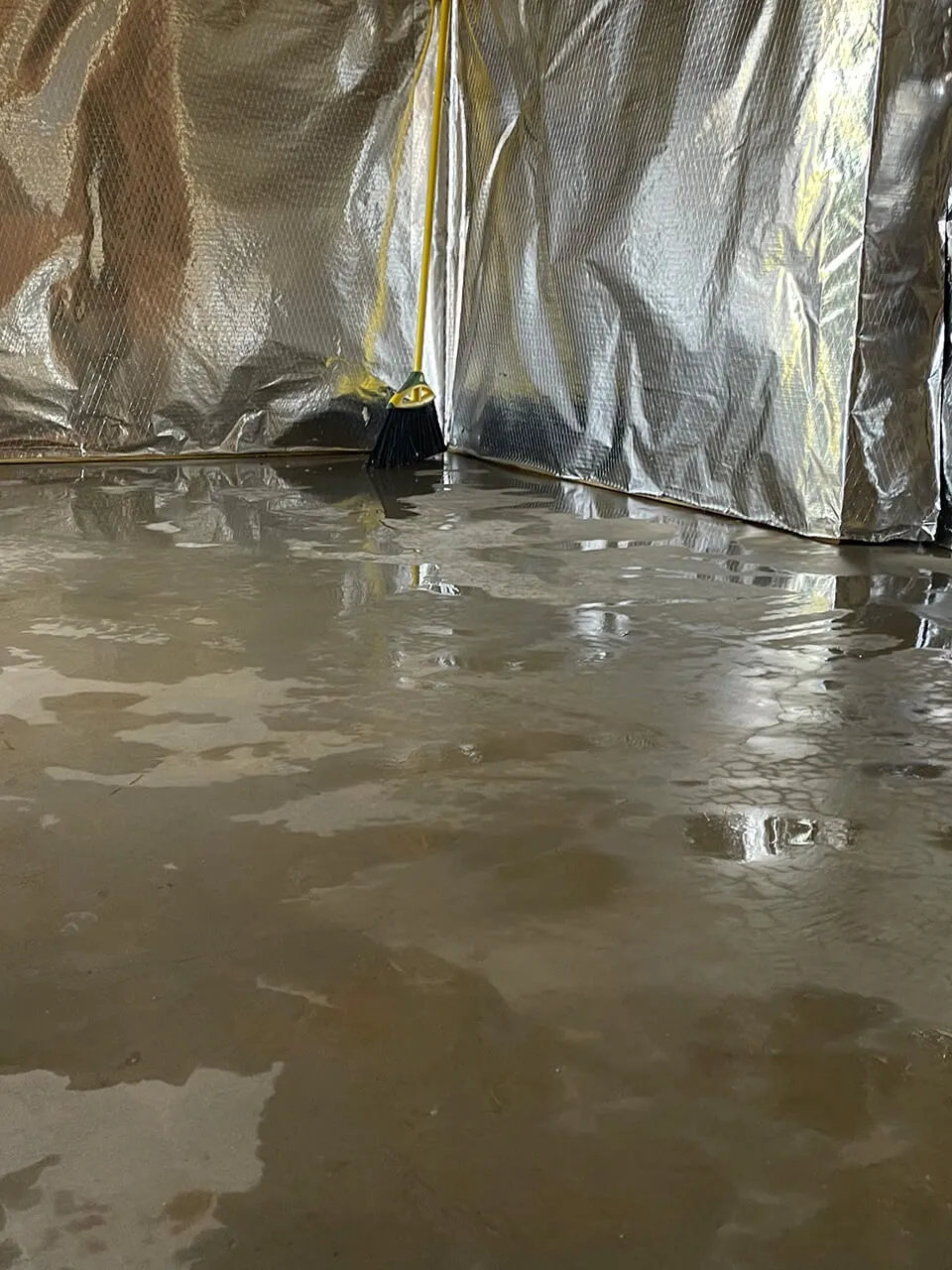
Ever notice the upstairs feels stuffy in August? A wet basement doesn’t stay a basement problem, because air in a house moves up. So the humidity you feel in the den often starts two levels down, and your air conditioner works overtime drying air the ground keeps re-wetting.
Crawl spaces tell the same story. Standing water under there feeds the whole house with musty air, and it’s why some families near Fowler Park call us about a smell rather than a puddle. That said, this one is very fixable — the drainage fix and the air fix are usually the same project.

You don’t have to take a contractor’s word on any of this, either. The CDC’s guidance on mold after water damage is a ten-minute read, and the National Weather Service flood safety pages are worth a look before spring storms.
Storage counts too. Once the floor stays dry, the space goes back to being useful — a gym, a playroom, somewhere the holiday bins live without a plastic tote moat.
Why we might be a good fit here
We’re in Lawrenceville, about half an hour south of you, and we’ve been at this over twenty years. We’ve worked the Lambert district neighborhoods, the older streets around the Cumming City Center district, and plenty of lakeside lots where Lake Lanier keeps the water table higher than anyone expects. Familiar housing stock means faster, more accurate diagnoses.
Our process is simple on purpose: find the entry point, explain the choice in plain English, put the scope in writing, and build the exit path to last. If the right answer is grading and downspout work instead of a perimeter system, that’s what the estimate says. Same crews, same trucks, same phone number when you call about the warranty.

Still figuring out what you’re dealing with? Our guide to flooded basement repair covers what to do in the first 48 hours, and the full range of basement waterproofing work is laid out step by step. If you’re also seeing stair-step cracks or a sticking door, foundation repair is the page to read next. Comparing notes with family closer to the city? We cover the same ground for Decatur best basement drainage.
Where we work around Cumming
We’re up this way constantly, from lakeside lots to the newer streets on the south end of town. Beyond Cumming, we work in Alpharetta, Milton, Suwanee, Buford, Gainesville, Dawsonville, Johns Creek, Duluth and Sugar Hill, plus the wider Forsyth County area.
Questions Cumming homeowners ask us
For a small spill, sure. For a real flood, no — an inch of water across a 1,000-square-foot basement is more than 600 gallons, so a shop vac is bailing a boat with a coffee mug. Removing the water also doesn’t change why it came in, which is what drainage handles.
Mold can take hold in wet material within about 24 to 48 hours, so drying speed matters more than anything else you do that first day. Pull up soaked carpet and pad, move wet boxes out, and get air moving. The CDC has plain-language cleanup guidance worth reading.
Safety first: don’t step into standing water near outlets or a powered appliance, and cut power to the area if you can do that from a dry spot. Then take photos for your records and start removing water and wet materials. Once it’s dry, find the entry point before repairs go back in.
Because red clay holds water instead of draining it. During a long rain the soil beside your wall saturates, pressure builds, and water finds the cove joint where the wall meets the floor. Relieving that pressure with drainage is the fix, and often improving grading and downspouts outside does a lot of the work.
It depends on the source. Sudden failures like a burst pipe are often covered, while groundwater seepage and surface flooding usually are not without separate flood coverage. So call your agent and ask specifically about sump pump failure — that one is sometimes a small add-on.
Let’s find out where the water is really getting into your Cumming basement
The inspection is free, the estimate is free, and nobody pressures you at the end. We’ll show you the entry point, explain why we’d pick one drainage route over another, and put the scope in writing — including when the right answer is the smaller one.
(678) 914-5112Serving Cumming and all of Metro Atlanta · $500 off projects over $3,500 · Live support 7am–8pm, 7 days a week