

Basement Drying Options Snellville Homeowners Face After a Wet Night
Shop vac and box fans, or a real drying crew? Here’s how each one works, when each one wins, and what we’d tell you to do.
Here’s something worth knowing at seven in the morning with a wet sock: if it happened to you, it probably happened to your neighbor too. The basement drying options Snellville homeowners are weighing today are being weighed three doors down at the same time, because whole streets here were graded, built and finished together.
Go look at a street in Summit Chase or Havenwood. Same builder, same year, same slope running toward the same low spot. So when a storm parks over Gwinnett, water doesn’t pick one house out of spite — it follows the dirt, and the dirt was shaped for everybody at once.
That’s oddly good news. This isn’t a mystery about your house; it’s a pattern we’ve been fixing for twenty years. And you really only have two paths from here.
What should you do in the first ten minutes?
Before anything else, kill the power to the basement at the panel. Never step into standing water while those circuits are live. That’s the one rule with no exceptions in this whole article, and it takes about thirty seconds.
Once power is off, figure out what the water is. Clean rainwater pushing through the wall is one situation. A sewer backup is a different one, and that second one isn’t a DIY project at any volume.
The clock that matters
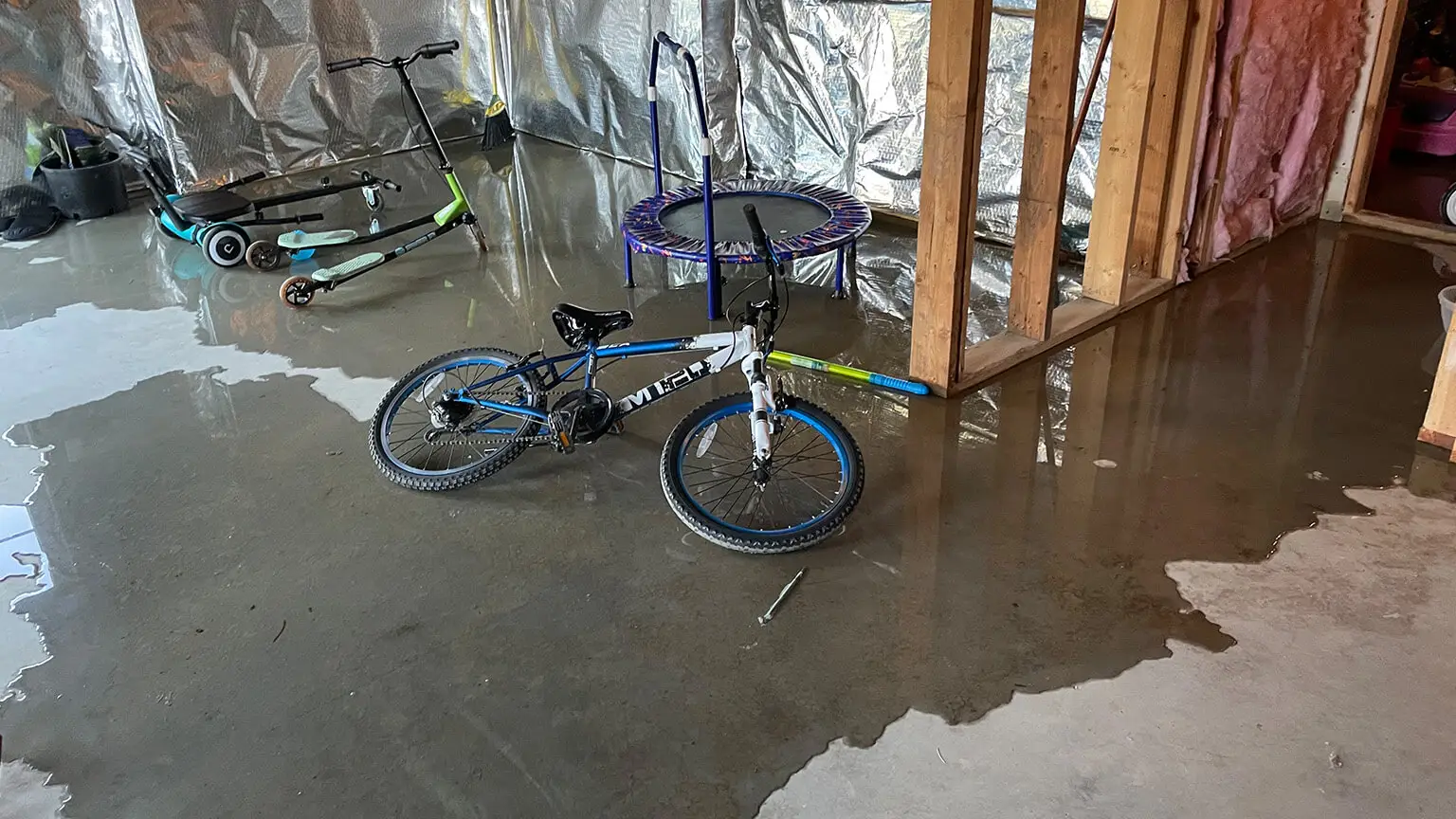
Mold can begin on wet organic material in roughly 24 to 48 hours, so speed beats horsepower. A modest fan running tonight does more good than a great machine that shows up Thursday.
Option A: can you dry it yourself?
Sometimes, yes — and we’d rather say that out loud than pretend otherwise. The kit is simple: a wet/dry shop vac, a few box fans, and a rental dehumidifier from a hardware store off Highway 78. Pull the water, move air across the wet surfaces, then pull the humidity out so it doesn’t resettle.
How it works: vacuum until nothing more comes up, then aim fans along the floor rather than straight down at it. Air has to travel across a wet surface to lift moisture off it. Meanwhile the dehumidifier catches that moisture before it lands somewhere else, which is the step most people skip.
What it costs: a weekend, a rental fee and some electricity. That’s the whole bill, which is why it’s the right answer more often than a waterproofing company usually admits.
When it wins: shallow water on a bare slab, caught fast, in an unfinished space. Half an inch in a storage basement you found within a couple hours? Handle it yourself. We’ll tell you so on the phone, for free.
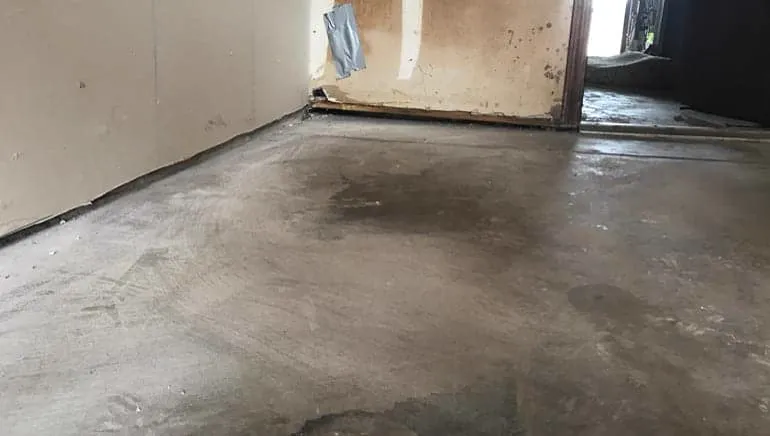
The trade-off: box fans dry what they can see. If water traveled under a wall or into a carpet pad, the surface looks finished while the inside of that wall stays soaked for weeks. That’s the classic miss, and it’s why the second option exists.
Option B: what does professional drying actually involve?
Structural drying sounds fancy, but it’s four plain steps in order. First, extraction — units that pull far more water, far faster, including water down inside carpet. Second, removal of anything wet and organic that can’t be saved.
Third comes targeted air movement: not fans pointed at a room, but air movers set at angles to sweep specific surfaces, plus commercial dehumidifiers sized to the actual cubic footage. Fourth, we take moisture readings with a meter and write them down, day after day, until the numbers match dry material elsewhere in the house. That last step is what separates the two options.
What it costs: more, and it rides on three things — how much water, how much wet material comes out, and how many days the equipment runs. One wet wall in an unfinished basement sits at the low end. A finished basement with soaked drywall and carpet pad sits much higher, since there’s demolition before the drying starts.
When it wins: finished space, standing water, water that sat overnight, or anything that isn’t clean. Also any time you want the readings on paper.

How do the two compare, straight across?
Doing it yourself
- Costs a rental fee and a weekend
- You can start tonight, which counts for a lot
- Great on bare slabs and small spills
- No readings, so you’re going by feel
- Can’t reach water inside a wall cavity
- Wrong tool for sewer water
Professional structural drying
- Extraction pulls water DIY gear leaves behind
- Wet organic material comes out properly
- Air movers and dehumidifiers sized to the room
- Written moisture readings, day by day
- Costs more and needs scheduling
- Overkill for a small, fast, clean spill
Neither column says “better,” because neither one is. One is a tool for a small clean problem; the other is for a big or hidden one.
Which four questions actually decide it?
Forget the equipment for a second. Four things settle this, and you can answer them all standing on the stairs.
Answer these and you have your answer
- How much water? A damp patch and two inches across the slab are different jobs.
- How long did it sit? Found in an hour is a different call than found after a weekend away. Time is the factor people underrate most.
- Is wet organic material trapped behind a finished wall? Carpet pad, the bottom edge of drywall, insulation in a stud bay. If yes, surface drying won’t reach it.
- Clean rainwater or a backup? Clean groundwater is a drying problem. Sewer water is a removal-and-sanitizing problem, and that line doesn’t move.
Three easy answers usually means grab the shop vac. One hard answer means call somebody, and the third question flips it most often around here.
A lot of Snellville basements were finished in the nineties, and the drywall has been quietly wicking water ever since. The fix isn’t more drywall — it’s stopping the water first.
So what would we tell you to do?
You wanted a recommendation instead of a shrug, so here it is. If the space is unfinished, the water is clean and under an inch, and you caught it the same day — dry it yourself. Fans, dehumidifier, patience. Save the money for the part that keeps it from happening again.
Bring in a crew when the basement is finished, when water stood overnight, when anything organic is trapped in a wall, or when the source wasn’t clean. The cost gap closes fast there, because the expensive outcome isn’t the drying bill — it’s drying twice and rebuilding the same wall.
One more honest note: drying is not waterproofing. Drying handles what already got in, while basement waterproofing handles the reason it got in at all. Plenty of homes near Brookwood High School have been dried three times by three different people, and never once had the source addressed.
What happens after the crew packs up?
Here’s the stretch nobody warns you about, and it’s where most of the worry lives. The equipment leaves, the floor looks fine, and now you’re supposed to just trust it. So we hand you the readings. Those daily moisture numbers turn “I think it’s dry” into a fact you can point at. Rebuild only after they settle, because closing a wall over damp framing is how a small job becomes a bigger one next spring.
After that, three habits keep it boring. Watch the same spot after the next real rain, run the dehumidifier through summer, and check the gutters twice a year. Boring is the goal — the whole point is a storm you get to sleep through.
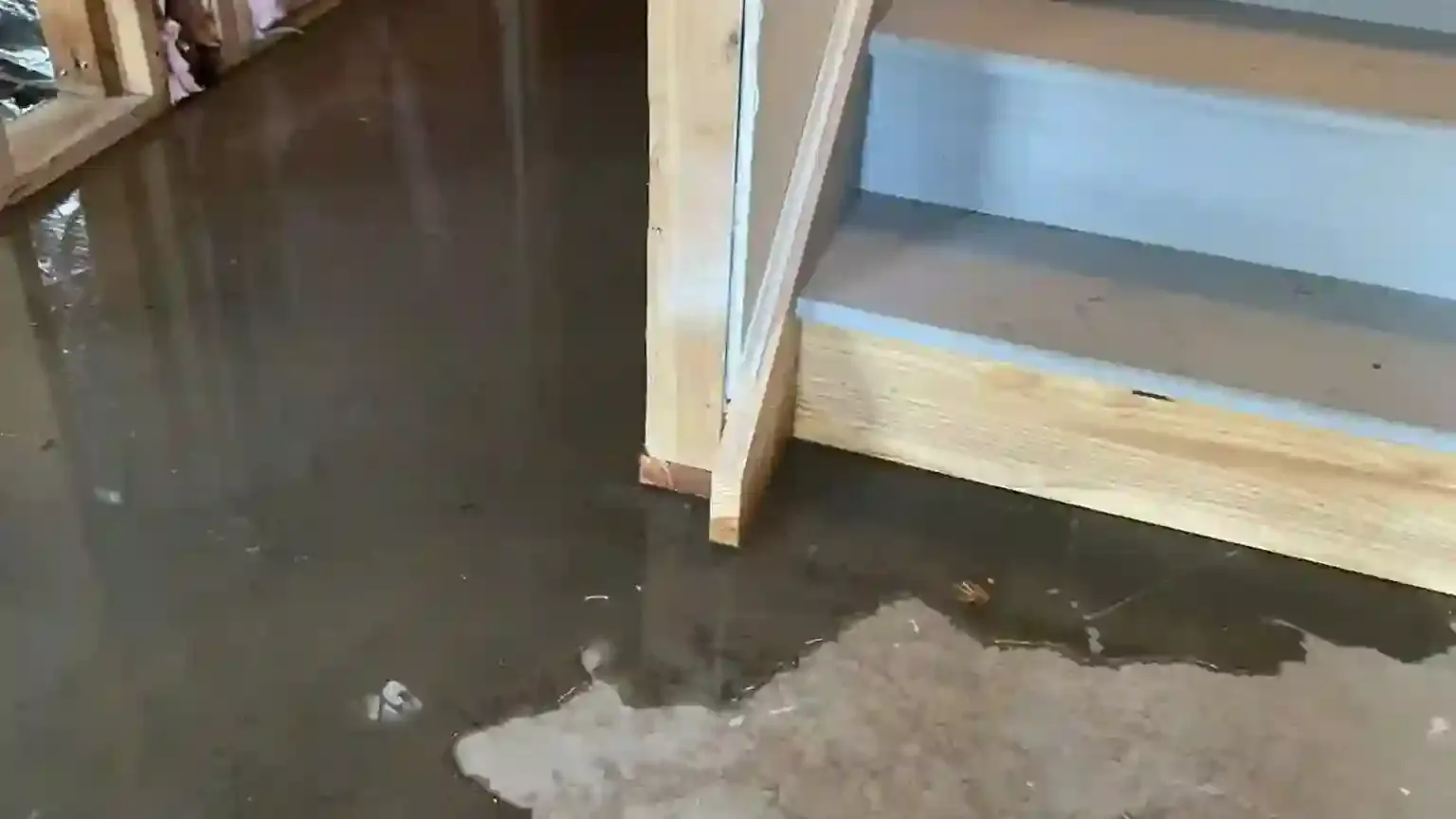
Check your policy too. Standard homeowners insurance typically excludes groundwater seepage, and sump pump failure is usually a separate rider you have to ask for by name. Better to learn that on a dry Tuesday than during a claim, and the FEMA guidance on protecting property from flooding is a solid place to start.
Which other rooms does this quietly touch?
Now the part that surprises people. A wet basement rarely stays a basement story, because air moves up through a house all day. Damp air rides the stairwell into the main floor, and suddenly the hall closet smells like something and nobody can say why.
Split-levels feel it fastest. Around here the lower level often sits partly below grade, so that bedroom shares walls with wet soil and shares air with the rest of the house. Homeowners in Towne Center district infill call about a musty upstairs closet and are surprised the answer is one floor down.
Good news is this cuts both ways. Dry the source properly and the odor, the sticky summer air and the long HVAC cycles all improve together. That’s the calm we’re after — one fix, several rooms quietly getting better.
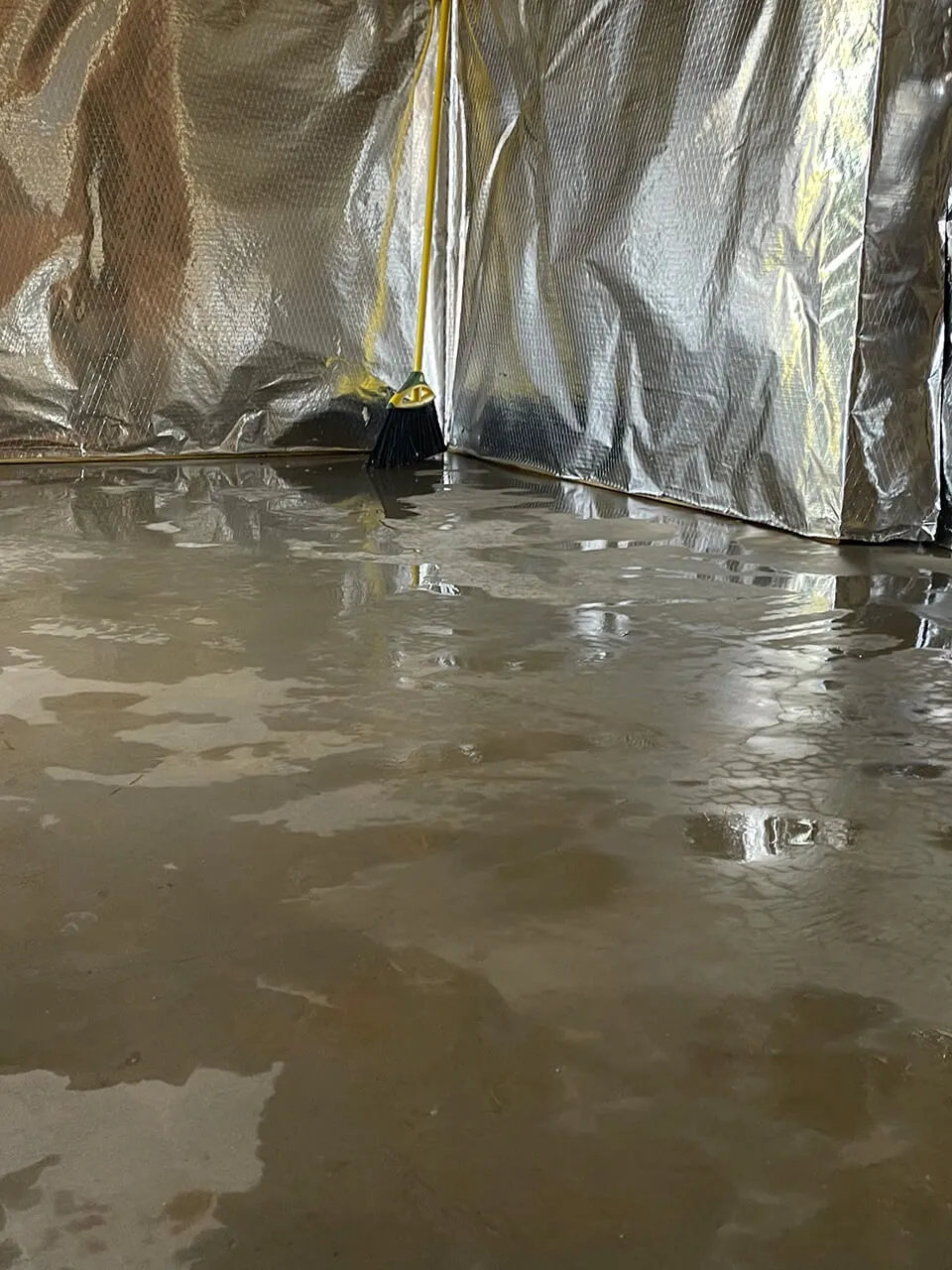
If mold got started before you found the water, don’t worry — the CDC’s guidance on mold cleanup after flooding lays out the steps plainly, and small areas are routine.
Why does the local part matter here?
Because Snellville’s dirt has a personality. Red clay holds water instead of draining it, and the rolling ground feeding the Yellow River gives storm runoff real momentum before it ever reaches a foundation. Add housing built mostly between 1975 and 1995, and the original drainage is simply old — not defective, just past its shift.
We’re fifteen minutes up the road, so we know these streets. Want the step after drying? Read our guide to the best basement drainage setups, compare notes with the Buford basement drying options write-up, or check foundation repair if you’re seeing cracks in the block too.
Where we work around Snellville
We’re based in Lawrenceville, about fifteen minutes north, so we’re on this side of US-78 constantly. We also cover Grayson, Loganville, Lilburn, Stone Mountain, Tucker, Dacula, Centerville and Norcross, plus the wider Gwinnett County area.
Questions Snellville homeowners ask us
Roughly 24 to 48 hours on wet organic material like carpet pad, drywall or cardboard. That’s why getting air moving tonight beats waiting for better equipment tomorrow. Concrete and block themselves don’t feed mold, so the softer stuff is what sets the clock.
Shut off power to the basement at the panel before you step into standing water. After that, take a few photos for your records, then start pulling water and moving anything soft up off the floor. Photos sound fussy, but they help later if a claim or an estimate comes into it.
Because red clay can only absorb so much, and the rest of the rain has to go somewhere. Saturated soil presses water toward the seam where your wall meets the floor, the easiest opening in the house. A light rain never reaches that tipping point, so the problem stays hidden.
Often not, at least for the common cause. Standard policies typically exclude groundwater seepage, and coverage for sump pump failure is usually a separate rider you have to add. Call your agent and ask about both by name, ideally before storm season rather than during it.
Start the same day if you can. Speed matters more than the size of the equipment, since the first 48 hours decide whether soft materials can be saved. If wet material is trapped behind a finished wall, that’s the point to call a crew instead of adding another fan.
Not sure which way to go? We’ll look at your Snellville basement for free
The inspection is free, the estimate is free, and there’s no pressure at the end. We’ll tell you honestly whether this is a weekend with a shop vac or a job for a crew — and either way, we’ll show you where the water is getting in.
(678) 914-5112Serving Snellville and all of Metro Atlanta · $500 off projects over $3,500 · Live support 7am–8pm, 7 days a week