

Flooding Cost in Peachtree Corners: What Moves the Number
The two jobs people mix up, the steps in order, how long it takes, and exactly what to ask before you sign anything.
Somebody made a decision about your basement before you ever saw the house. A builder stood in a red clay hole off a street like Spalding Drive, brushed a coat of black tar on the outside of the block, and called it waterproofed. That was standard in 1978. So when you start pricing the flooding cost Peachtree Corners homeowners deal with today, it helps to know you’re not fixing a mistake you made — you’re replacing a choice somebody else made almost fifty years ago.
Good news right up front: that’s a very solvable problem, and it’s most of what we do around here.
Why do so many homes here have the same story?
Peachtree Corners went up in a long stretch between the early seventies and the mid-nineties. Those are good houses, built well, with real bones. But they were mostly built before modern basement waterproofing was standard practice. Many of them never had a real system — they had a coat of tar and good intentions.
Tar is a coating, and coatings age. Meanwhile the original drain tile buried along the footing has spent five decades filling with silt. So the water that used to get carried away now sits against the wall instead, waiting for a door.
That’s the whole story in Amberfield, in Spalding Corners, in Peachtree Station. Same era, same clay, same tired system. Which means the fix is well understood too, and nobody has to invent anything on your house.
What are you actually paying for?
Here’s the thing most estimates never spell out. A flooded basement is two separate jobs, and people constantly price them as one.
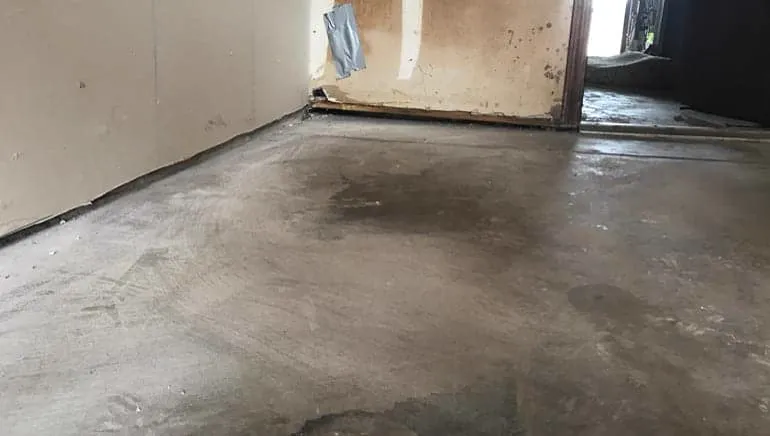
Job one is getting the water out and drying the space. Pumping, extraction, hauling out soaked material, then running air movers and a dehumidifier until the framing and slab read dry on a meter. That job is measured in days.
Job two is making sure it doesn’t happen again. Interior drainage, a sump that works, a discharge line that carries water somewhere useful, and whatever needs correcting outside. That job is measured in years — hopefully decades.
You can do the first without the second. Plenty of folks have, twice. Doing only the drying is a bit like mopping the floor while the faucet runs, and while it feels productive, the bill shows up again next spring.
Worth knowing
When you gather quotes, ask each company which of the two jobs they’re pricing. If one bid looks much cheaper than another, that’s usually why — not because somebody found a shortcut.
What does the cleanup involve, in order?
Nobody thinks clearly with water on the floor, so here’s the sequence written down for later.
- Safety first. Power off to the basement before anyone steps in standing water. If the panel is down there, that call goes to an electrician.
- Water out. Pumps and extractors, starting at the low point. This is fast once equipment is on site.
- Wet material out. Soaked carpet, pad, insulation and the bottom of the drywall come out. Organic material holds water long after the floor looks dry.
- Drying. Air movers plus a dehumidifier, usually three to five days, checked with a moisture meter rather than a guess.
- Cleaning. Hard surfaces get cleaned and treated once they’re dry, not while they’re wet.
- Diagnosis. While the equipment runs, we find the entry point. That’s the part that decides job two.
Speed matters here for a real reason. Mold can start on wet organic material in roughly 24 to 48 hours, so every day of delay adds material to the removal list. The CDC’s guidance on mold cleanup after a flood lays out the same timing plainly. Get the wet stuff out early and the whole invoice shrinks — which is a nice thing to say about a repair bill.

So what actually moves the price?
Real talk: nobody can price a flooded basement over the phone, and anyone who tries is guessing with your money. Still, you deserve to know what we’re weighing while we walk the house.
The drivers, plainly
- How much water. A damp corner and four inches across a full slab are different days of work.
- How long it sat. Overnight is one number. A week while you were away is another, because more material has to go.
- How much wet organic material comes out. Carpet, pad, insulation and drywall drive the removal and disposal side more than anything else.
- Finished or unfinished. A bar, built-ins and a bathroom mean careful work before the real work starts.
- Whether drainage is part of the permanent fix. Interior perimeter drainage is the biggest single line item when it’s needed.
- Whether you need a sump. Some homes have a serviceable basin already. A lot of eighties-era pits around here do not.
- What’s happening outside. Sometimes regrading and moving two downspouts handles most of it, and that’s a much smaller invoice.
Notice that half those drivers are about material and time, not equipment. That’s why acting quickly is the cheapest thing you’ll ever do about flooding cost in Peachtree Corners.
The expensive-sounding version usually isn’t yours
Ready for the part nobody expects? When homeowners call us, they’ve usually already read about full perimeter systems with battery backups and pictured the top of the range. More often than not, that’s not the job in front of us.
A lot of these houses don’t need everything. They need the one thing that’s actually failing, done properly.
On the slopes running down toward the Chattahoochee near Jones Bridge Park, we’ve walked plenty of basements where the water was coming from a downspout dumping four feet from the wall and a yard drain packed solid with leaves. Fall drop is heavy under that tree canopy. Fixing those two things and correcting the grade solved it, and the invoice was a fraction of what the homeowner had braced for.
We’ll tell you when that’s the case. Honestly, we’d rather be the company that talked you out of a big job than the one you warn your neighbors about. Either way you get the diagnosis in writing, so you know what you’re buying.

Where is the water getting in?
Usually one place, and it surprises people: the cove joint. That’s the seam where the wall meets the floor, and it’s the most common entry point in a basement. When clay soil swells after days of rain, it pushes groundwater against the foundation. That force has a name — hydrostatic pressure — and it finds the seam long before it finds a crack.
Which is why water can come up through the floor while the walls look perfectly fine. Nothing is broken. Water simply took the easiest route.
The fix doesn’t block that water, it redirects it. A narrow channel opens along the affected perimeter, perforated pipe goes into clean washed stone below floor level, wall liner sends seepage down into that pipe, and everything routes to a sump basin that pushes it well away from the house. In other words, we meet the water lower, where it has almost no pressure left. Then fresh concrete closes it up and we test the system with you standing there. Our basement waterproofing page walks through the system types side by side.
Most installs run one to three days on site. Your prep list is short too: clear about four feet along the working walls, move fragile items off nearby shelves, and make sure we can reach an exterior door. We’ll handle the heavy things.
Why sump pumps fail, and how to price around it
Sump pumps rarely fail mysteriously. They fail in five predictable ways, so you can shop for the fixes.
- Power loss during the storm. The exact hour you need it most. A battery backup answers this one.
- A stuck float. The switch hangs on the basin wall or on debris and the pump never gets the message.
- Undersized for the water. The pump runs constantly and still loses ground.
- No check valve. Water in the discharge line drains back into the pit and gets pumped twice, over and over.
- A clogged or frozen discharge. The pump works fine while the water has nowhere to go.
Every one of those is preventable, which is the good news. Test yours twice a year by pouring a bucket of water into the pit and watching it cycle. If it groans, hesitates, or never shuts off, that’s a cheap thing to catch on a dry Saturday. Curious how storm timing plays into this? The National Weather Service flood safety pages are a good neutral read.
What can you honestly handle yourself?
More than companies usually admit. Extending downspouts six to ten feet out, cleaning gutters twice a year, clearing yard drains after leaf drop, regrading soil so it falls away from the house, keeping window wells open, and testing the sump. Those six solve a real share of minor water complaints and cost almost nothing.
What DIY can’t reach is anything below the slab. You can’t install drain tile without opening concrete, and no product in a bucket beats saturated clay pressing on a wall. That’s not a skill problem — the water simply isn’t where the coating goes. Large-volume drying is the other one, since rental fans move air but rarely pull enough moisture out of framing to hit a safe reading.
While we’re being honest: insurance. Standard homeowners policies commonly exclude groundwater seepage and surface flooding, and coverage for sump pump failure is usually a separate endorsement you have to add. Some policies do cover sudden discharge from a burst pipe. Call your agent and ask about your specific policy before you assume either way — it takes ten minutes and it changes how you plan.
What do the first week, first year, and tenth year look like?
Here’s the part that makes the money feel real, because a repair is easier to judge when you can picture living with it.
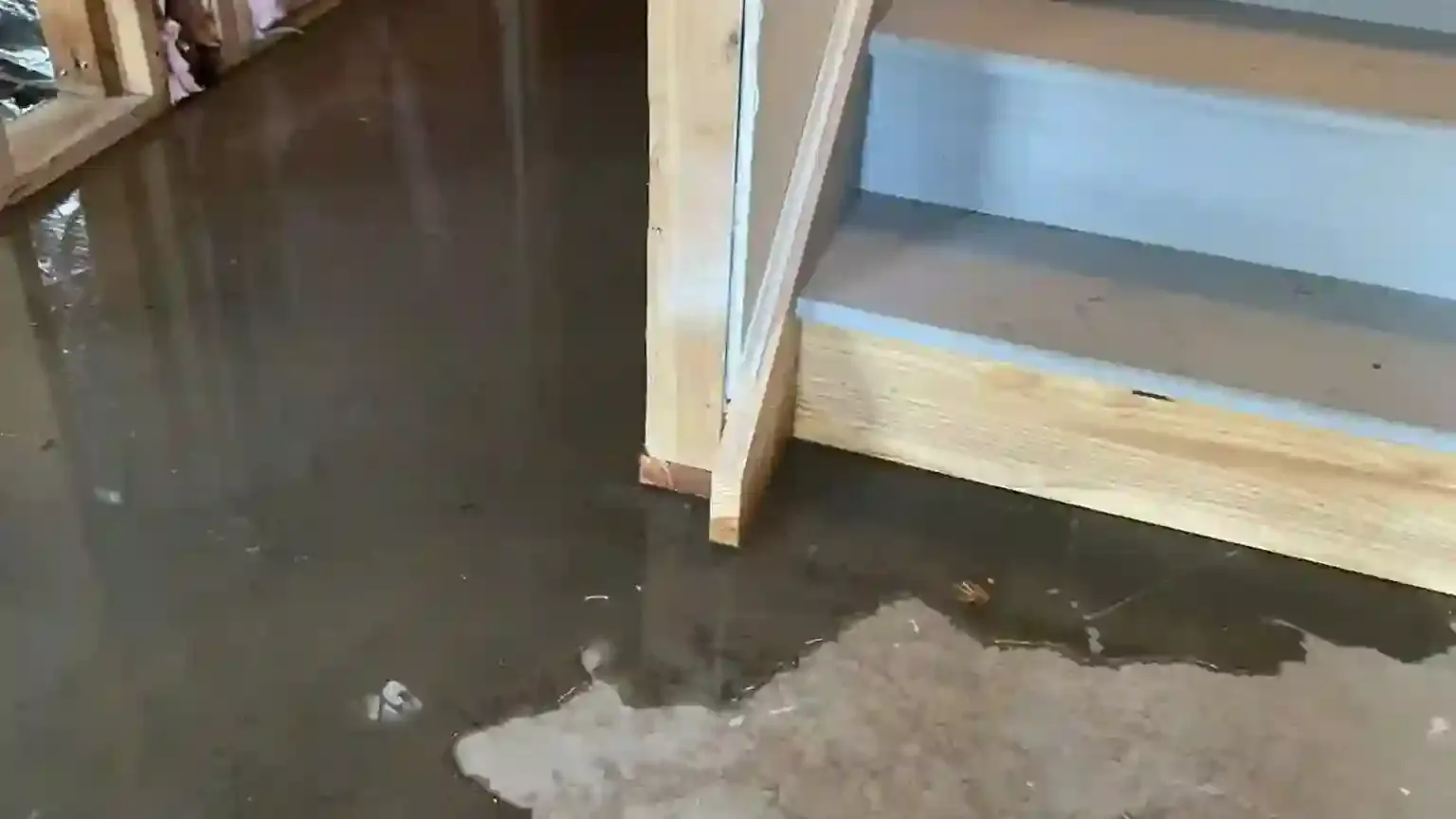
Week one. The concrete is curing, so you leave it alone for a few days before loading it up. The dehumidifier runs, the musty smell fades faster than most people expect, and the floor stays dry through the first rain. That first storm is the one everybody stands at the top of the stairs for.
Year one. You go through a full spring, which is when Peachtree Corners really tests a basement. Nothing happens. Around month six you empty a dehumidifier that’s barely working, and somewhere in there you stop checking the radar out of habit. Most folks start using the space again — a gym, an office, somewhere the kids can be loud.
Year ten. Stone and pipe below a floor have nothing to wear out, so the drainage is doing exactly what it did on day one. The sump pump is the part with a service life, and by then it’s likely been replaced once, which is a routine, inexpensive swap. If something needs attention, you call the same local crew that installed it. That’s what a warranty is worth when the company is still ten minutes up the road near Technology Park.
How do you know the job was done right?
Ask for five things and you’ll sort good work from fast work in about a minute. A written scope naming linear feet, sump location and discharge point. Moisture readings before and after drying, not opinions. Photos of the stone and pipe before concrete goes back down. A warranty you can read without a translator. And a live test while you’re standing there.
That’s the whole checklist. Bring it to every estimate you collect, including ours, because a company that welcomes those questions is telling you something. For the drying side specifically, our guide to basement drying goes deeper on meters and timelines. If cracks or settling are also part of the picture, foundation repair is a separate conversation and we’ll say so plainly. Comparing across the county line? Our breakdown of Dunwoody basement flooding cost uses the same math.

Where we work around Peachtree Corners
Our shop sits about twenty minutes northeast in Lawrenceville, so we’re down 141 constantly. We also cover Norcross, Duluth, Johns Creek, Dunwoody, Berkeley Lake, Sandy Springs, Suwanee, Alpharetta and the wider Gwinnett County area. If you’re anywhere along Peachtree Parkway or Holcomb Bridge Road, odds are we already have a truck nearby.
Questions we get from Peachtree Corners homeowners
Shut off power to the basement before anyone walks into standing water, then get belongings up off the floor. After that, start removing wet carpet, pad and insulation, because those hold water the longest. Call for help while you work, since drying equipment matters more the sooner it arrives.
Georgia red clay soaks up days of rain and swells, which pushes groundwater against your foundation. That pressure finds the weakest seam and comes through. In a dry stretch there’s no pressure, so the same basement looks perfectly fine.
Often not for groundwater seepage or surface flooding, which standard policies commonly exclude. Coverage for sump pump failure is usually a separate endorsement you add on purpose. Policies really do differ, so call your agent and ask about yours specifically rather than assuming.
Fast. Mold can begin growing on wet organic material within roughly 24 to 48 hours, so the first day matters most. Getting soaked carpet and insulation out early keeps the removal list short, which keeps the cost down too.
Because the cove joint, where the wall meets the floor, is the easiest path in. Pressure under the slab pushes water through that seam before it bothers with solid concrete. Nothing is broken when this happens, and interior drainage below the slab is the standard fix.
Let’s find out what your basement actually needs
The inspection is free, the estimate is free, and nobody pressures you at the end. We’ll show you where water is getting in, what it takes to stop it, and what it costs here in Peachtree Corners — including the times the answer is smaller than you expected.
(678) 914-5112Serving Peachtree Corners and all of Metro Atlanta · $500 off projects over $3,500 · Live support 7am–8pm, 7 days a week