

Flooded Basement Repair in Milton: What It Involves and What It Costs
The water showed up in one night. The reason showed up a long time before that.
Here’s the thing about a flooded basement: the flood is the last event, not the first one. By the time you’re standing on the stairs looking at water, the path it took has usually been forming for months. So if you’re searching for flooded basement repair Milton homeowners can trust, start with the clock, because it tells you more than the puddle does.
Good news up front, though. This is very fixable work, and it’s the kind of thing we handle every week. You’re not looking at a mystery house. You’re looking at water that found an easier route, and routes can be changed.
So what is a flood, exactly?
Let’s back up a second, because two different problems get the same name. Seepage is slow. It darkens the bottom of a wall, leaves a chalky bloom, and shows up after a long rain. Flooding is bulk water — gallons arriving fast, spreading across the slab, doing real damage in an hour.
That difference matters, since the repair is different too. Bulk water almost always points to one of four things: hydrostatic pressure under the slab, a sump pump that quit, a drain line that’s blocked, or a window well with no working drain. In other words, something either pushed harder or stopped carrying water away.
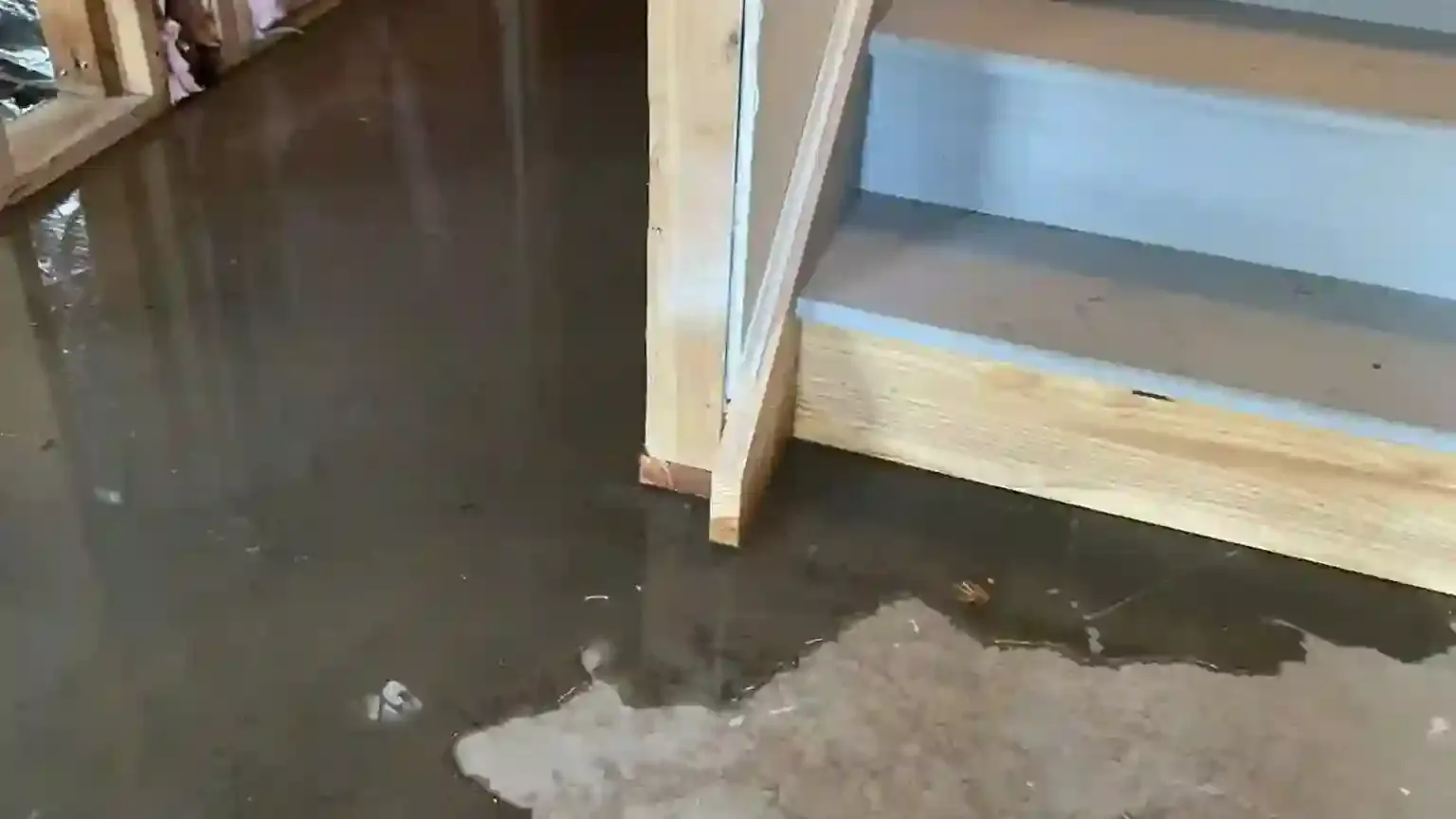
The most common entry point isn’t a crack at all. It’s the cove joint — the seam where your basement wall meets the floor slab. Those two pieces of concrete were poured at different times, so they never actually bond. Under pressure, water simply walks through the seam.
Good news
If you’ve been hunting for a crack and can’t find one, you’re not missing it. Plenty of homes flood through a seam, and a seam is easier to handle than most people expect.
Why does this happen so often around here? Georgia red clay. It doesn’t drain — it holds. After a long soaking week, that clay stays saturated against the wall, and pressure builds until water pushes through the hollow cores of block. On Milton’s big open lots, there’s a lot of clay doing exactly that.
And that’s the local piece worth saying plainly. In Milton the basement isn’t storage. It’s a finished floor of the house — a theater, a gym, an in-law suite — so a small amount of water down there causes a very large amount of damage.
What actually happens when the crew arrives?
Most jobs follow the same shape, so you can picture it before anybody parks a truck on your driveway.
- Water out first. Standing water gets pumped and extracted before anything else. Then wet organics — soaked carpet, pad, wet drywall bottoms — come out, because those hold moisture the longest.
- Dry it down, on purpose. Air movers and commercial dehumidifiers run until materials read dry on a meter, not until the floor looks dry. Those are two different days.
- Find the source. We walk the outside — grade, downspouts, the long driveway, where roof water actually lands. Then we walk the inside. Often the real culprit is out in the yard.
- Open a channel at the perimeter. A narrow strip of slab comes up along the walls that need it. Loud and dusty, usually a day or two.
- Set drainage below the slab. Perforated pipe in clean stone, placed below floor level, so water is caught before it reaches your floor instead of after.
- Route it to a sump and close up. Water goes to a basin, the pump sends it well away from the house, fresh concrete goes over the channel, and we haul our mess out.
Speed matters more than almost anything else in that list. Mold can begin growing on wet building materials within roughly 24 to 48 hours, which is why we treat drying as its own stage of the job instead of a thing that happens on its own. That’s also why we answer the phone at seven in the morning.
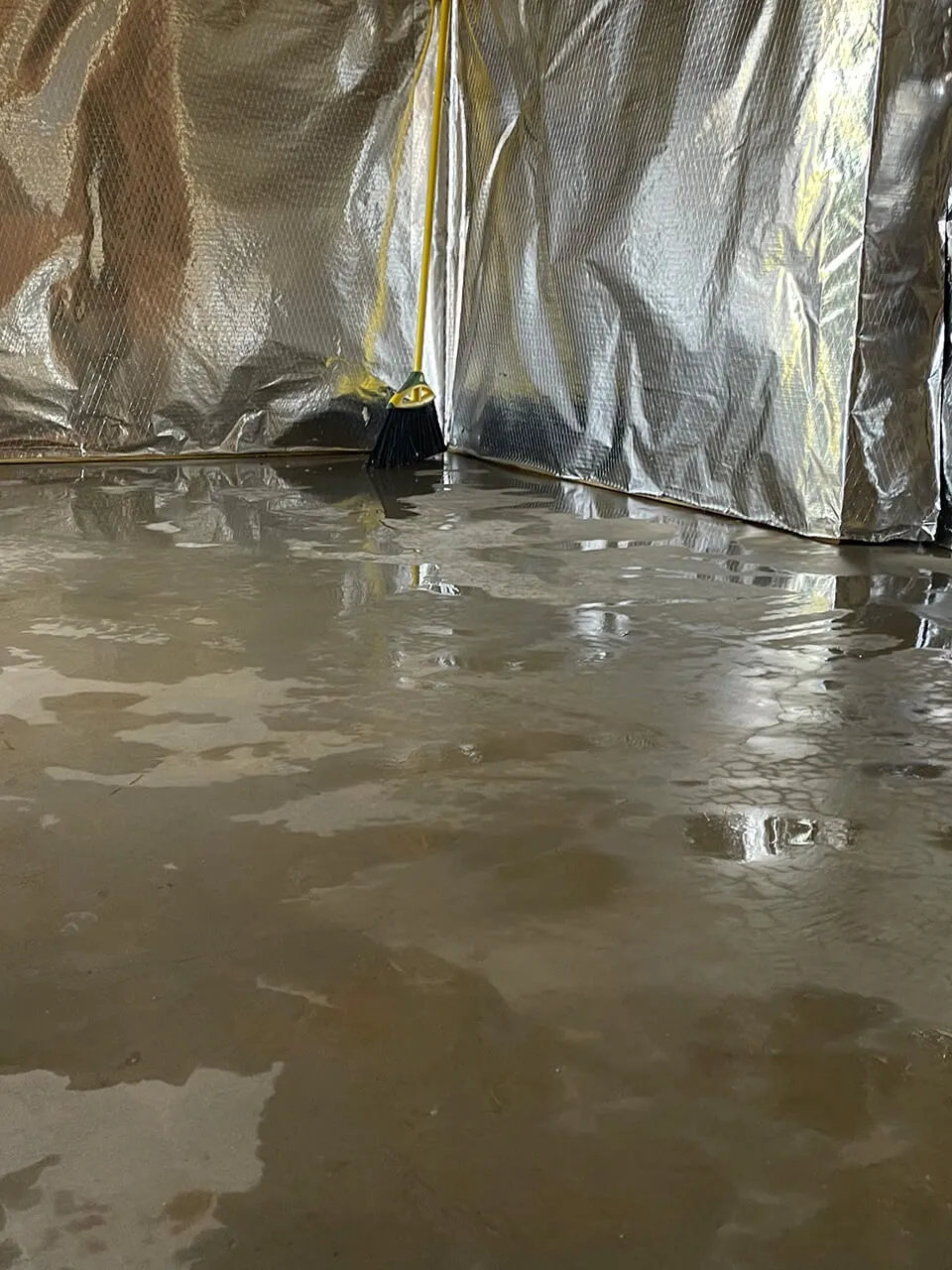
One safety note, said calmly and then we’ll move on. Never step into standing water while power is still on to that level. Kill the circuit at the panel first, and if the panel itself is anywhere near the water, call an electrician instead. The National Weather Service flood safety page covers this in a couple of minutes.
Want to know if somebody actually diagnosed it?
Ask this: “Which of the four causes was it, and how did you rule out the other three?”
That single question separates a diagnosis from a product pitch. A company that measured something will answer it easily. They’ll tell you the pump was undersized for the volume, or the discharge line was clogged forty feet out, or the float was stuck against the basin wall, or there’s no check valve so water kept falling back in and cycling the pump to death.
Sump pumps fail in predictable ways, which honestly is a relief. Power loss during the storm is the big one, since the storm that floods the basement is the same storm that drops the lines. After that it’s stuck floats, undersized pumps, missing check valves, and clogged discharge lines. Every one of those is a known fix with a known part.
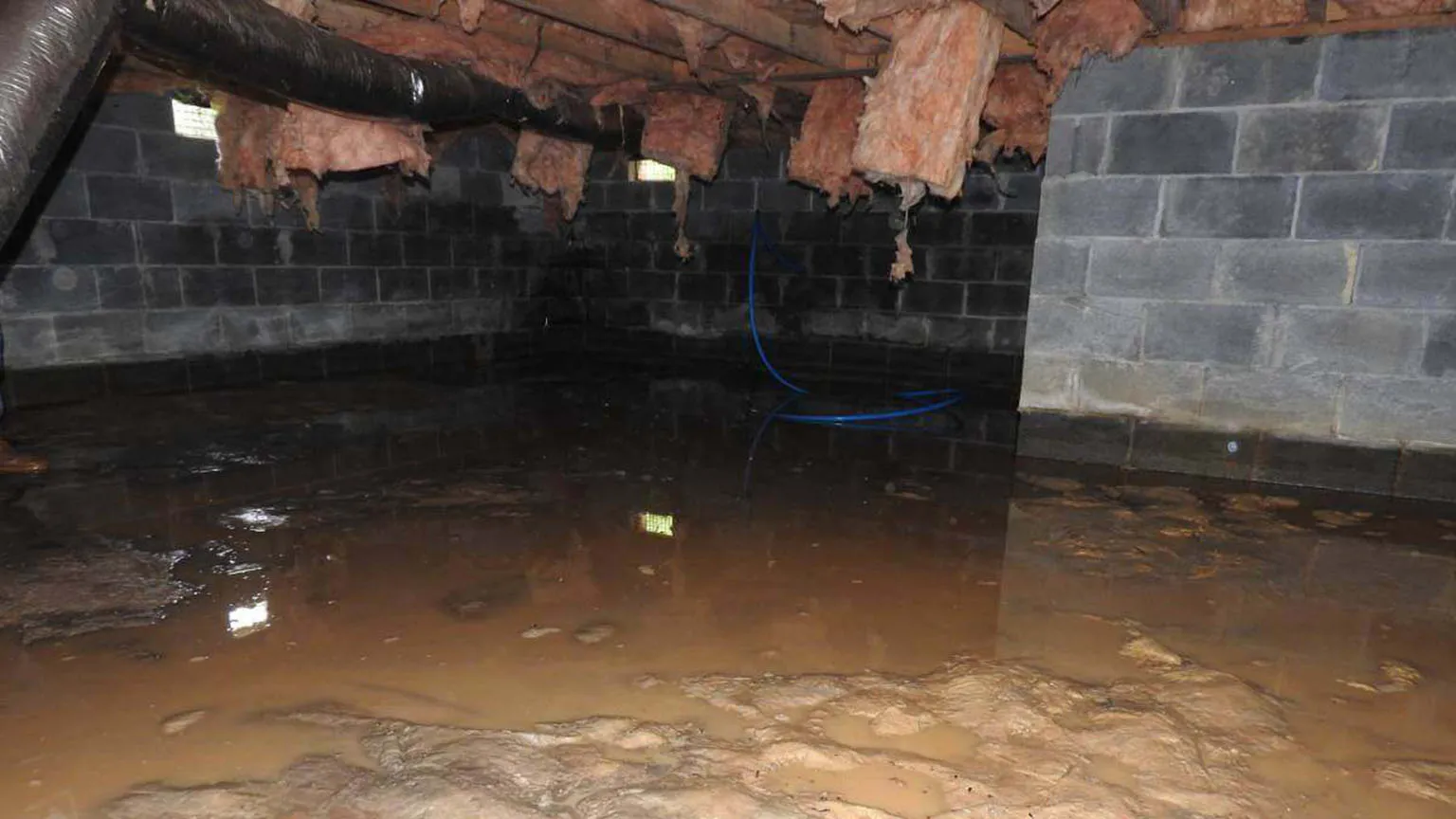
Here’s the other reason we push on diagnosis. Milton’s housing stock is mostly custom homes built between the mid-nineties and the mid-2010s, so a fair number of these houses are still young enough to be settling. New-construction settlement cracks on homes under twenty years old are common, and they change how water moves. Fix the drainage without addressing a moving wall and you’ve paid twice.
Okay — what does it cost?
Straight answer: it depends on how much wall is involved and how hard it is to reach. Anybody quoting a flat number sight unseen is guessing, and you’d be the one paying for the guess. Still, here’s exactly what we’re weighing when we write yours.
What moves the number up or down
- Linear feet. One wall is a very different job than a full perimeter, and on Milton basements the perimeter can be long. This is the biggest factor by far.
- Finish level. An open basement is straightforward. A finished theater with built-ins costs more, because there’s careful work before the real work.
- Water removal and drying. A few gallons is one afternoon. Several inches across a large floor means extraction, equipment and days of monitoring.
- Pump and backup. A new sump, a properly sized pump and a battery backup add cost — and the backup runs during the outage that caused the flood.
- What’s happening outside. Grading, downspouts, a long driveway shedding toward the house, or a saturated septic field. Sometimes that’s the whole story, and it’s a smaller ticket.
- Wall condition. Cracks or bowing mean structural work comes first. Waterproofing over a wall that’s still moving is money spent twice.
Small drainage corrections land at the low end. A full perimeter system, a new sump with battery backup and careful work around a finished lower level sits at the high end. Most flooded basement repair Milton projects land somewhere in between, and after we walk your house you get a written number with the scope spelled out line by line.
What’s included? Labor, materials, water removal, the concrete we replace, hauling, and the warranty in writing before we start. What isn’t? Rebuilding finished walls we opened, replacing ruined flooring and furniture, and structural repair, which gets priced on its own. Better you hear that now than find it in fine print later.
On insurance, let’s be honest rather than optimistic. Standard homeowners policies commonly exclude surface flooding, and sump pump failure coverage is usually a separate endorsement you have to add. Check your own policy or call your agent, because the language varies. FEMA’s guidance on protecting property from flooding is a solid neutral read while you’re at it.
The house off Birmingham Highway that wasn’t what anyone thought
Want a real one? A homeowner off Birmingham Highway (GA-372) called us after a spring storm week put about two inches across a finished lower level. Their assumption was the sump, and fair enough — the pump was fifteen years old and had run all night.
Except the pump was fine. It ran, it moved water, and it kept moving water while we watched it. What had actually happened was outside: the discharge line ran forty feet toward the tree line, sagged over the years, and had silted nearly shut. So the pump pushed, the water had nowhere to go, and it came right back down the pipe.
Meanwhile, the second half of the story was the lot itself. Big open acreage, red clay, and a long driveway sheeting runoff straight at the uphill corner. The fix ended up being a perimeter channel on two walls, a properly sized pump with a check valve and a battery backup, and a rebuilt discharge run with a clean daylight outlet. Three days on site.
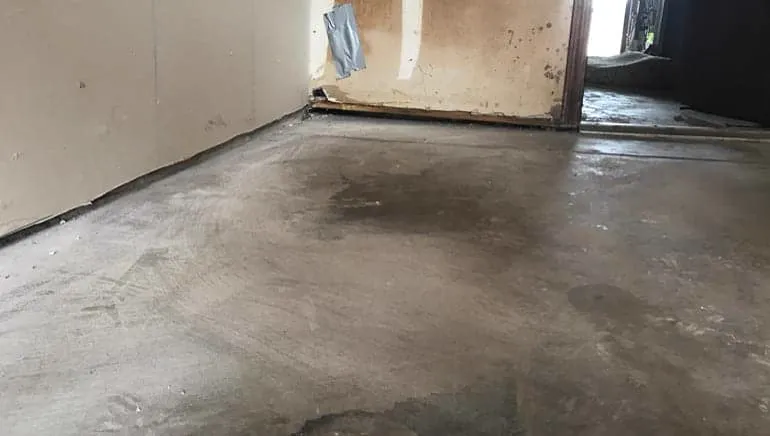
They told us the best part wasn’t the dry floor. It was finally understanding their own house — knowing where water goes when it rains, and why. That’s the feeling we’re actually selling.
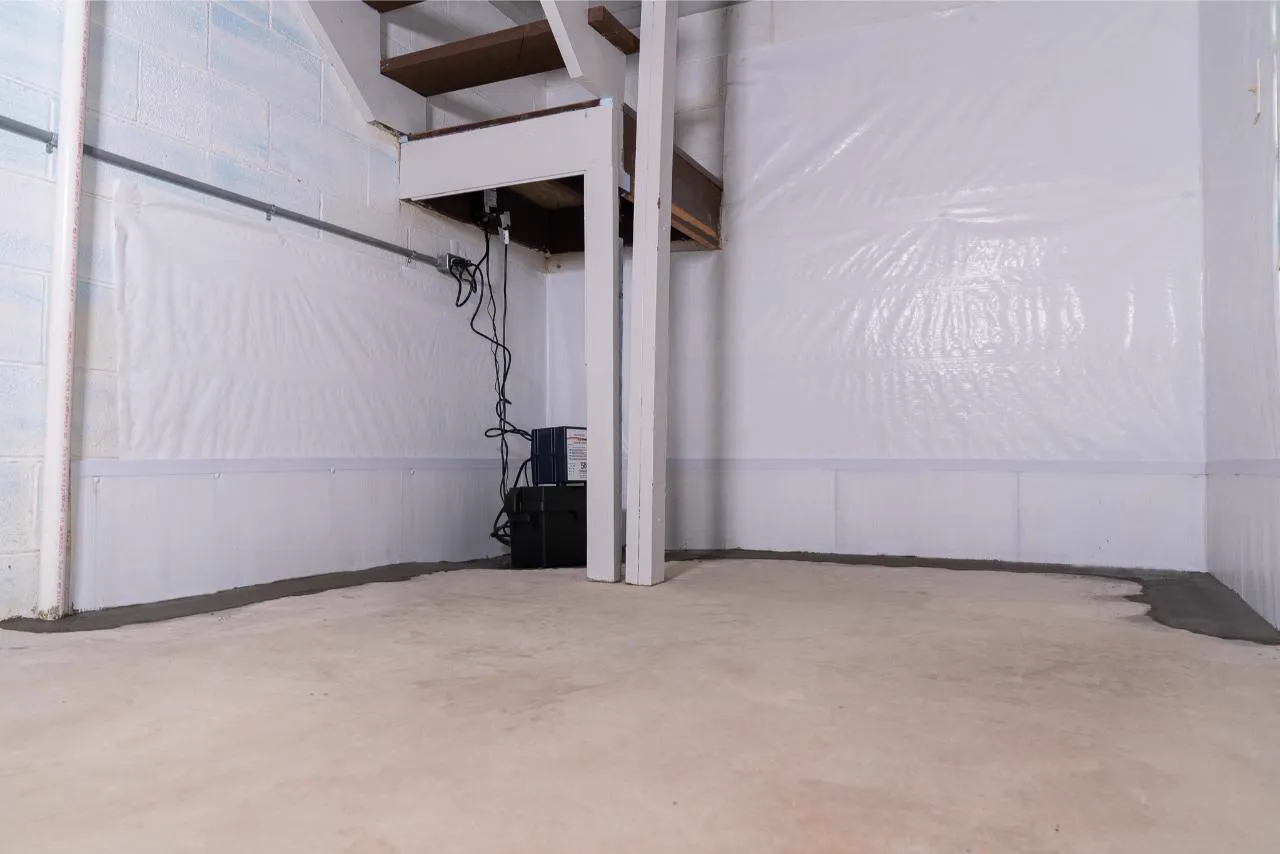
Why does hiring local matter for this one?
Because a warranty is only worth as much as the company standing behind it. We’ve been doing this for more than twenty years, and our shop sits about thirty-five minutes southeast in Lawrenceville. If something needs a look in year six, you’re calling the same people who did the work — not a call center in another state.
Local also means we know these lots. We’ve worked the long sloped driveways in White Columns, the clay-heavy grades around Blue Valley, and the big walkout basements over in Six Hills. If you’re anywhere between Bell Memorial Park and Birmingham Falls, odds are decent we’ve already been under a house on your road.
Still figuring out what you’ve got? Our guide on standing water basement problems walks through the symptoms, and every system we install is laid out on our basement waterproofing page. If cracks or settling are part of the picture, start with foundation repair. Comparing notes with family up the road? We cover the same ground for Cumming flooded basement repair.
Where we work around Milton
We’re based in Lawrenceville, so Milton is an easy run for our crews. We work throughout Alpharetta, Roswell, Cumming, Johns Creek, Woodstock and Canton, plus Crabapple, Duluth, Suwanee and the wider Fulton and Cherokee County area. If you’re along Birmingham Highway or out toward Freemanville, we’ve likely got a truck nearby this week.
Questions Milton homeowners ask us
Mold can begin growing on wet building materials within roughly 24 to 48 hours. That window is why drying speed matters more than almost anything else after a flood. Get the water out, get soaked carpet and pad out, and get air moving the same day if you can.
Shut off power to that level at the panel before you step into standing water — and if the panel is near the water, call an electrician instead. After that, move what you can lift to dry ground and take photos for your records. Then call us, because extraction is much easier than restoration.
Because red clay holds water against the wall instead of draining it away. After a long rain that saturated soil builds pressure, and the water pushes through the cove joint or the hollow cores of block. Light rain never builds enough pressure to do it, which is why the problem seems to come and go.
It depends on your policy, so please check yours directly. Standard homeowners policies commonly exclude surface flooding, and sump pump failure coverage is usually a separate endorsement you have to add on. Your agent can tell you in one phone call what you actually carry.
Faster than most people expect. Standing water comes out first, then wet organics like carpet and pad, then dehumidification runs until a moisture meter says materials are dry. Looking dry and being dry are two different things, and only one of them protects your finishes.
Let’s find out what’s really happening under your Milton home
The inspection is free, the estimate is free, and nobody pressures you at the end. We’ll show you where the water gets in, which of the four causes it was, and what it takes to stop it — even if the answer is simpler than you expected.
(678) 914-5112Serving Milton and all of Metro Atlanta · $500 off projects over $3,500 · Live support 7am–8pm, 7 days a week