

How to Choose Flood Restoration Peachtree Corners Homeowners Actually Trust
What a good crew does after the water, how to read the scope, and the questions worth asking first.
Every March the same thing happens. A long Georgia rain parks over Gwinnett for two days, and by Sunday morning the search for flood restoration Peachtree Corners homeowners can trust starts from a wet basement stair with a flashlight. So if that’s your weekend, take a breath. This is a solved problem, and picking the right crew matters more than picking the fastest one.
Spring is the loud season, but fall sneaks up on people too. The tree canopy over these neighborhoods is heavy, and leaf drop buries gutters and yard drains by November. Water that used to run away from the house starts running toward it instead. Same storm, different ending.
Why does this city flood in waves?
Because the whole town gets the same weather on the same day. When a storm sits over the corridor along Jimmy Carter Boulevard, dozens of basements take on water within hours of each other. That’s also why the good local crews book up fast, and why the out-of-town trucks show up in the driveway before you’ve even called anyone.
Good news, though — the volume of calls doesn’t change what your house needs. It only changes who’s available. Knowing what to ask keeps you from hiring whoever knocked first.

What makes Peachtree Corners homes different?
Start with when they were built. Most of this city went up between the early seventies and the mid-nineties, which makes it the oldest large body of really good housing stock on our side of the map. These homes were mostly built before modern basement waterproofing was standard practice. Many of them never had a real system — they had a coat of tar and good intentions.
Then add the ground. Red clay sits over rock that comes close to the surface, especially in the streets that fall toward the Chattahoochee bluffs. Clay holds water instead of letting it drain, so after a two-day rain the soil beside your foundation acts less like dirt and more like a wet sponge leaning on the wall.
One more piece explains most of the calls we take here: original clay or perforated drain tile that’s completely silted shut. Fifty years of fine clay washes into those old lines until they carry nothing at all. The system didn’t break, exactly. It just filled up, quietly, over decades.
Good news
A basement that floods is almost always a drainage problem, not a structural one. Most of the homes we inspect here need water managed, not walls rebuilt — and we’ll tell you that on the spot when it’s true.
Newer parts of town behave differently, which is worth knowing if you’re comparing notes with a neighbor. Around Town Center at Peachtree Corners the construction is recent and the drainage was designed in. Over in the older sections near Simpson Elementary, the houses are lovely and the drainage is fifty years old. Same city, two completely different conversations.
What should a good crew do differently?
Simple test: do they measure, and do they show you? A real restoration crew carries a moisture meter and uses it on framing, subfloor and the bottom of the drywall — then turns the screen around so you can see the reading. Numbers before work, numbers after. That’s how you know the space is actually dry instead of just feeling dry.
Next, they should be taking photos before anything moves. Wide shots, close shots, meter readings, the water line on the wall. Your insurer wasn’t standing in the basement at 6 a.m., so the documentation is the only version of events that exists. A crew that shrugs at that step is making your claim harder for no reason.
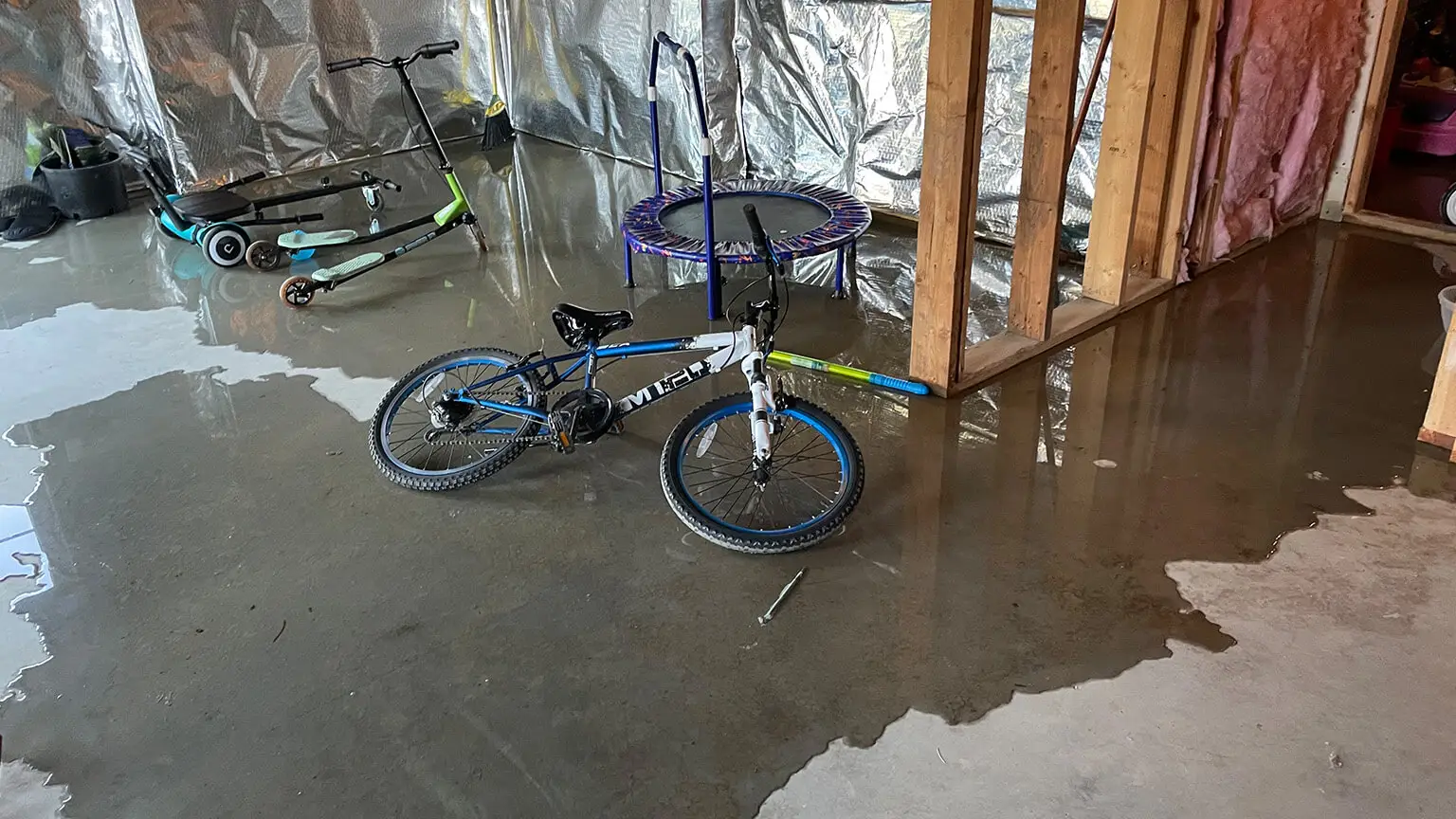
Third, wet organic material comes out. Soaked carpet pad, saturated drywall, wet insulation and particleboard all hold moisture long after the air feels fine. Mold can start growing on wet organic material in roughly 24 to 48 hours, so drying around those materials isn’t a shortcut — it’s a repeat visit. The CDC’s guidance on mold cleanup after flooding walks through it in plain language if you want a second opinion in your pocket.
Last one, and it’s the big one. A good company separates the cleanup from the permanent fix and says so out loud. Extraction and drying handle today. Finding and stopping the entry point handles next March. Anyone who blurs those two together is selling you half a job with a whole-job price.
Here’s the easier first step most people don’t realize they have
You can get a free diagnostic inspection before you sign anything with anybody. Not a sales visit. An actual walk of the house — outside and in — that ends with a written explanation of where the water came from and what it would take to stop it. It costs nothing, and it changes every conversation that follows.
Why it helps so much: once you know the source, every bid becomes readable. A proposal that addresses the entry point is worth comparing. A proposal that only mentions fans and dehumidifiers is fine for the cleanup and silent on the cause. Same money, very different outcome.
The best call we get all spring is the one that starts with, “nobody’s touched anything yet, can you look first?”
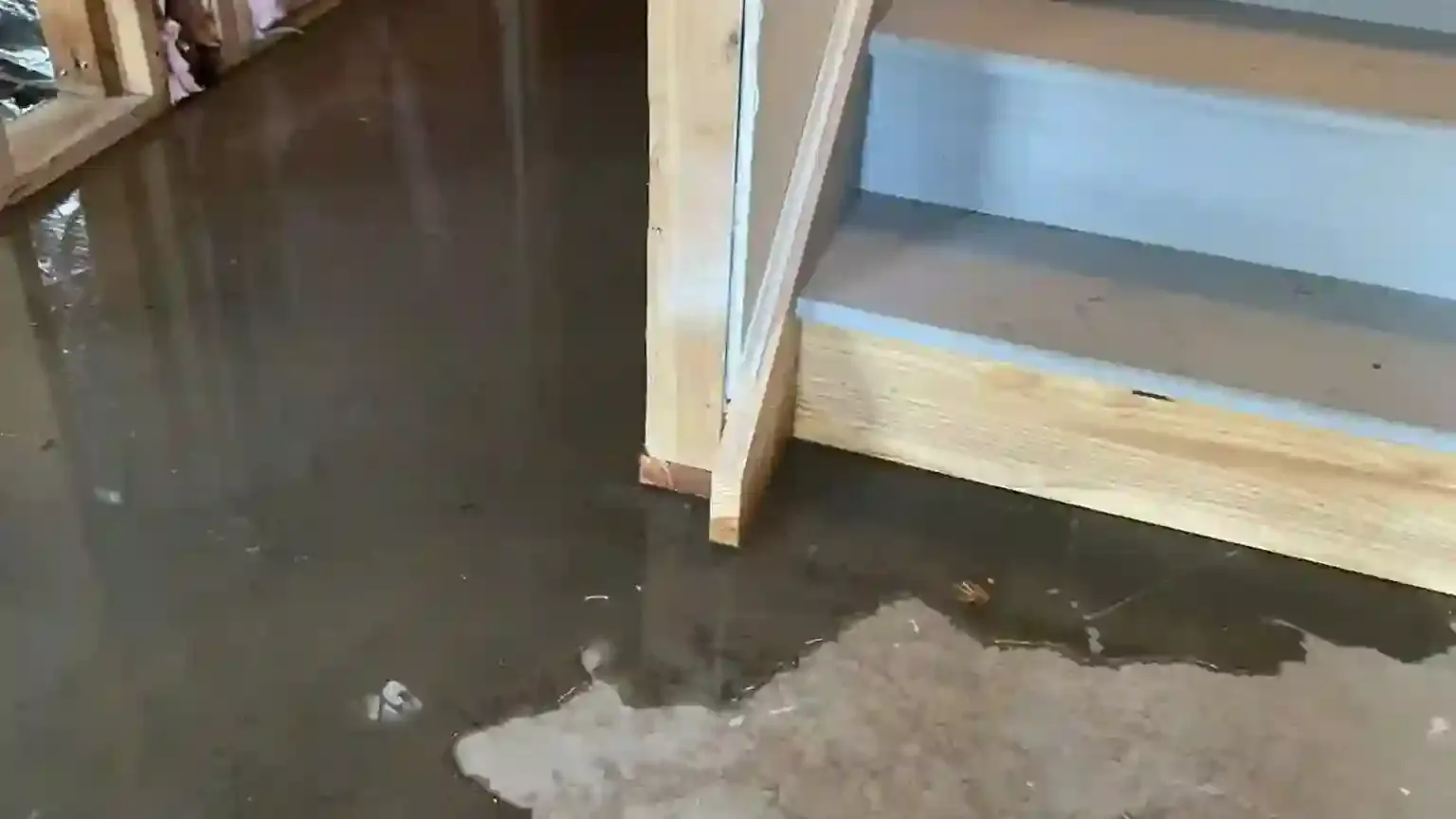
Where do we usually find it? The cove joint — the seam where the wall meets the floor. Under hydrostatic pressure, water in saturated clay pushes up and in right at that seam, which is why the floor gets wet while the walls look fine. A crew that never goes looking for the source is, honestly, selling you a repeat.
How do you read the estimate?
Line by line, and out loud if that helps. A real scope of work from any flood restoration Peachtree Corners company names what’s being removed, what’s being dried, how many linear feet of drainage go in, where the sump discharges, and what the moisture targets are. A weak one says “water mitigation” and a number. Folks around here compare bids carefully, which we genuinely like, because detail is why we win jobs.
Questions worth asking before you hire anyone
- Where did the water get in, and how do you know? A confident answer includes something they saw outside.
- Will you take moisture readings and show me? Before and after, in writing.
- What gets removed versus dried? Soaked organic material should be on the removal list.
- What’s your response time this week? Fair to ask, since the first two days matter most.
- Is the permanent repair a separate line item? It should be, because it’s a separate job.
- Will you document for my insurer? Photos, readings, and an itemized scope.
- Can I see proof of insurance and the warranty? Any real company hands both over without flinching.
About cost, we’ll be straight with you. Cleanup pricing moves with how much water there was, how much material has to go, and how many days the equipment runs. The permanent side moves with linear feet of drainage, slab access, and whether a sump basin already exists. After we walk it, you get one written figure with the scope spelled out — never a “starting at” and never a phone guess.
Which red flags actually matter?
A firm price over the phone before anyone has seen the water is the first one. Nobody can price what they haven’t looked at, so that number is either padded or about to change. Pressure to sign while you’re rattled is the second, and it’s the one we hear about most after a big storm week.
No written scope is the third. If the plan lives entirely in a conversation, there’s nothing to hold anyone to later. And the fourth is the quiet one: treating extraction as the whole job when nobody ever found the entry point. The basement dries, the invoice clears, and the next long rain brings the same water back through the same seam.
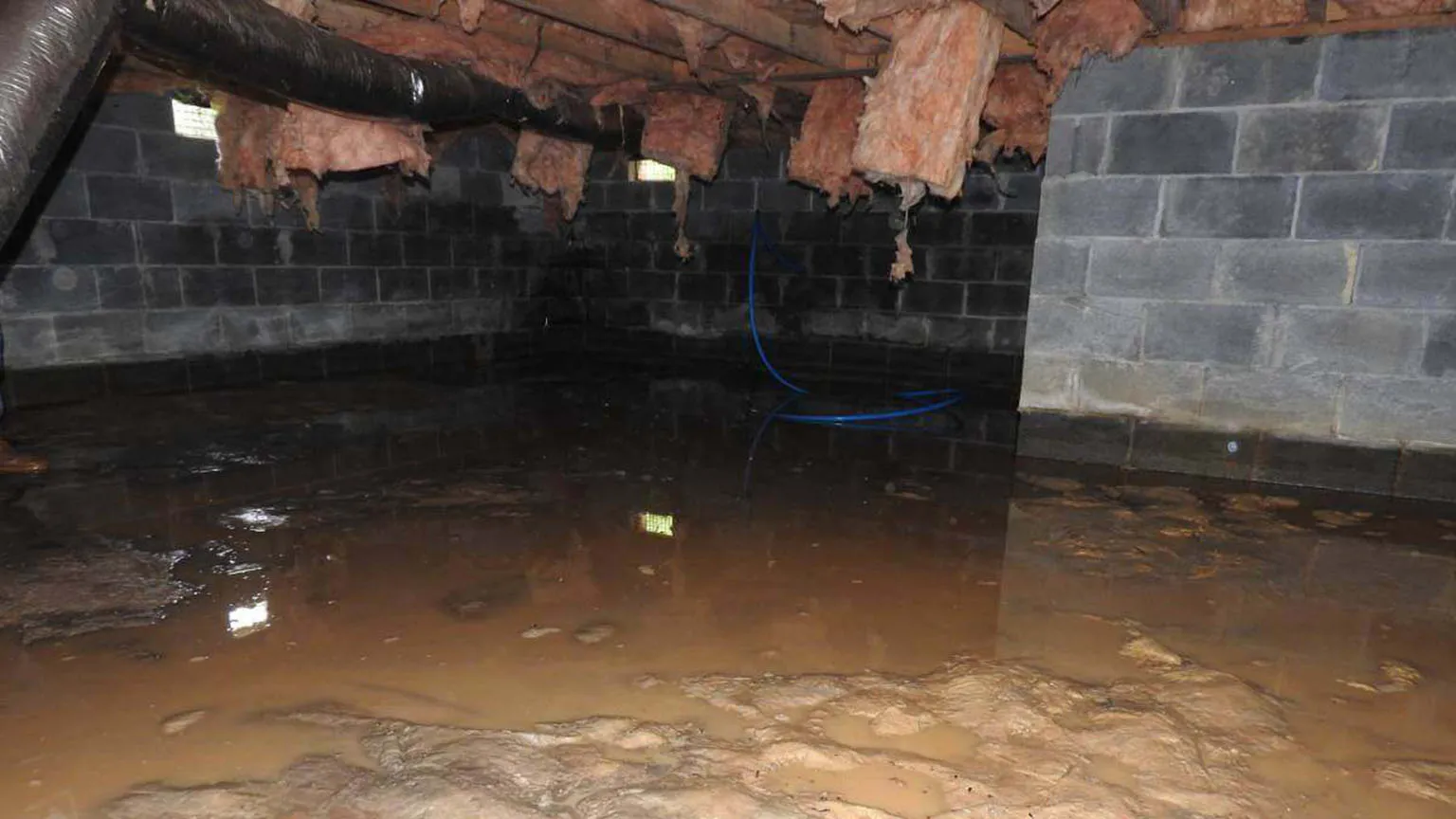
On insurance, here’s the honest version: standard homeowners policies commonly exclude surface flooding, and sump-related coverage is usually a separate endorsement you have to add. That said, documentation helps no matter which way your policy lands. Read your own declarations page, and if you want background on how flood risk gets handled, FEMA’s building science resources are a solid, unbiased place to start.
What happened on the Riverfield side?
Want the one that surprised everybody? A homeowner in Riverfield called us after a spring storm with about an inch of water across a finished basement. Two crews had already quoted big demo. One inch across a 1,000-square-foot floor is more than 600 gallons of water, which is exactly why the shop vac felt hopeless by hour two.
Then we went outside. The original perforated drain tile from the seventies was silted solid, so roof and yard water had nowhere to go but into the clay beside the wall. Meanwhile the water indoors had come up at the cove joint, not down the block. The finished walls weren’t the problem. They were just the part everyone could see.
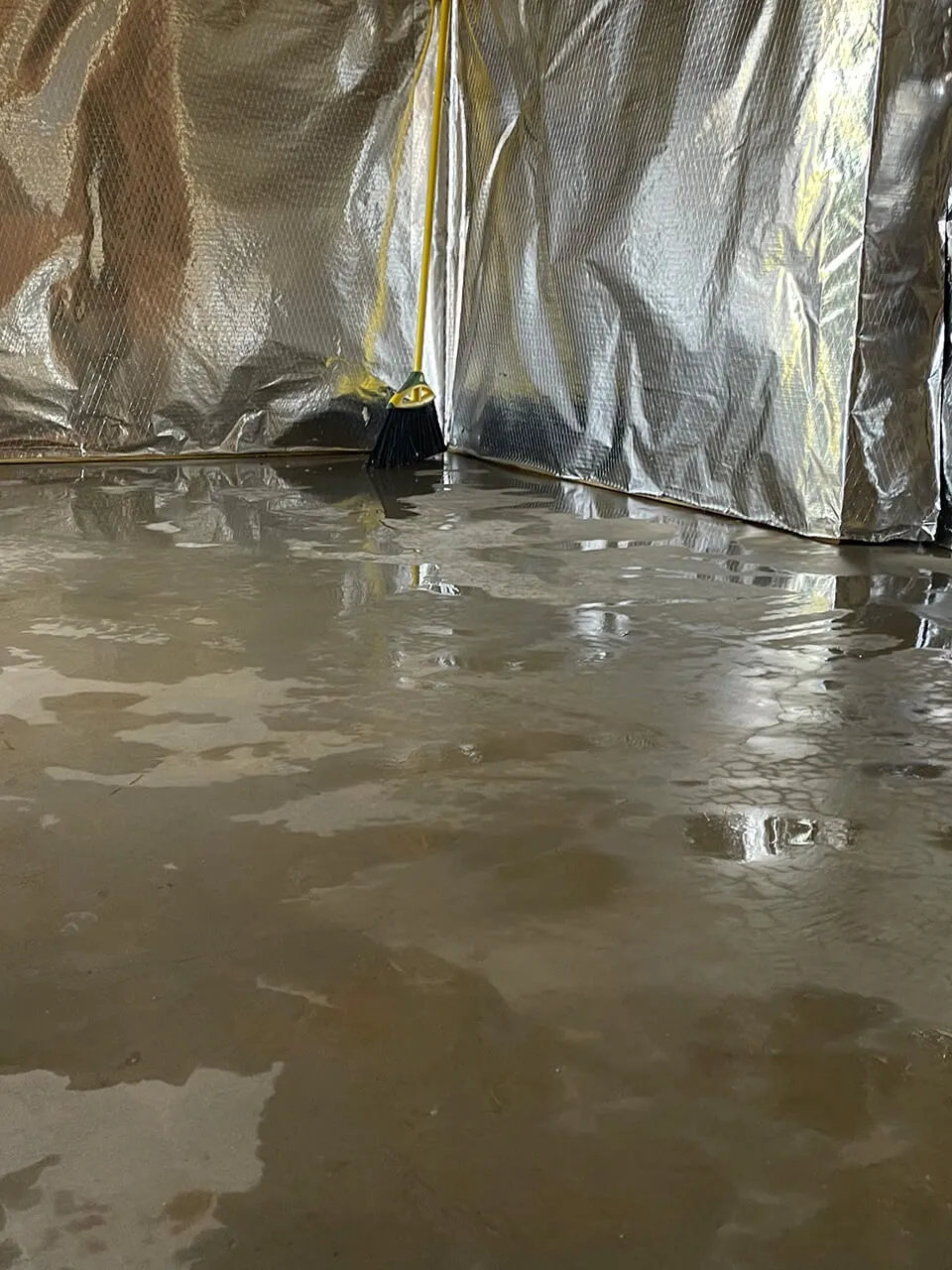
So the work came in smaller than the demo bids: pull the soaked pad and the bottom band of drywall, dry and document the framing, then install interior drainage along the two walls that were actually taking water and route a discharge well away from the house. Three days, start to finish.
Picture the after, because that’s the whole point. The next long April rain came through and the floor stayed dry. The musty smell at the bottom of the stairs went away and stayed away. Best of all, the basement went back to being a room they use instead of a room they check on. That’s the feeling we’re after — relief, not drama.
Why we might be the right fit
We’re about twenty minutes northeast of you in Lawrenceville, and we’ve been doing this for over twenty years. If you want flood restoration Peachtree Corners neighbors have already used, we’ve probably worked a street near you. Because so much of our work sits in these older Gwinnett neighborhoods, we know what’s behind the walls before we open them — from the sloped lots in River Station to the flatter streets over near The Forum on Peachtree Parkway. Familiar housing stock means faster, more honest diagnoses.
We also stay in our lane on purpose. We stop the source, protect the structure, explain the plan in plain English, and build it to last. If the right answer for your home is smaller than what you were quoted elsewhere, that’s what the report will say.
Still figuring out what happened down there? Our guide to a flooded basement covers the first 48 hours step by step, while basement waterproofing lays out the drainage systems we install. If you’re also seeing cracks or a sticking door, foundation repair is the better read. And if family one town over has the same trouble, we cover Dunwoody best basement drainage too.
Where we work around Peachtree Corners
We’re in this city constantly, from the older streets on the river side of town to the newer blocks by Town Center. Beyond Peachtree Corners, we work in Norcross, Duluth, Johns Creek, Dunwoody, Berkeley Lake, Sandy Springs, Suwanee, Lilburn and Lawrenceville, plus the wider Gwinnett area. Odds are we already have a truck near you this week.
Questions Peachtree Corners homeowners ask us
Because saturated clay pushes water upward, not just sideways. That pressure finds the cove joint, which is the seam where your wall meets the slab, and that seam is the easiest path in. So the floor gets wet while the walls look perfectly fine.
Yes, when the fix addresses the source rather than the symptom. That usually means giving the water a managed path out through drainage and a sump, plus correcting whatever is dumping water beside the foundation. Cleanup alone dries today, while source work is what keeps next spring quiet.
It depends on how much material has to be removed and how many linear feet of drainage the house needs. Small drainage corrections sit at the low end, while a full perimeter system with a new sump in a finished basement sits at the high end. After we walk the house, you get one written number with the scope spelled out.
That’s still worth looking at, because the path the water uses doesn’t close on its own. In these older homes it’s often a silted drain line that only backs up during the longest rains. The fix is usually the same size whether it happens twice a year or twelve times.
For a small spill, sure. For an inch across a basement floor, that’s more than 600 gallons, and a household vac can’t keep pace with it. Soaked pad, drywall and insulation also hold moisture that fans won’t reach, so those materials need to come out rather than dry in place.
Let’s find out where the water is really getting into your Peachtree Corners basement
The inspection is free, the estimate is free, and nobody pressures you at the end. We’ll show you the entry point, the readings, and how big the job honestly needs to be — including the times the answer is smaller than you expected.
(678) 914-5112Serving Peachtree Corners and all of Metro Atlanta · $500 off projects over $3,500 · Live support 7am–8pm, 7 days a week