

How to Hire the Best Basement Drainage Milton Homeowners Can Count On
Which system fits your lot, how to read a real scope of work, and the questions that sort the good crews from the fast ones.
There’s a room down there you stopped using. Maybe it was the theater, or the gym, or the guest suite your in-laws liked — and now the door stays shut after a hard rain. If you’re shopping for the best basement drainage Milton has to offer, that closed door is usually the real reason, and it’s a very fixable one.
Here’s the thing: nobody calls us because they love drainage. They call because a nice part of the house quietly turned into storage. So let’s talk about getting the room back, and about picking a crew that gets it right the first time.
Why do Milton lots move water the way they do?
Start with the ground under you. Georgia red clay doesn’t drain — it holds. After a long rain, clay stays saturated for days and leans that wet weight against your foundation wall. That pressure has a name, hydrostatic pressure, and it’s simply water pushing because it has nowhere better to go.
Now add the lots. Milton isn’t small suburban squares; it’s rolling acreage and wooded parcels, with real grade changes from the mailbox to the back fence. Out toward Birmingham Highway (GA-372) especially, one property can shed a startling amount of surface water toward a single low corner of the house.
Septic matters here as well, since many homes sit on their own drain field. When that field stays saturated through a wet stretch, the soil near the foundation never gets a chance to dry out.
Then there’s the housing stock. Most homes around town were built between roughly 1995 and 2015, and those basements are big and finished — theaters, wine rooms, gyms, in-law suites. In Milton the basement isn’t storage. It’s a floor of the house, which means a small amount of water down there causes a very large amount of damage.
Which drainage fix actually matches your house?
Good news? There are really only three main routes, and a good company will tell you plainly which one your home needs. Drainage is the permanent half of the problem — sealing and patching handle symptoms, while drainage decides where the water goes for the next thirty years.
Interior perimeter drain to a sump
This one targets the cove joint, which is where wall meets floor and where most water enters under pressure. A channel is cut along the inside base of the wall, perforated pipe goes in below the slab, and everything runs to a sump basin that pumps it away from the house. It’s the least disruptive option, because nobody touches your landscaping or your driveway.
Exterior footing drain
Sometimes the smarter play is stopping water before it ever reaches the wall. That means excavating down to the footing, waterproofing the outside face, and setting drain pipe in clean stone. It costs more and it disturbs the yard, so we only recommend it when the outside is genuinely the entry route.
Grading and downspout extensions
Real talk: this is the fix homeowners underestimate the most, and on clay lots it often matters more than anything else. Roof water needs to land far from the foundation, and soil should fall away from the house rather than toward it. We’ve solved wet corners in the Crabapple Market district with a regrade and two buried downspout lines — no jackhammer, no drama.
Worth saying out loud
Sometimes the cheapest correct fix is entirely outside the house. A company worth hiring will tell you that even though it’s the smaller invoice.
What happens after the crew packs up?
Ready for the part almost nobody asks about during the sales visit? Installation day is the easy part. The system’s real test comes eighteen months later, at 11 p.m., in the middle of a spring storm — so ask what the plan is for that night.
Sump pumps don’t fail mysteriously. They fail in about five predictable ways, and every one of them has an answer:
How pumps actually fail
- Power loss during the storm. The heaviest rain and the outage tend to arrive together. A battery backup covers exactly that gap.
- A stuck float. The switch hangs up on the basin wall or on debris, so the pump never gets the message to run.
- Undersized for the house. A big Milton basement with a long perimeter can outrun a small pump on a heavy night.
- No check valve. Without one, water in the discharge line falls right back into the basin and the pump runs itself ragged.
- A clogged or frozen discharge. The pump works fine; the water simply has nowhere to exit.
So ask about a battery backup before you sign, because a good crew expects that question. Ask who answers the phone if it fails, too. If we warranty a system, you’re calling us — not a call center in another state.
Picture the payoff, though. A storm rolls through, you hear the pump cycle once from upstairs, and nothing else happens. That quiet is the whole product.

How do you read a drainage estimate?
Slowly, and line by line. Homeowners here tend to compare proposals carefully, which we genuinely like, because detail is how we win work. A strong scope names the system, the linear feet, the depth, the pump size, the discharge location and the warranty terms. A weak one says “drainage system” and a total.
So bring a short list with you:
Questions to ask before anyone starts
- Where exactly is the water entering, and how did you determine that? If they never walked the yard, they’re guessing.
- Why this route instead of the cheaper one? A real answer compares options out loud rather than skipping them.
- How many linear feet, and why that section? Vague coverage produces a vague price.
- Where does the discharge end up? It should exit well away from the house and downhill, not back beside the foundation.
- Is a battery backup included or optional? Either answer is fine, as long as it’s stated.
- Is the warranty transferable, and what voids it? Ask for it on paper before you decide.
- Can I see the certificate of insurance? Any real company hands it over without hesitating.
Red flags get simple after that. Watch for a firm price quoted over the phone before anyone has seen the house, or a discount that disappears at midnight. Be careful too when the inspection never leaves the basement, when the scope carries no measurements, or when the same system gets recommended for every home regardless of what’s outside.
On cost, we’ll be straight. Grading and downspout corrections land at the low end, while a full interior perimeter system with a new sump and backup in a large finished basement sits well above that. What moves the number is linear feet, access, and how much finished space needs protecting. After we walk it, you get one written figure with the scope spelled out — never a “starting at.”
What’s the number that reframes this whole job?
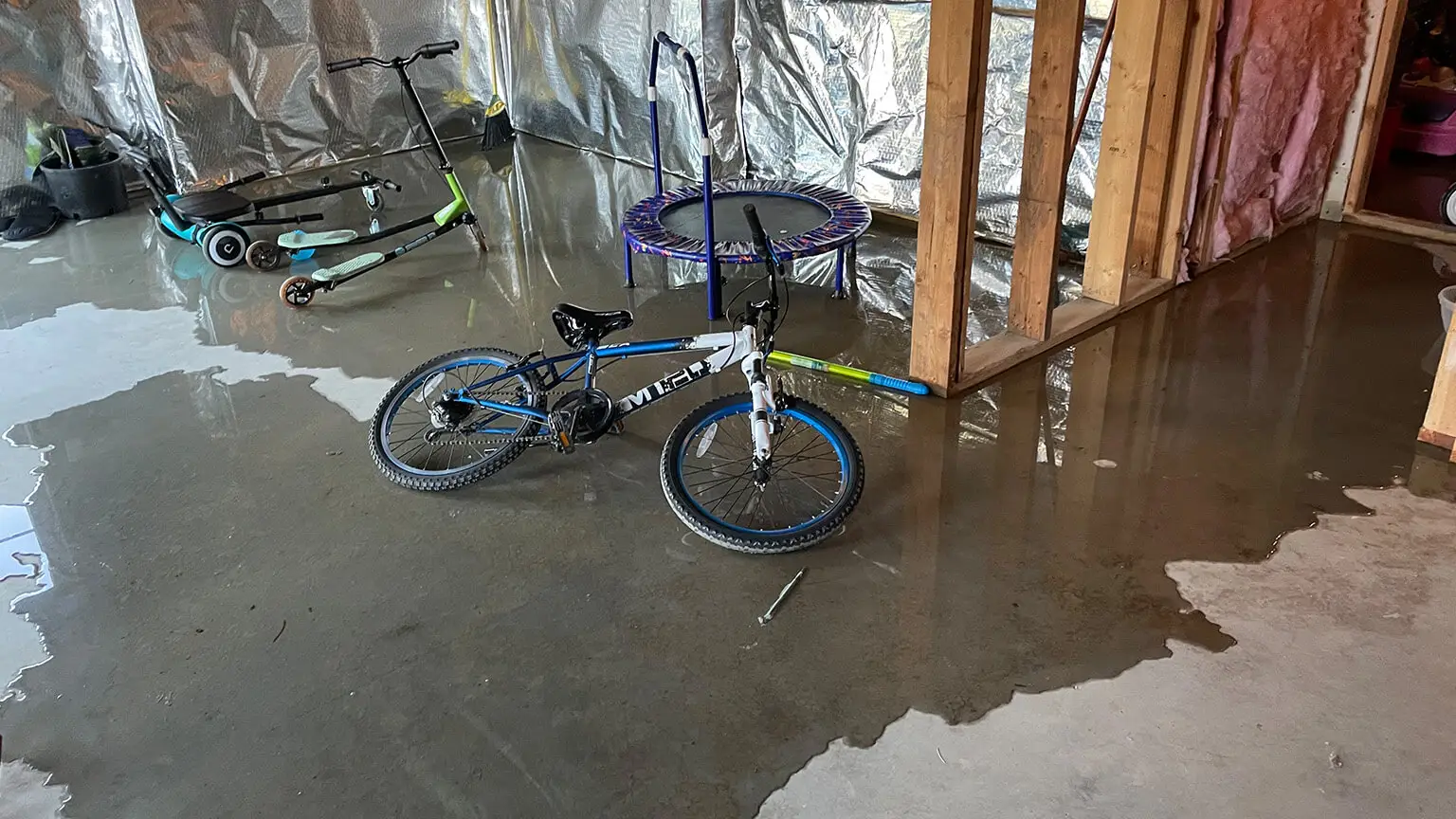
Here’s one worth remembering: mold can begin growing on wet building materials within 24 to 48 hours. Two days. That single figure explains why speed beats almost everything else after water gets in, and why drainage that works automatically is worth more than a plan that depends on you noticing.
Think about what that means in a home near The Manor Golf & Country Club or out around White Columns, where basements are finished and families travel. Water arrives Friday, and nobody opens that door until Sunday night. The drywall doesn’t wait for your schedule, so the system has to handle it while you’re gone.
Good news, though — that’s exactly what a real system does. Water reaches the cove joint, drops into the channel, hits the basin, and leaves. Nothing sits. If you want the deeper background, the CDC’s guidance on mold cleanup after flooding is a quick, useful read, and FEMA’s building science library covers how homes are protected from flooding in general.
Why we might be the right fit for your home
We’re based in Lawrenceville, about thirty-five minutes southeast of Milton City Hall, and we’ve been doing this for more than twenty years. Same crews, same trucks, same phone number. We know the properties around Crabapple Market and the big-lot homes further out, so we usually recognize a drainage pattern before we’ve finished walking the yard.
More importantly, we find the entry point before we quote. Every so often that means recommending the small outside fix, and honestly those are our favorite visits.
Still working out what’s happening down there? Our guide to flooded basement repair walks through the first 48 hours step by step, while the basement waterproofing systems we install are laid out in full detail. If you’re seeing cracks or settling along with the water, foundation repair is a separate conversation worth having. Comparing notes with family across the county line? We cover the same ground for Cumming best basement drainage.
And when it’s done, you get something better than dry. You get to walk somebody down those stairs and not think about it at all. That’s a good feeling — the house is solid, and you’re the one who took care of it.
Where we work around Milton
We’re up this way constantly, from the estate lots off Birmingham Highway to the tighter streets near Crabapple. Beyond Milton, we work in Alpharetta, Roswell, Cumming, Johns Creek, Woodstock, Canton, Sandy Springs and Dunwoody, plus Cherokee County and the wider north Fulton area. Odds are we already have a truck near you this week.
Questions Milton homeowners ask us
That’s still worth fixing, though it may not need the biggest system. Water that shows up only after long, heavy rain usually points to surface water and grading rather than constant pressure, so the correction is often smaller and cheaper. We’ll tell you honestly which situation you’re in.
For a small, one-time puddle on a bare slab, sometimes yes. In a finished basement it usually isn’t, because water travels behind baseboards and under flooring where a vac can’t reach. Drying the surface also does nothing about the route the water used to get in.
Mold can begin growing on wet building materials within 24 to 48 hours. That’s why drying speed matters so much, and why a drainage system that works on its own beats a plan that depends on someone being home. Move air early and get wet materials out of the way.
Cut power to the affected area at the panel before you step in, then lift anything you can off the floor. After that, start air moving with fans and a dehumidifier. Take photos for your insurance carrier, and call us for a free inspection so we can find the entry point while the evidence is still fresh.
Because red clay soaks up water and then holds it against the wall. Once the ground around the foundation is saturated, pressure builds and finds the cove joint where the floor meets the wall. Long driveways, downspouts and a saturated septic field can all push that soil past its limit faster.
Let’s find out what your Milton basement actually needs
The inspection is free, the estimate is free, and nobody pressures you at the end. We’ll show you where the water is getting in, explain why we’d choose one route over a cheaper one, and put the whole scope in writing — including the times the answer is smaller than you expected.
(678) 914-5112Serving Milton and all of Metro Atlanta · $500 off projects over $3,500 · Live support 7am–8pm, 7 days a week