

Wet Crawl Space in Loganville: What It Means and How It Gets Fixed
You closed that door for a reason. Here’s the plain-English cause of the smell — and what an honest fix looks like.
Which room in your house did you quietly give up on? For a lot of folks it’s the back bedroom over the crawl space, or the bonus room nobody sleeps in because it always smells like a tent that got packed away damp. That’s usually the first real sign of a wet crawl space Loganville homeowners are living over without knowing it. Good news right up front, though: this is one of the most common things we look at, and it’s very fixable.
Nobody plans to lose a room. It just happens slowly, because the air in there feels off and eventually you stop fighting it. So let’s back that room out of retirement.
Why does one room smell and the others don’t?
Because that room sits closest to the source. Damp air from the ground rises through gaps around pipes and wires, and it shows up strongest wherever the floor is thinnest or the ductwork runs longest. That’s why one hallway smells fine while the guest room smells like a basement nobody has.
You’ve probably noticed the other clues too. Cold floors in February. Sticky air even when the thermostat says 72. All of that traces back to moisture, and moisture almost always traces back down.
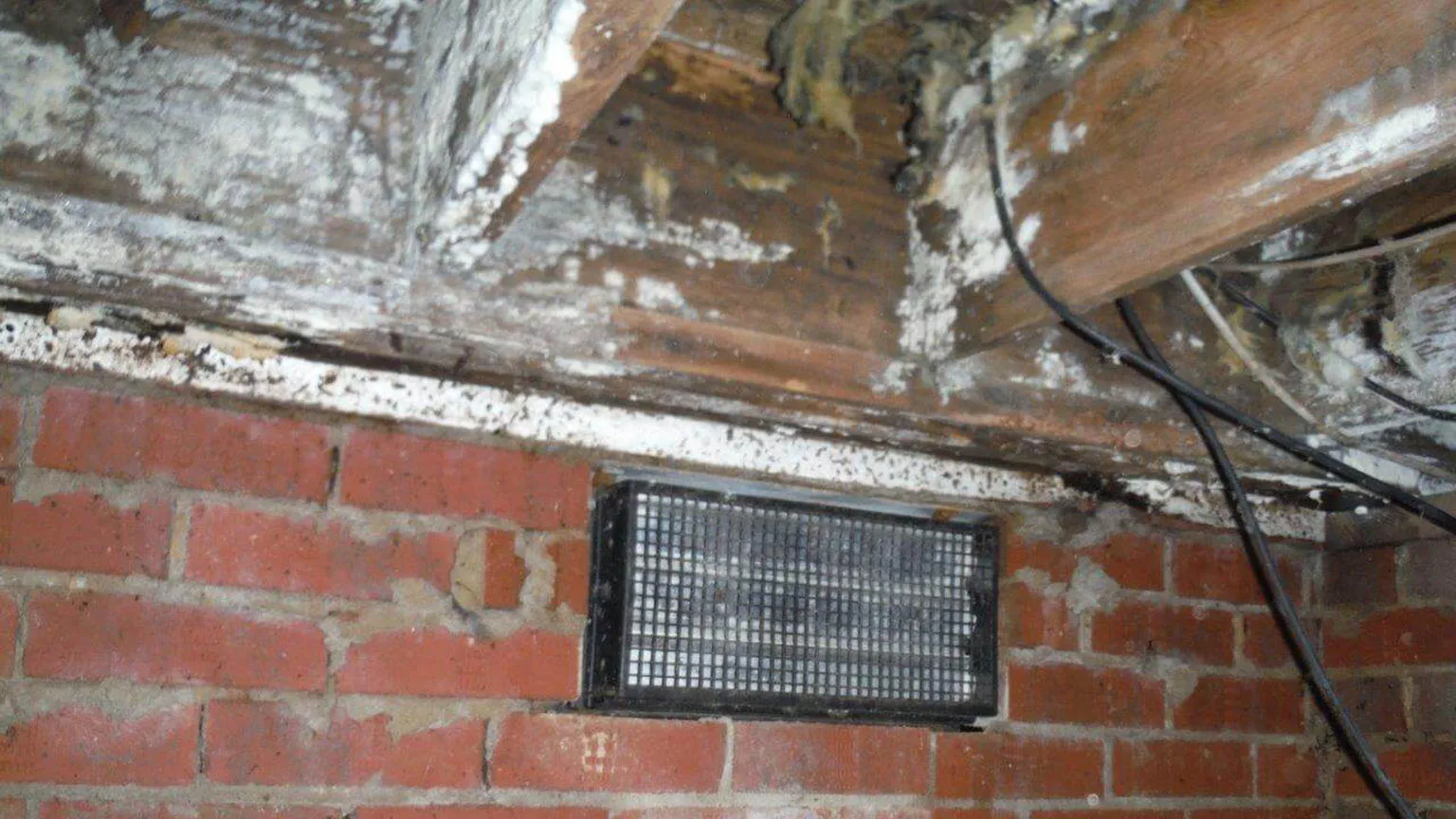
Wood is the honest witness down there. Framing starts supporting growth once its moisture content climbs to roughly twenty percent, and in a vented Georgia crawl space in August, joists hit that number regularly. So we bring a meter and show you the reading on the spot. That beats taking anybody’s word for it, including ours.
So what’s actually making it wet down there?
Three things, usually, and they pile on each other. First, bare dirt gives off water vapor all day long. Second, red clay holds rainwater like a sponge and lets it go slowly. Third — and this one surprises people — the foundation vents.
Open vents were code for decades, on the idea that outside air dries a crawl space out. In a humid climate, however, that backfires. Warm summer air rolls in, meets a cool subfloor and cool pipes, then drops its moisture right there as condensation. In other words, the vents built to dry the space end up watering it.
Worth knowing
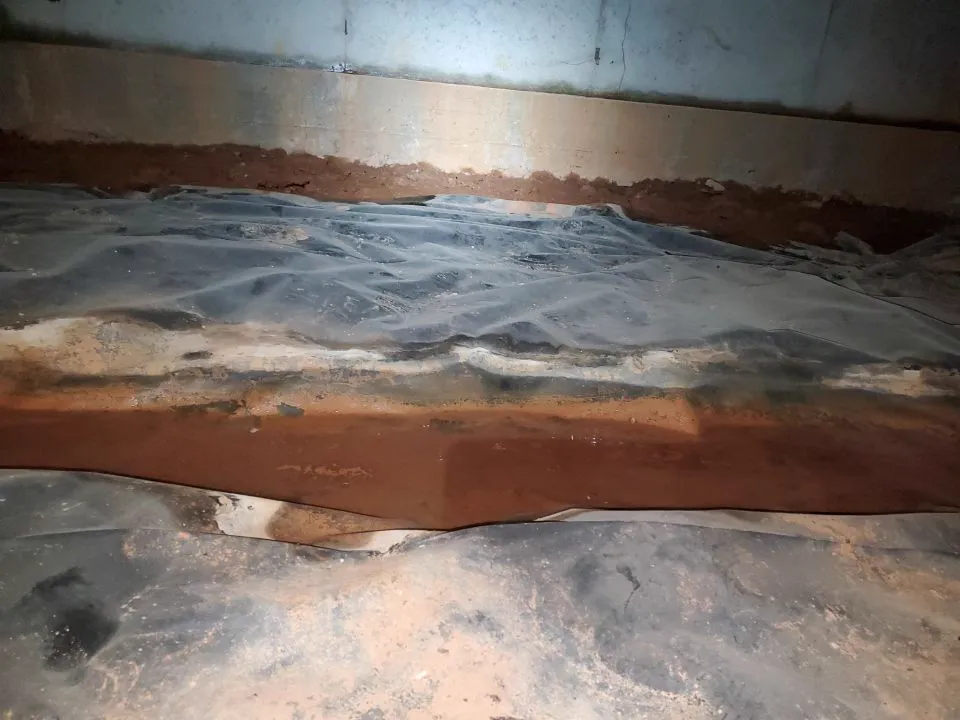
Old torn plastic laid loose on the dirt isn’t a vapor barrier. It’s more of a suggestion. A real barrier is thick, sealed at every seam, and run up the walls so the ground can’t feed the room anymore.
Loganville adds its own wrinkle. Lots out here run big and roll gently toward the Alcovy River, so one yard can hand a lot of water to one foundation. Plenty of properties have septic drain fields too, which keep the soil damp on purpose. That’s not a flaw in your house. It just means the water needs a plan.
Is yours mild, or is it more than that?
Fair question, and you can get most of the way to an answer from your hallway. None of the signs below are bad news. They simply show where you sit on the scale.
Reading the signs
- Musty smell, nothing visible. Moisture is arriving as vapor. Mild, and the least expensive version to solve.
- Indoor humidity parked in the mid-sixties. Your air conditioner is racing the ground and losing.
- Batt insulation drooping between the joists. Fiberglass soaks up moisture, gets heavy, then lets go.
- White fuzzy bloom on the rim joist. Surface growth on damp wood. Still very fixable at this stage.
- Standing water or soft mud after a storm. Time for a look. Bigger scope, same idea.
If you’d rather hear the health side from somebody who isn’t selling anything, the CDC’s page on mold and your home is short and calm. We’d genuinely rather you read a neutral source than trust a pitch.
Can we back up a second?
Here’s the thing. Underneath “why is my crawl space wet” there’s a bigger question most homeowners are really asking: did I do something wrong, or is my house just built badly? Neither one, almost always. Your house was built to the standard of its day, and that standard has changed.
That matters a lot around here. Most Loganville homes went up between the mid-nineties and about 2015, so a whole city’s worth of original moisture systems are aging out on roughly the same schedule. We see it by street. Established pockets like Bay Creek and Chandler Ridge often have builder plastic that quit years ago, while houses up in Wildwood are built tighter, which means moisture that gets in has fewer ways back out.
In other words, this is first-generation waterproofing reaching the end of its run. Neighbors compare notes at Vines Park on a Saturday and realize three of them got the same news that month. That’s not a scary pattern. That’s a predictable one, which is much easier to plan around.
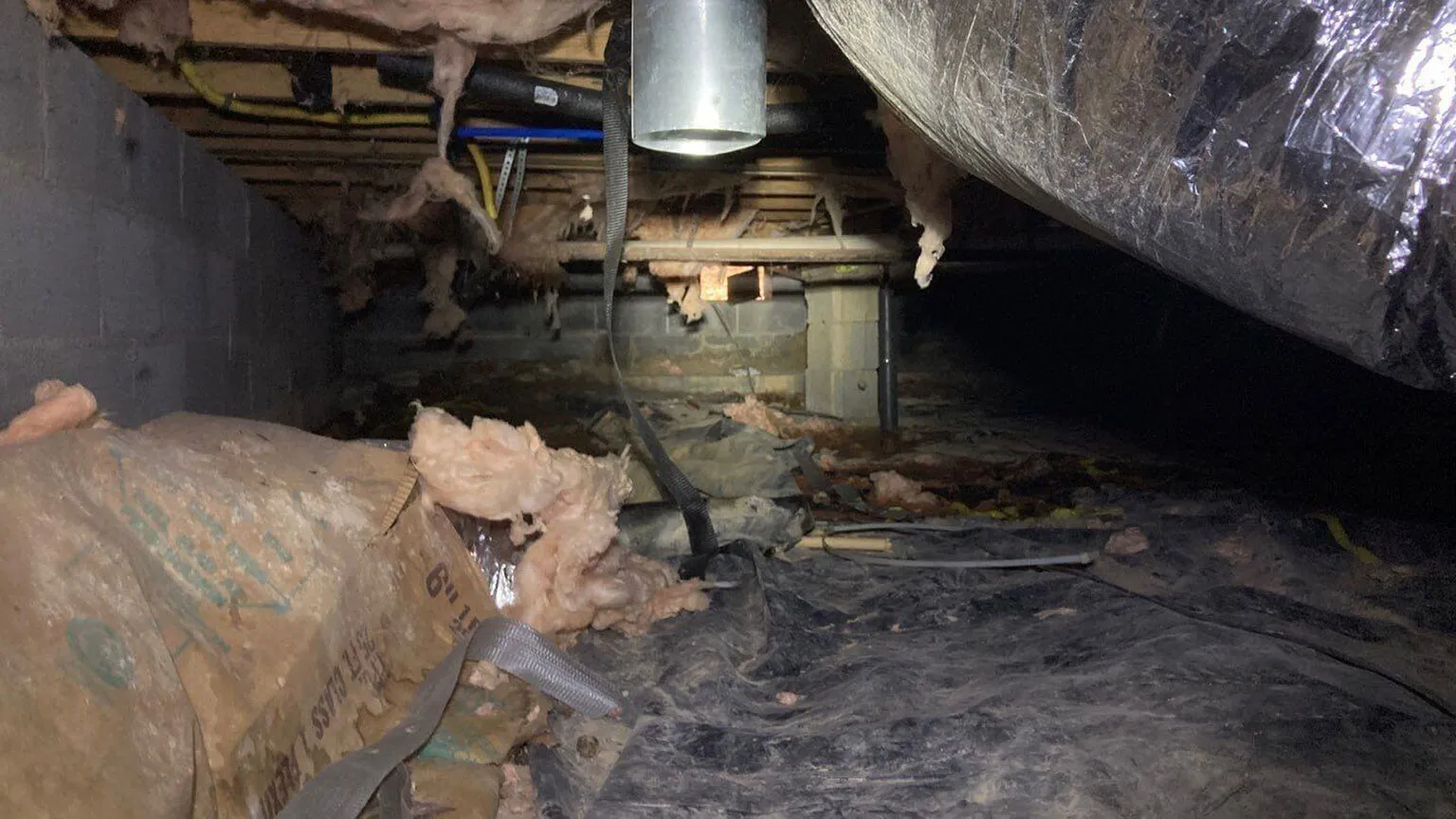
We had a homeowner off Tom Brewer Road who was sure the smell meant something was rotting. It wasn’t. His old plastic had sunk into the clay and a downspout was dumping right at the corner of the house. Two straightforward problems, one afternoon of diagnosis, and a whole lot of relief on his face.
What happens if you just leave it?
Nothing dramatic, honestly. A wet crawl space in Loganville widens slowly and quietly. Insulation keeps falling, humidity upstairs stays high, and your cooling system works a little harder each summer. Given enough years, damp framing can soften, which turns a sealing job into a carpentry job. So the reason to handle it sooner is cost, not fear.
Most of the time the house is fine. Something is simply delivering more water than the ground can carry away — and that’s a much friendlier problem to solve.
Folks around here don’t want to be talked into anything, and we like that. If a downspout and a liner will do it, we’ll say so and go home.
How does the fix actually work?
Simpler than most people expect. Fixing a wet crawl space Loganville homeowners have been living over means treating that space as part of the house instead of as outdoors. Here’s the order it happens in.
- Handle the water first. Downspouts, grading, and a drain with a sump if groundwater is showing up.
- Clear it out. Old plastic, debris and soggy fallen insulation come out. Wood gets cleaned and treated where it needs it.
- Line everything. A heavy liner runs across the dirt and up the stem walls, with seams sealed and piers wrapped.
- Close the vents. Once the ground is sealed, outside air has no drying job left — only a wetting one.
- Insulate the walls, not the ceiling. Foam on the stem walls keeps the space near house temperature, which stops condensation.
- Control what’s left. A dehumidifier holds humidity steady, plus a gauge you can read without crawling anywhere.
Wall insulation instead of ceiling insulation catches people off guard every time. The Department of Energy’s guide to insulation and moisture control explains why a sealed, insulated crawl space performs better in a climate like ours.
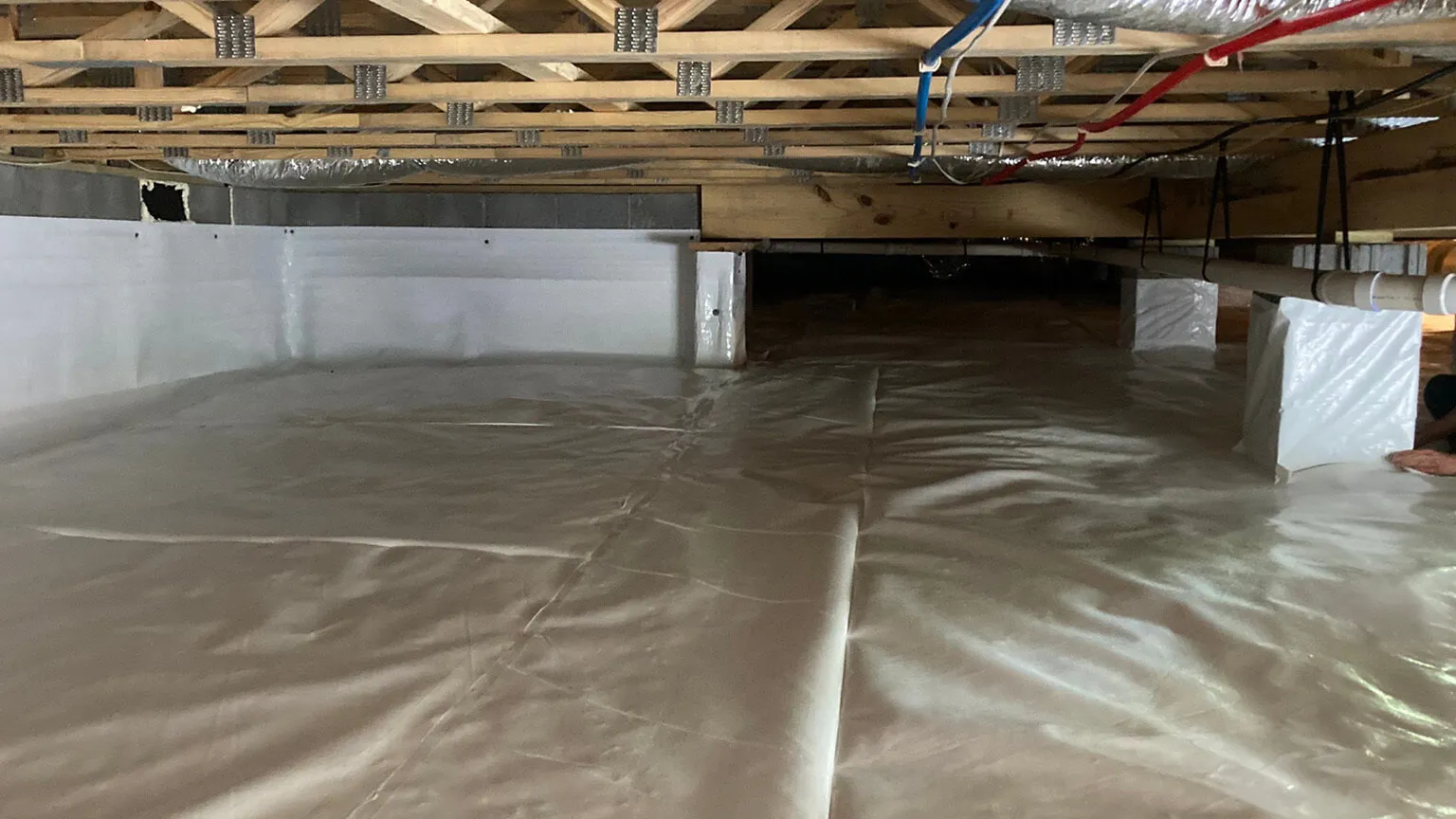
Most jobs run two to four working days. Pricing follows square footage, ceiling height, and whether water has to be moved, so our encapsulation cost breakdown lays out the drivers before you ever call. The crawl space repair page shows exactly what we install and why.
We also put the whole scope in writing, with proof of insurance and a warranty you can read in one sitting. Homeowners out here compare proposals line by line, and honestly, we’d do the same.
What does this have to do with the air upstairs?
More than almost anyone expects, and this is the part that changes how people think about it. Warm air rises and escapes through the roof, so replacement air gets pulled in from the lowest point in the house. Building scientists call that the stack effect. Their research shows a large share of the air you breathe on the main floor started down in the crawl space.
Out in Loganville a lot of homes sit on crawl spaces, and a wet crawl space doesn’t stay down there. That damp air rides right up into the house you’re living in, carrying the smell with it. Which means you were never smelling your guest room. You were smelling the dirt under it.
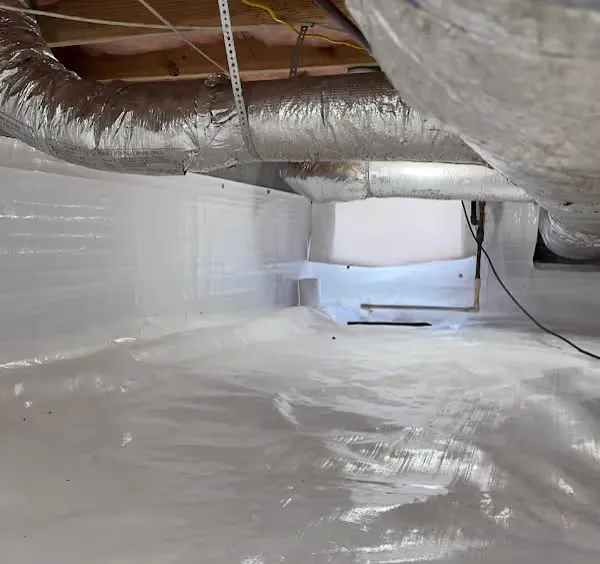
Seal the ground and the whole chain changes. The smell fades within a week or two, because the source is gone instead of covered. Floors stop feeling cold in the morning, and the humidity number on your thermostat finally sits still.
Then the best part shows up. You open that door again, put a bed back in there, and the room is just a room. A year later most people forget the whole thing happened — except for the quiet satisfaction of knowing the house is solid because they took care of it.
If your place has a full basement on one side and a crawl space on the other, which is common in the newer subdivisions, our flooded basement repair guide covers that half of the story. And if you want to see how the same houses behave closer to the perimeter, the Tucker wet crawl space guide walks through it.
Where we work around Loganville
We’re based in Lawrenceville, about twenty minutes northwest of downtown Loganville, and we’re on both the Walton side and the Gwinnett side constantly. That includes Loganville, Snellville, Grayson, Monroe, Between, Bay Creek, Dacula, Walnut Grove, Centerville, Lawrenceville and the wider Walton and Gwinnett Counties area. Big lot, long driveway, septic field to work around? That’s normal out here, so plan on us working around it.
Questions Loganville homeowners ask us
In most sealed crawl spaces, yes, and it’s a small part of the job. The liner stops the ground from adding moisture, but a dehumidifier holds the number steady through a humid Georgia summer. We set it and add a gauge you can read from the doorway, so you’re never guessing.
Closed, once the space is properly sealed and insulated. Open vents were meant to dry things out, but in our climate they invite warm, damp air onto cool surfaces instead. Until the ground is sealed, though, don’t just shut them on your own — the order of operations matters here.
In almost every case, yes, because that smell is damp air traveling up from the ground. Once the dirt is sealed and humidity is held steady, nothing is left to carry the odor into your living space. Most homeowners notice a real difference within a week or two.
Most crawl spaces take two to four working days from start to cleanup. Add a day if drainage or a sump is part of the scope, and another if the space is tight or packed with debris. You can stay in the house the whole time, since all of the work happens below the floor.
Usually it helps, though how much depends on your house and your habits. Dry air is easier to cool than damp air, so your system runs shorter cycles in summer. Sealed walls also bring the ductwork in out of the weather, which cuts the energy you were losing under the floor.
Let’s find out what your Loganville crawl space really needs
We’ll go under the house, take real moisture readings and photos you can actually see, then explain the fix in plain language. The inspection is free, the estimate is free, and nobody pressures you. If it turns out you only need a small thing, we’ll tell you that.
(678) 914-5112Serving Loganville and all of Metro Atlanta · $500 off projects over $3,500 · Live support 7am–8pm, 7 days a week