

Encapsulation Cost Loganville: A Practical Guide for Crawl Space Homes
The steps in order, what moves the number, what you can do yourself, and how to check the work.
It’s 2 a.m. and the rain is hammering the roof hard enough to wake you up. You lie there for a minute, and then your brain goes straight down — under the floor, to the dark part of the house you never look at. By morning the storm has passed, but the thought hasn’t, so you start pricing out encapsulation cost Loganville numbers over coffee. Good news right away: this is fixable, and it’s routine work.
Better yet, you can understand the whole estimate before you sign anything. No mystery line items. Let’s walk it the way we’d explain it standing in your driveway.
Why do crawl spaces act up around here?
Because Loganville sits on rolling ground with big lots, red clay, and a lot of houses built on crawl spaces instead of slabs. Clay holds water like a sponge and gives it back slowly, so bare dirt under a floor stays a moisture source long after the rain quits.
Then the vents make it worse instead of better. Warm, wet summer air pours through those block openings, hits the cool surfaces under your floor, and lets go of its moisture — the way a glass of sweet tea sweats on the porch. Out in Loganville a lot of homes sit on crawl spaces, and a wet crawl space doesn’t stay down there. That damp air rises right up into the house you’re living in.
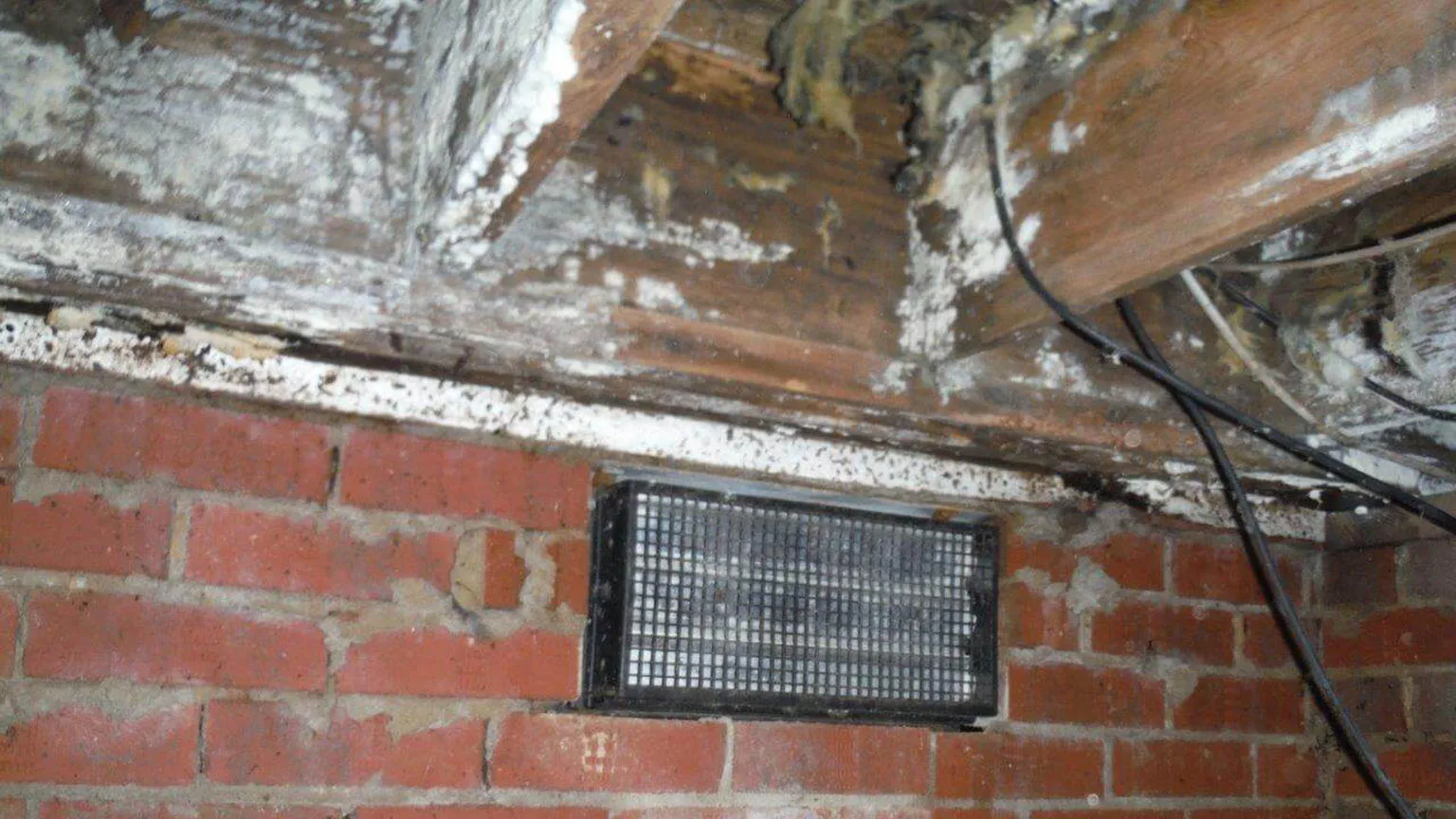
Here’s the number that makes it click. Wood starts supporting mold growth at around 20% moisture content, and in a vented Georgia crawl space in July, framing regularly gets there. Nothing dramatic happens overnight. Still, it explains the musty closet smell that shows up every summer and leaves every fall.
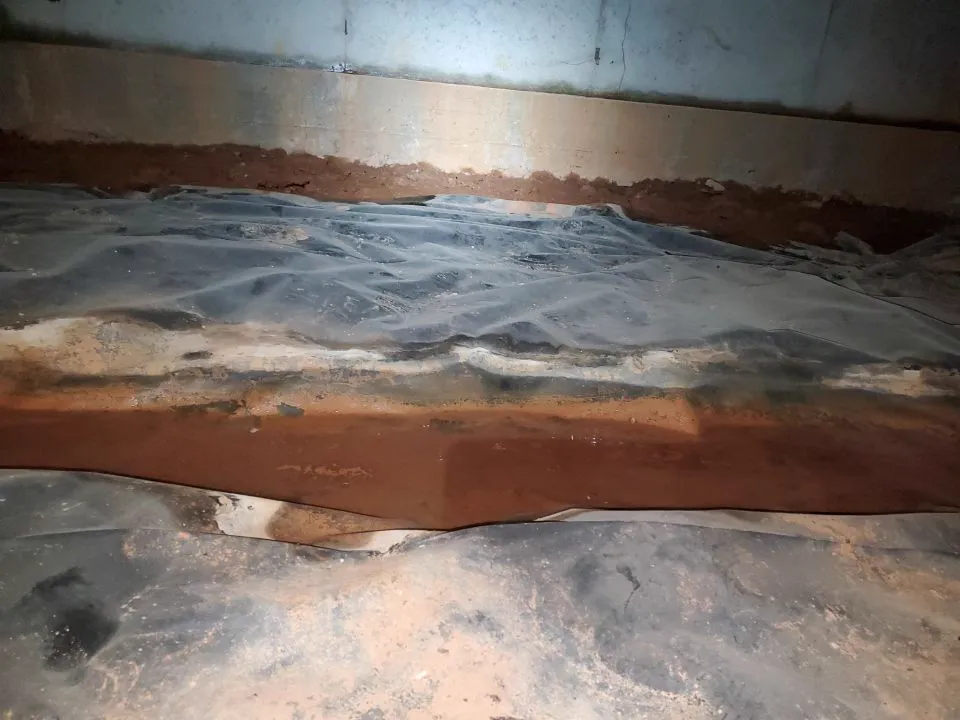
Geography plays a part too. Ground on this side of town drains toward the Alcovy River, so low-sitting lots hold seasonal water longer than the neighbors up the hill. We see the pattern in the older sections off GA-20 and again in Chandler Ridge, where mature trees keep the soil shaded and slow to dry.
Worth knowing
Damp and damaged are two different conversations. Plenty of the crawl spaces we look at are humid while the framing is sound. We’ll tell you which one you’ve got before anybody talks money.
What does the job actually look like?
Every house is different, but the order almost never changes. Below is the honest version, front to back.
- Inspect and measure. We crawl the whole space, measure it, check the framing and piers, and read the moisture level. Then you get photos, because most homeowners have never seen it.
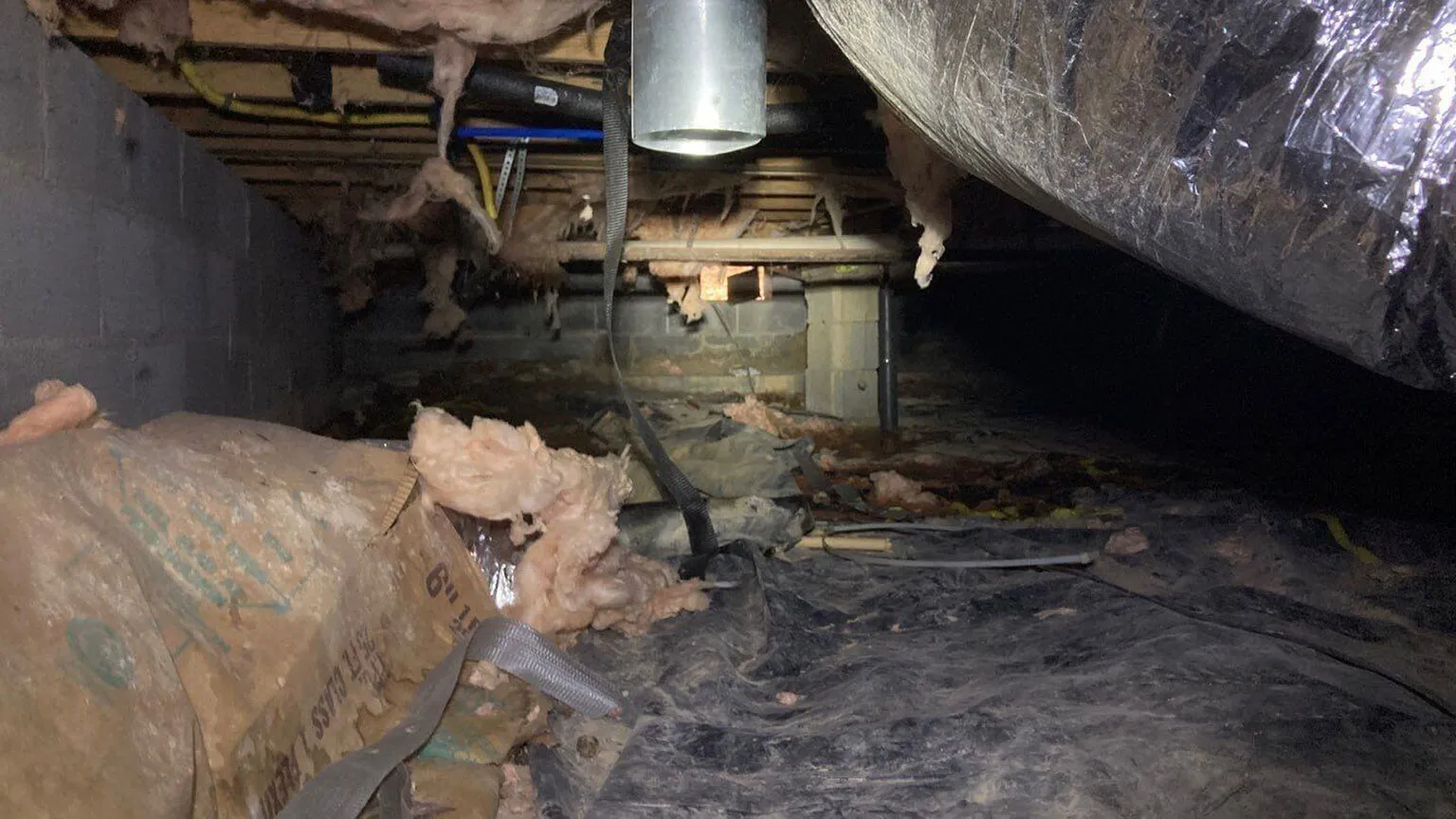
- Clear it out. Fallen insulation, torn plastic, and construction scraps come out first. Nothing gets sealed in.
- Handle the water. If water is getting in, that’s solved before anything else — a drain line, a sump basin and pump, or grading work outside.
- Treat the wood. Surface growth on joists or subfloor gets cleaned and treated while it’s still easy to reach.
- Seal the vents. Those openings get closed so outside air stops feeding the problem all summer.
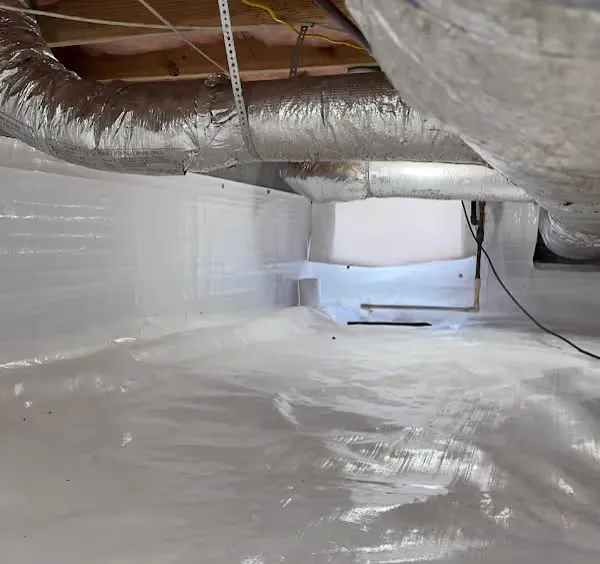
- Install the liner. A reinforced liner goes down over the ground, up the stem walls, and around every pier, sealed at the seams.
- Insulate and condition. Rim joists get insulated, and a dehumidifier sized to your space holds humidity steady year-round.
- Walk it with you. We show you the finished space in photos and leave the paperwork with you.
Timeline runs two to four working days for most homes here. Add a day for heavy debris, and another when drainage is in the scope. Your prep is light: clear a path to the access door, keep pets inside, and plan on a truck in the driveway.
Where does a patch stop and a real fix start?
Right here, and it’s the whole ballgame. A patch treats what you can see, while a fix treats where the water is coming from. Those two jobs look identical on estimate day and completely different two Julys later.
Take the older rural properties out past the Ozora corridor. Many sit on block piers, and when the crawl space stays wet long enough, the floor framing above starts to soften. A patch says “let’s put down plastic.” A fix asks why the ground under those piers never dries out, then deals with that.
The estimate isn’t the first thing that should show up at your house. The diagnosis is.
So ask one question and listen closely: “Where is the moisture coming from, and how do you know?” A real answer is specific. Ground evaporation through bare clay. Humid air through open vents. Roof water dumping at the back corner. A septic drain field soaking one side of the lot. Any of those, and you’re talking to somebody who actually looked.
A vague answer sounds like “crawl spaces are always wet, we’ll wrap it.” That’s a product being sold, not a problem being solved. Because the source decides the scope, and the scope decides the price — which is why nobody should quote your house over the phone.
What actually moves the number?
Straight answer: square footage first, then how hard the space is to work in. We won’t publish a flat price, since a flat price for a crawl space is a coin flip in a nice font. Instead, here’s what we weigh.
Price drivers, biggest first
- Square footage. More ground and more wall means more liner, more seam work, and more hours. It’s the largest swing, every time.
- Headroom and access. A twenty-four-inch crawl costs more to work in than a four-foot one. Everything happens lying down, through one small door.
- Cleanout volume. Old insulation, torn sheeting, and twenty years of stored junk have to come out first. That’s real labor.
- Standing water. If water pools down there, you need drainage and usually a pump. That’s a system, not an add-on.
- Pier and wall condition. Sound block seals up fast. Crumbling parge or shifting block piers take longer.
- Dehumidifier. Whether one is included, and what size, changes the total noticeably.
- Extras. Rim joist insulation, duct repairs, and wood treatment each nudge the number up.
So a small, tall, clean crawl space with no water sits at the low end. A sprawling low one with standing water, a full cleanout, and a dehumidifier lands at the top, while most encapsulation cost Loganville projects fall in the middle. After we walk it, you get a written scope with every line spelled out. Our page on crawl space repair covers the local side, and the service page shows what we install.

Can you do part of this yourself?
Some of it, genuinely. Cleaning gutters, running downspouts eight or ten feet out, and pulling soil back so the grade slopes away are all real wins. Plus they cost almost nothing and cut the water load before anyone quotes you a system. If you like reading first, the Department of Energy’s guide to insulation and moisture control is a sales-free place to start.
Now the honest limit. A roll of hardware-store plastic laid loose on the dirt is not encapsulation. A true system uses a reinforced liner sealed to the walls and piers, so moisture has nowhere to sneak around the edges. That one difference is why one job lasts a season while the other lasts decades.
Sizing a dehumidifier, setting drainage, and sealing vents without trapping a combustion appliance aren’t weekend work either. Not because the tools are exotic, but because a wrong choice looks exactly like a right one until August. On the air side, the EPA’s page on mold and health explains why controlling moisture beats cleaning up after it.
A Meadow Glen inspection that ended smaller than expected
A homeowner in Meadow Glen called about a musty smell and braced for bad news. What we found was a disconnected dryer vent blowing warm wet air under the floor, plus a downspout emptying two feet from the foundation. The framing was fine.
So the scope shrank. We fixed the vent, moved the water away, encapsulated a healthy crawl space, and set a right-sized dehumidifier. He’d budgeted for a rescue and paid for an upgrade instead — which is why the truth comes before the estimate.
What do you do once it’s finished?
Almost nothing — and that’s the point. Still, a good system likes a ten-minute checkup once a year, in early spring before the storms pick up. Here’s the whole list.
Your once-a-year crawl space checkup
- Read the humidity. A cheap gauge should sit in the range your installer gave you. If it climbs, call before summer.
- Rinse the dehumidifier filter. Five minutes, and the unit keeps its rated capacity.
- Test the sump pump. Pour a bucket of water in the basin and watch it kick on.
- Walk the outside. Downspouts should discharge well away from the house, and mulch shouldn’t creep up the foundation.
- Peek at the liner. Look for tears near the access door, since that’s where boxes and boots do damage.
- Watch your grade. On big Loganville lots, soil settles. A shovel of dirt now beats a drain line later.
After that, life gets pleasantly boring. Floors stop feeling cold in February, the musty smell leaves for good, and the space under your house becomes clean dry storage instead of somewhere you point a flashlight and back away from. Best of all, you stop thinking about it at 2 a.m.
One last note for neighbors. Ball games at Vines Park don’t stop for weather, and neither do we — spring storm season is our busiest stretch, so scheduling a few weeks out helps. If your home has a basement instead, our guide to flooded basement repair is the better read, and folks comparing towns can check Tucker encapsulation cost.
Where we work around Loganville
We’re based in Lawrenceville, about twenty minutes northwest, so we’re down this way most weeks. That includes Loganville, Snellville, Grayson, Monroe, Between, Bay Creek, Dacula, Lawrenceville, Centerville, and the wider Walton and Gwinnett Counties area. Whether you’re on the Walton side or the Gwinnett side, we know these houses.
Questions Loganville homeowners ask us
In most homes, yes. That smell is damp crawl space air riding up into your living space, so once the ground is sealed and the humidity is held steady, the source is gone. Most folks notice a real difference within a couple of weeks.
Two to four working days covers most homes around here. Heavy debris removal adds about a day, and drainage work adds another. You can stay in the house the whole time, since all the work happens under the floor.
Usually it helps, because your system stops working so hard to pull moisture out of damp air. Sealing the vents and insulating the rim joists also cuts the cold-floor effect in winter. We won’t promise a percentage, since every house is different, but most homeowners notice.
In most older crawl spaces it comes out. Batt insulation stapled under the floor soaks up humidity, gets heavy, and falls down, so leaving it just seals in a wet sponge. We haul it off, then insulate the rim joists instead, which is where it actually does the work.
It’s better than bare dirt, but it isn’t the same product. Loose sheeting has open seams and open edges, so moisture travels around it, and foot traffic tears it within a season or two. A real encapsulation uses a reinforced liner sealed to the walls and piers, so there’s no way around it.
Let’s find out what your Loganville crawl space actually needs
We’ll crawl it, photograph it, tell you where the moisture is coming from, and price only what your house needs. Inspection free, estimate free, no pressure at the end.
(678) 914-5112Serving Loganville and all of Metro Atlanta · $500 off projects over $3,500 · Live support 7am–8pm, 7 days a week