

Crawl Space Encapsulation Loganville: What It Costs and What You Get
You’ve decided to hire somebody. Here’s the plain-English version of the work, the honest cost drivers, what’s included, what isn’t, and the questions that separate a real bid from a cheap one.
Two houses on the same street, built the same year, same builder, same red clay underneath. One has a hallway that smells like an old cooler. The other smells like nothing at all. That gap is almost never luck, and it’s the whole reason crawl space encapsulation Loganville homeowners ask about keeps coming up. One of those crawl spaces got sealed. The other one is still breathing.
Good news? This is a very fixable, very ordinary job. We do it constantly, and by the end of this page you’ll know what to ask for and what a fair estimate looks like.
So what’s different about the dry house?
Out in Loganville a lot of homes sit on crawl spaces, and a wet crawl space doesn’t stay down there. That damp air rises right up into the house you’re living in. So the house with the musty hallway isn’t a hallway problem at all. It’s a dirt problem, four feet below the floor.
The dry house has a sealed floor, sealed walls, closed vents and controlled humidity. Meanwhile the other still has bare red clay giving off moisture daily, plus vents pulling in humid August air. Your crawl space doesn’t need fresh air any more than your pantry needs a sprinkler.
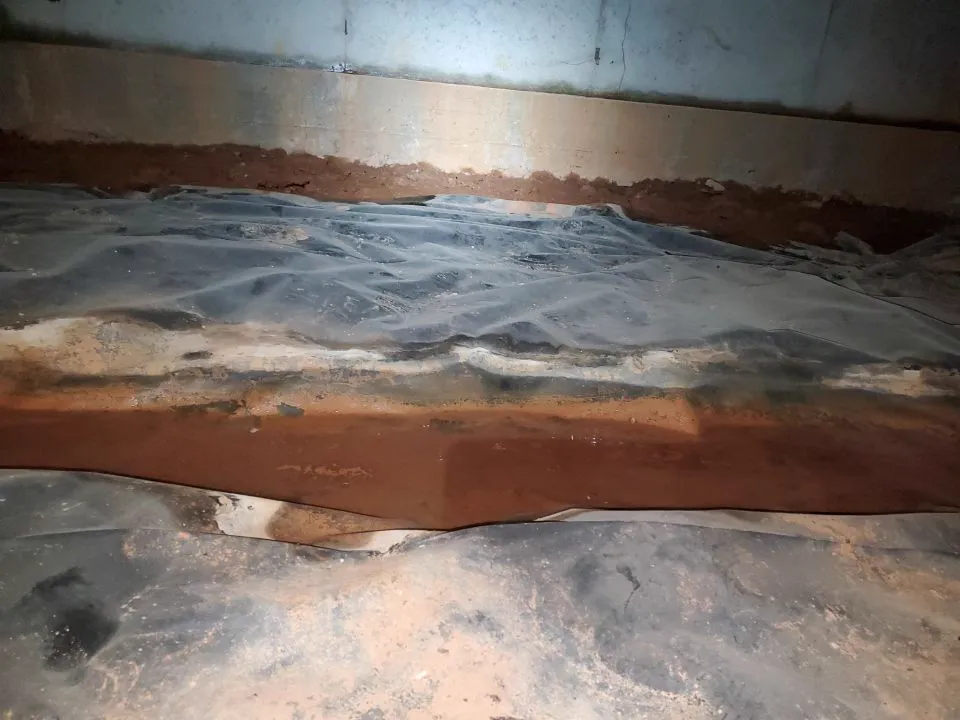
What is encapsulation, in plain words?
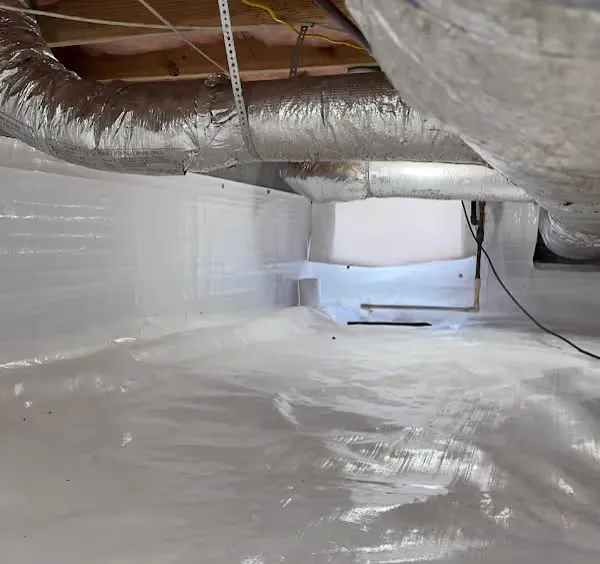
Picture a heavy white liner covering the entire dirt floor, running up the foundation walls, and wrapped around every pier. It’s sealed at every seam and fastened along the top edge. Here’s the thing most ads leave out: a true encapsulation uses a reinforced liner sealed to the walls and piers, not loose sheeting laid on the dirt. Those are two different products and two very different results.
After the liner, we close the vents and seal the access door, so the space belongs to the house instead of the yard. Then comes humidity control — usually a dehumidifier sized to the space with a self-draining line. Nobody wants a bucket chore under their floor.
Sometimes water has to be handled first. Plenty of Alcovy River basin lots around here sit with seasonal high water. Sealing a space that’s actively taking on water just gives the water a nicer place to sit. If you’re seeing standing water rather than damp air, start with our guide to a wet crawl space, because the order of operations changes.
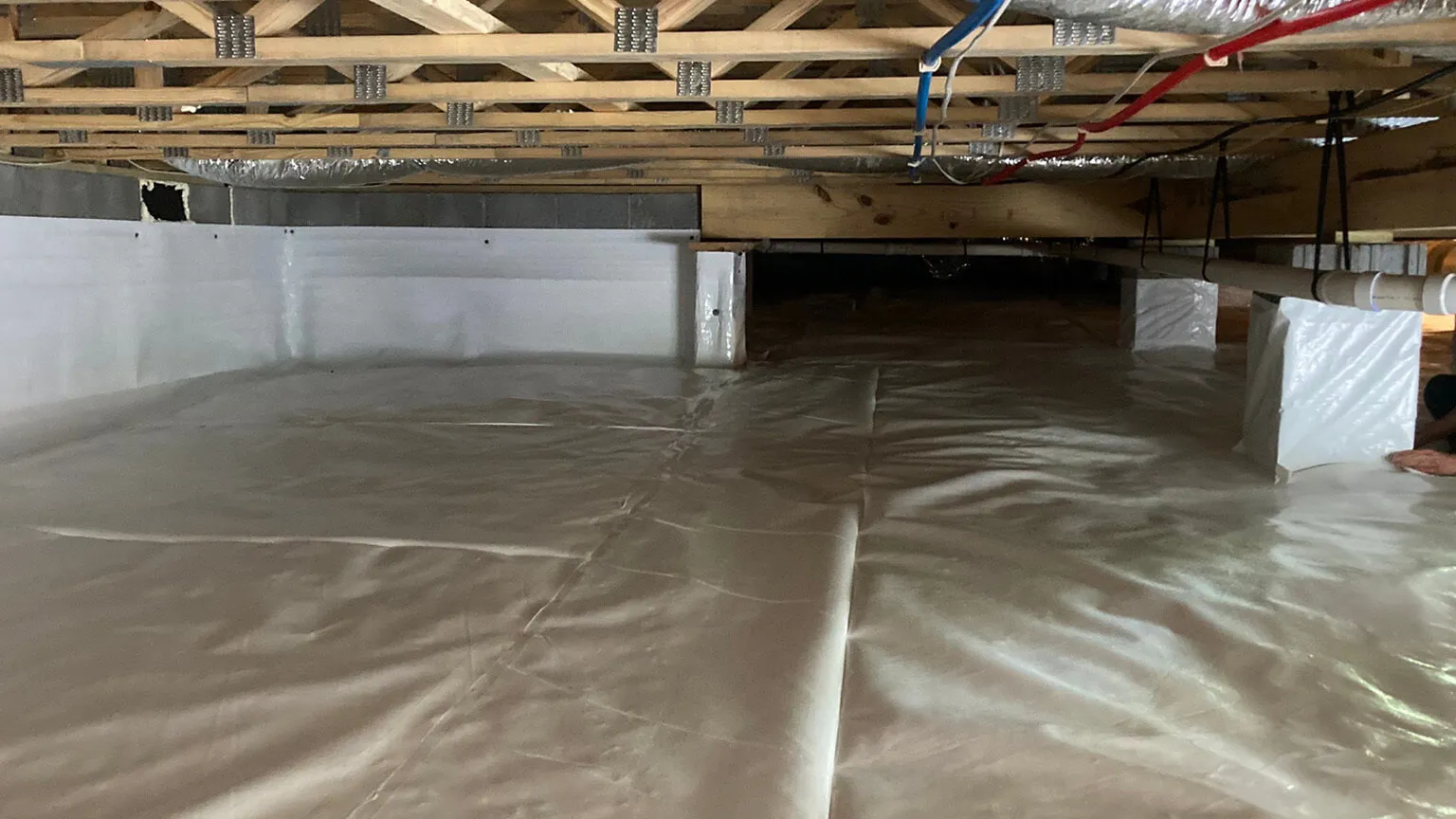
What does a real job look like, day by day?
Day zero is the free inspection. We crawl the whole space, not just the first ten feet past the door, and we read the wood. Moisture readings, stain lines, rusted duct straps and sagging insulation all point to where the water comes from.
Cleanout comes next. Old insulation gets pulled, torn plastic and debris go out, and the grade gets smoothed so the liner lies flat. Any drainage work happens in this stage too, since nothing goes over a problem we haven’t solved yet.
After that the liner goes down, up the walls, and around each pier, sealed as it goes. Vents get closed, the door gets sealed, and the dehumidifier gets set and drained. Most homes take two to four working days. A homeowner in Grand Rivers told us the loudest part of the week was our radio, which we’re taking as a compliment.
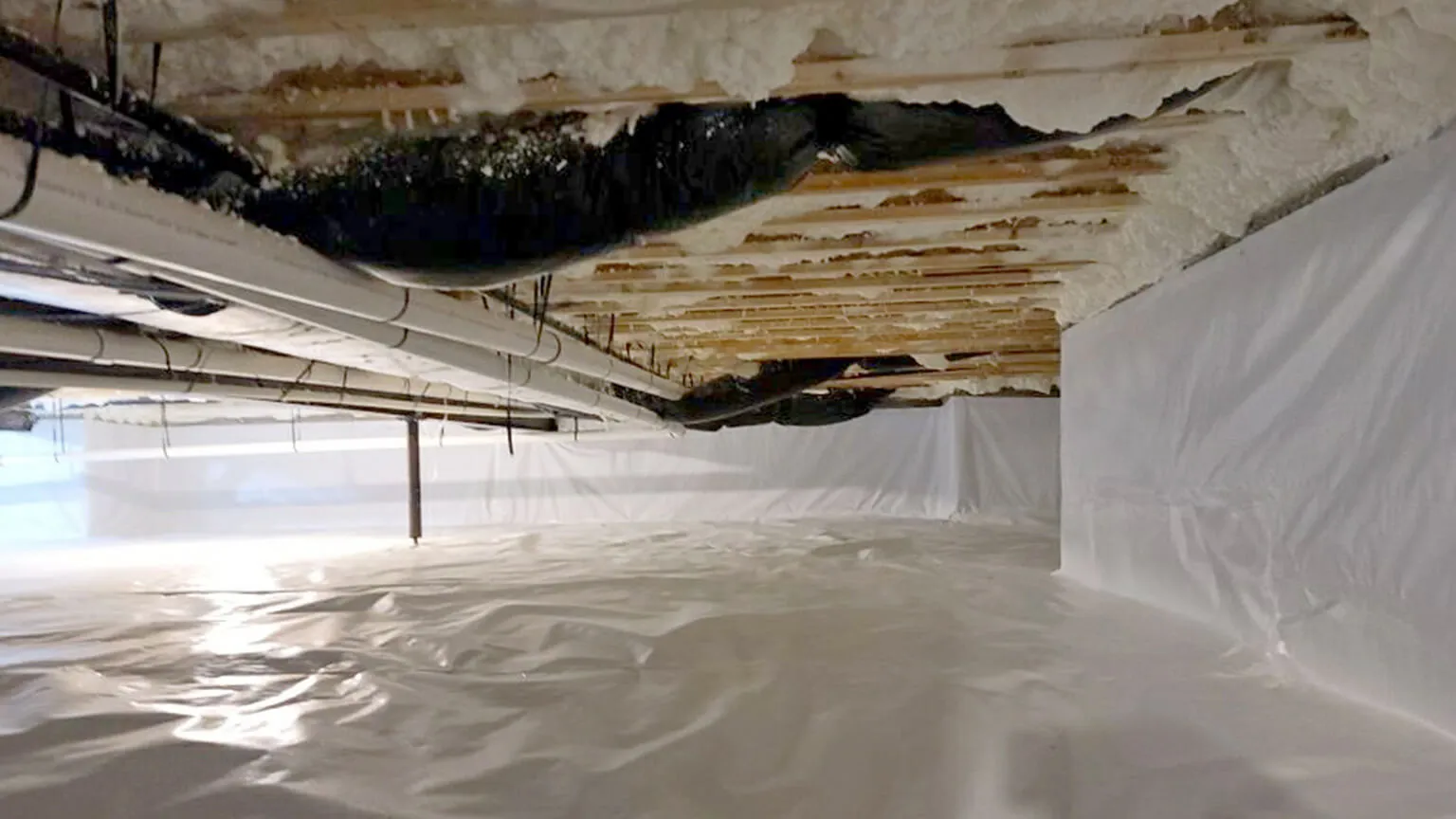
Here’s the part most companies skip when they explain this
Everybody talks about the liner. Almost nobody talks about how the liner attaches. But that top edge, where the plastic meets the block wall, is the detail that decides everything. It’s the difference between a working system and one that just looks tidy.
Loose sheeting lets moisture rise around every edge and pier, so the space keeps breathing damp air under a nice white cover. Real encapsulation fastens the liner to the walls, seals it there, and wraps each pier with taped, overlapped seams. Think lid on a container, not napkin resting on top.
That’s why we tell folks to ask any bidder one question: “How do you attach the liner to the walls and the piers?” A real answer names fasteners, sealant and seam overlap. A weak answer is a thickness number and nothing else. Thickness matters, sure, and a thick liner sealed to nothing is still sealed to nothing.
Worth knowing
Sealing and drainage are two separate conversations. Many crawl spaces only need a liner and a dehumidifier. Others need water managed first, and we’ll tell you which one you have before money comes up.
What actually moves the price?
The price of crawl space encapsulation Loganville homeowners get quoted comes down to square footage, headroom, and how much has to come out first. We won’t publish a flat number, because one price covering a tight 900-square-foot space and a tall 2,400-square-foot space would be wrong somewhere. Still, you deserve to see what we’re weighing.
Price drivers, biggest first
- Square footage. Liner, labor and crawling hours all scale with floor area. This is the biggest swing by far.
- Headroom and access. A space you can duck-walk through costs less to work in than an eighteen-inch belly crawl. That’s real labor, not a surcharge.
- Cleanout. Fallen insulation, old plastic and debris have to leave before the liner goes down.
- Drainage needs. If groundwater shows up, a drain and pump go in under the liner, which changes the scope.
- Dehumidifier size. Bigger spaces need bigger units, plus a condensate line that goes somewhere sensible.
- Extras. Subfloor insulation, duct sealing and a new access door are common add-ons, but none of them are automatic.
Small sealed spaces land at the low end. A large space with drainage, a pump and a commercial dehumidifier sits at the top, and most homes land somewhere in between. Either way you get one written number with the scope spelled out beside it, plus $500 off projects over $3,500. If you’re comparing across the metro, our Tucker crawl space encapsulation guide walks the same cost logic.
What’s included, what isn’t, and what’s the warranty?
Included: the inspection, the estimate, the diagnosis, the reinforced liner and all sealing, vent and door closure, the dehumidifier and its drain, haul-off of what we pull out, and photos before we close up. Ask any contractor for those photos. Nobody honest minds.
Not included, usually: mold remediation, structural repair to damaged joists, HVAC replacement, and plumbing leaks we find along the way. We flag those during the walkthrough instead of mid-project, because surprises belong at birthday parties. Sagging framing or rotted block piers turn into a crawl space repair conversation of their own. Out on the older semi-rural properties, that comes up more than you’d think.
The warranty is plain English, short enough to read in one sitting, and it transfers with the house. That matters when you sell. A family in Windsor Creek handed ours to a buyer’s agent and went back to taping boxes.
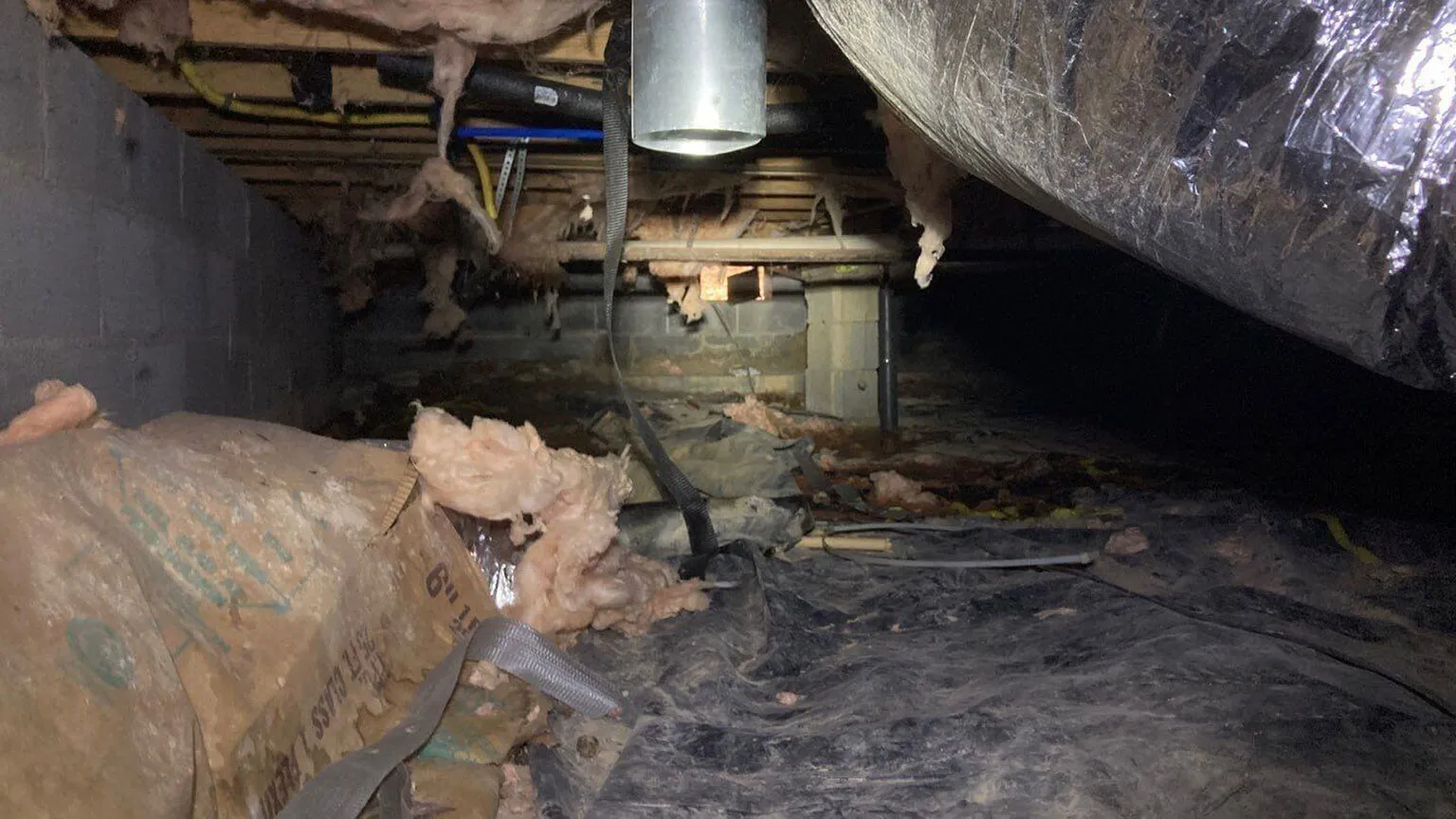
Want the number that reframes the whole thing?
Bare soil under a house can release roughly 10 to 15 gallons of water a day. That’s per 1,500 square feet of exposed dirt. Not once. Every day, quietly, for as long as the dirt sits open. That’s a leaking pipe nobody ever calls a plumber about.
Suddenly the price makes more sense, doesn’t it? You’re not buying plastic. You’re shutting off a source that’s been running under your floor since the house was framed. That’s why sealing changes the smell upstairs so fast, while air fresheners and open vents never do.
Because air moves upward through a house, a real share of what you breathe in the living room started down in that crawl space. The EPA’s page on mold and health and the CDC’s guidance for homeowners both explain the moisture connection without selling anything.
Picture the after: floors that feel warmer in February, a hallway that smells like nothing, and a space you’d actually store the Christmas bins in. One homeowner out toward Wildwood said the real surprise was that the whole house finally held a steady temperature.
Why does hiring locally matter out here?
Because Loganville isn’t the Gwinnett core, and the houses tell you that fast. Bigger lots, more crawl spaces, and plenty of homes from the mid-nineties through the mid-2000s now hitting first-generation waterproofing failure. Add septic drain fields and slow-draining red clay, and you get a specific set of problems.
We’ve been at this 20-plus years around Metro Atlanta, and our shop sits about twenty minutes northwest of you. We’re up and down Athens Highway (US-78) every week, so a follow-up visit near downtown Loganville or over by the Rock Gym isn’t a scheduling project. Same crews, same trucks, no subcontractor roulette. And if water is showing up in a basement instead, our flooded basement repair guide covers that side of it.
Folks out here tend to be straight shooters who hate being upsold, and honestly that suits us. We’d rather tell you the space only needs a liner and a dehumidifier.
Where we work around Loganville
We’re based in Lawrenceville and we’re out this way constantly, on both the Walton side and the Gwinnett side. That covers Loganville, Snellville, Grayson, Monroe, Between, Bay Creek, Dacula, Lilburn and Centerville, plus the wider Walton and Gwinnett Counties area. Whether your house sits up on a rise or down near the creek bottom, we’ve probably worked on one just like it nearby.
Questions Loganville homeowners ask us
It’s a reinforced white liner covering the dirt floor, running up the foundation walls, and sealed around every pier. The vents get closed and the access door gets sealed, so the space becomes part of the house instead of part of the yard. Most homes add a dehumidifier to hold the humidity steady.
Crawl space encapsulation Loganville pricing depends mostly on square footage, headroom and how much cleanout the space needs. A small, clean crawl space sits at the low end, while a large space needing drainage and a bigger dehumidifier sits at the top. We give you one written number with the scope beside it, and the inspection is free.
Almost always, yes. Sealing stops new moisture from coming in, but a dehumidifier is what holds the space steady year-round through a humid Georgia summer. We size it to the space and run a drain line, so you never have to empty anything.
In our climate, closed. Vents were required for decades on the theory that outside air dries a crawl space, but humid summer air condenses on cool surfaces instead. Once the space is sealed and the humidity is controlled, closed vents are the whole point.
Usually it does, because air travels upward through a house and that smell often starts under the floor. Once the moisture feeding it is gone, the odor fades over the following weeks instead of getting covered up. If anything lingers, that tells us there’s a second source worth finding.
Let’s find out what your Loganville crawl space actually needs
We’ll crawl the whole space, take real moisture readings, show you photos of what’s down there, and explain the fix in plain language. The inspection is free, the estimate is free, and nobody pressures you at the end of it.
(678) 914-5112Serving Loganville and all of Metro Atlanta · $500 off projects over $3,500 · Live support 7am–8pm, 7 days a week