

Wet Crawl Space in Grayson: What Causes It, and What a Fair Fix Looks Like
Two houses on the same street. One stays dry, one doesn’t. Here’s the plain-English reason why — and exactly what to ask for.
Picture two houses in Grayson Downs, built the same year by the same crew, sitting maybe eighty feet apart. One has clean, dry dirt under the floor. The other has damp soil, sagging insulation, and a smell in the hallway nobody can place. Same plans, same clay, same rain — so why does one homeowner end up searching for help with a wet crawl space Grayson builders left vented, and the other never thinks about it? The answer is almost never the house itself. It’s where the water goes.
Good news right away: this is one of the most common things we get called about, and it’s very fixable. Better yet, the fix is about sealing and drying, not tearing anything apart.
So what’s different about the wet one?
Usually the yard. The dry house sits a little higher, or its downspouts carry water twenty feet out, or the original grade still slopes away from the foundation. Meanwhile the wet house has a slight dip along one side that nobody has looked at since 2003.
Here’s the thing about this town: bigger yards in Grayson are great — until a heavy rain, and you realize all that water has to go somewhere, and your foundation is downhill of it. A half-acre lot collects a remarkable amount of rainfall. Gravity is not subtle about where it sends it.
Then there’s the air. Warm air rises and leaves through your roof, so replacement air gets pulled in from the lowest opening. That’s the stack effect, and it means a real share of the air you breathe in the den started on the dirt below your floor.
What’s actually making it wet?
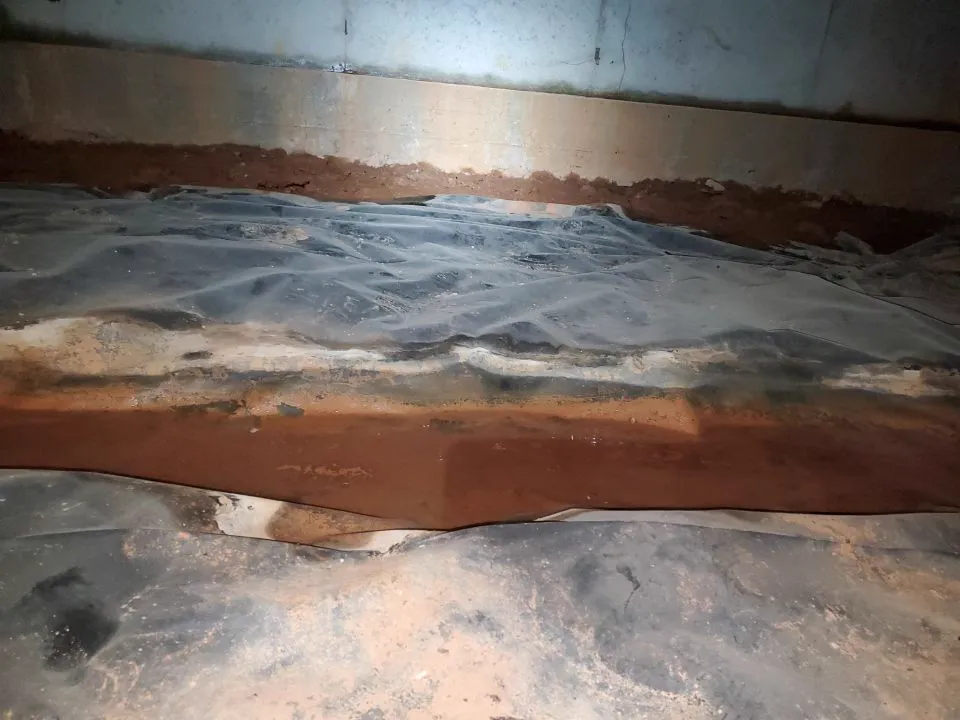
Three things, usually, and they stack. First, bare soil gives off water vapor around the clock. Second, red clay holds rain like a sponge and lets it go slowly, so the ground can stay damp two weeks after a storm. Third — and this one surprises people — the vents.
Open foundation vents were code for decades, on the theory that outside air dries a crawl space out. In our climate, however, that backfires. Warm July air rolls in, hits a cool subfloor and cool pipes, and drops its moisture right there as condensation. In other words, the vents meant to dry the space are quietly watering it.
Worth knowing
Loose plastic laid on the dirt is not a vapor barrier. It’s a suggestion. A true encapsulation uses a reinforced liner sealed to the walls and piers — not sheeting draped over the ground and left to slide around.
One more local wrinkle: septic. Plenty of older rural parcels around Grayson still run on a drain field, and a tired field keeps the soil near the foundation saturated long after the weather clears. That’s not a scary finding — it just changes where we start.
Is yours mild, or is it more than that?
Fair question, and you can get most of the way to an answer from your kitchen. None of this is bad news. It simply shows where you land on the scale.
Reading the signs
- Musty smell, nothing visible. Moisture is arriving as vapor. Mild, and the least expensive version to solve.
- Indoor humidity parked in the mid-sixties. Your air conditioner is fighting the ground and losing.
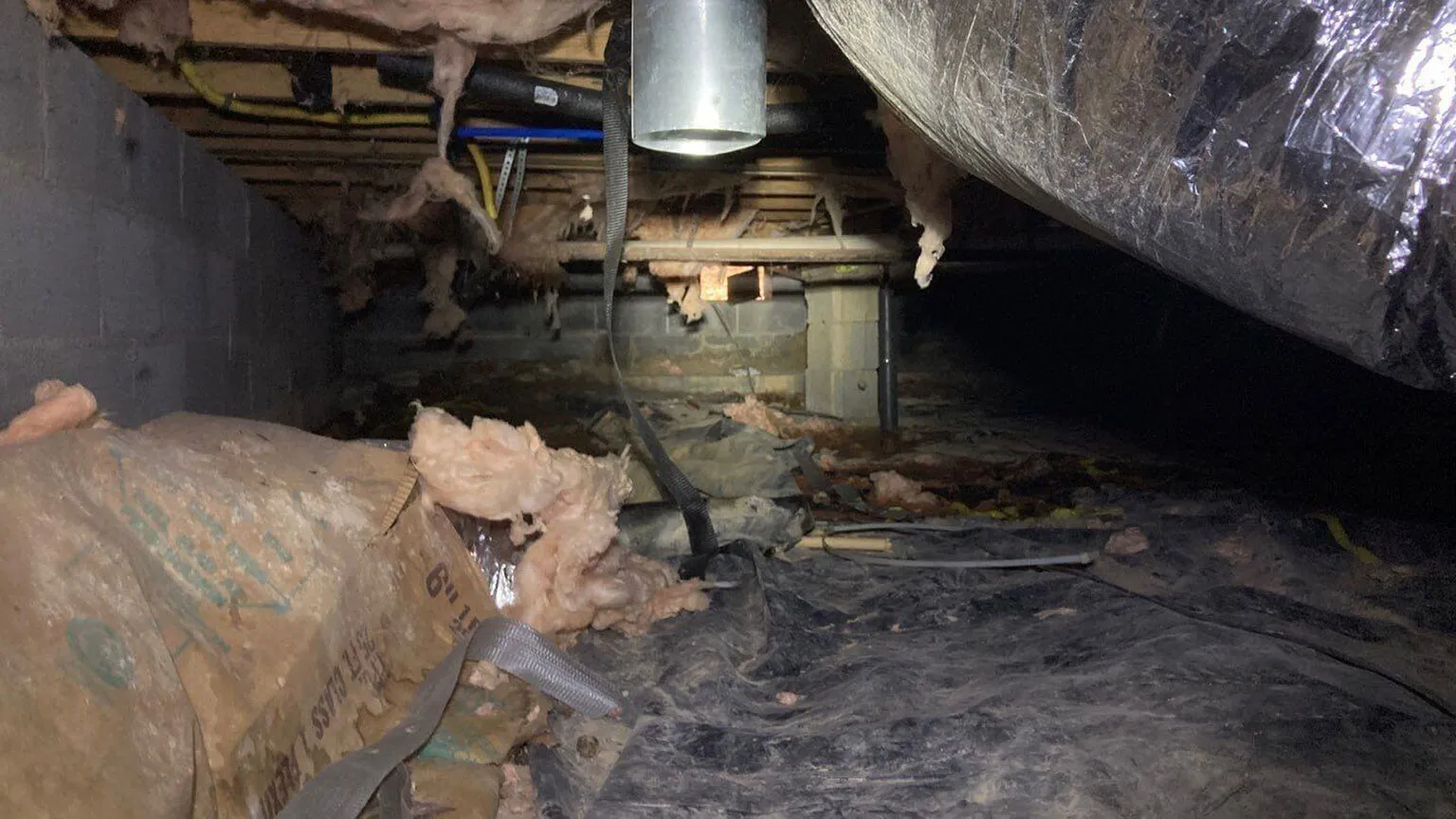
- Batt insulation hanging between the joists. Fiberglass soaks up moisture, gets heavy, then lets go.
- White fuzzy bloom on the rim joist. Surface growth on damp wood. Still very fixable at this stage.
- Standing water or mud after a rain. Bigger scope, same idea, still routine work.
Wood is the honest witness down there. Framing starts supporting mold growth once its moisture content reaches roughly twenty percent, and in a vented Georgia crawl space in August, joists hit that number regularly. So we bring a meter and show you the reading. If you’d rather hear the health side from somebody who isn’t selling anything, the EPA’s page on mold and health is short and calm.
What would we want to know if it were our own house?
Honestly, we’ve asked ourselves that on a lot of driveways. So here’s the short list we’d want answered before we signed anything — whether we hired us or somebody else.
Where is the water coming from, specifically? Not “moisture.” A real answer sounds like: the back downspout dumps six feet from the wall, and the grade falls toward the house on that corner. If nobody can point at a cause, nobody has found it yet.
Are we sealing before we’ve handled the source? A liner over ground that’s still flooding is a raincoat on a leaking boat. Drainage first, liner second. Any honest estimate says so in that order.
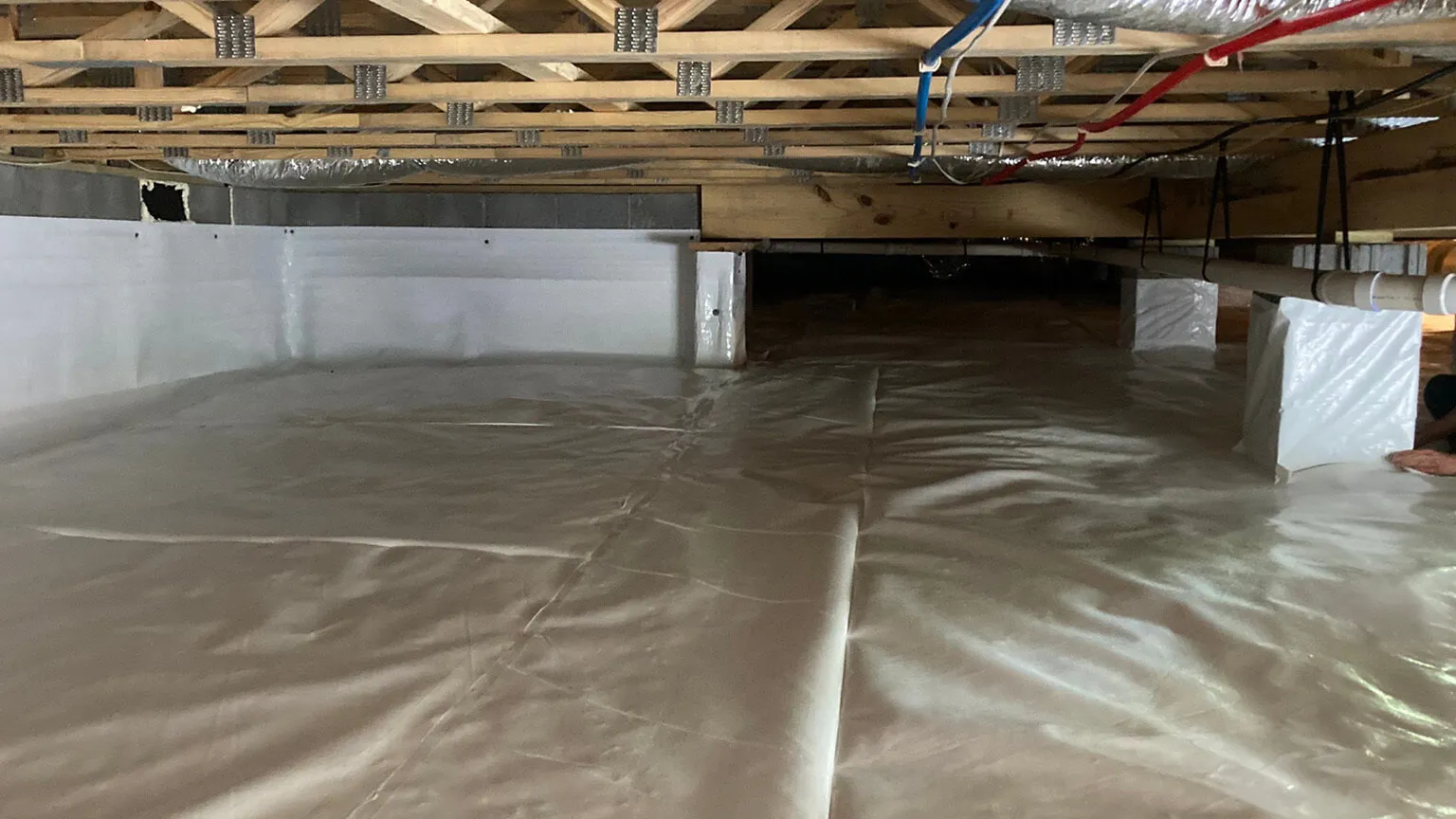
What exactly is the liner, and where does it stop? Ask for the thickness, whether it’s reinforced, whether the seams are taped and sealed, and whether it runs up the stem walls and wraps the piers. That single question separates a real system from a very expensive tarp.
Who’s under the house on the day? We send the same local crews on every job, partly because that’s how quality stays consistent, and partly because in Grayson word travels faster than we do.
What’s in writing? Scope, proof of insurance, and a warranty you can read in one sitting. Homeowners around Herrington Trace and Wisteria Park compare proposals line by line, which keeps everybody honest — us included.
What happens if you just leave it?
Nothing dramatic, honestly. A wet crawl space in Grayson widens slowly and quietly. Insulation keeps falling, upstairs humidity stays high, and your cooling system works a little harder each summer. Over more years, damp framing can soften, which turns a sealing job into a carpentry job. So the reason to handle it sooner is cost, not fear.
Most of the time the house is fine. Something is simply delivering more water than the ground can carry away — and that’s a much friendlier problem to fix.
We see the same pattern by street. Homes on the wooded slopes off Ozora Road sit downhill from a lot of open yard, so groundwater shows up with a running start. Lots near the low ground around Tribble Mill Park hold water longer in spring. That said, a house on a slope isn’t a problem house. It just needs its water managed on purpose.
How does the fix actually work?
Simpler than most people expect. Encapsulation treats that space as part of the house instead of as outdoors. Here’s the order, and the order matters more than any product name.
- Handle the water first. Downspout extensions, grading, and an interior drain with a sump if groundwater is coming in.
- Clear it out. Old plastic, debris and wet fallen insulation come out. Wood gets cleaned and treated where it needs it.
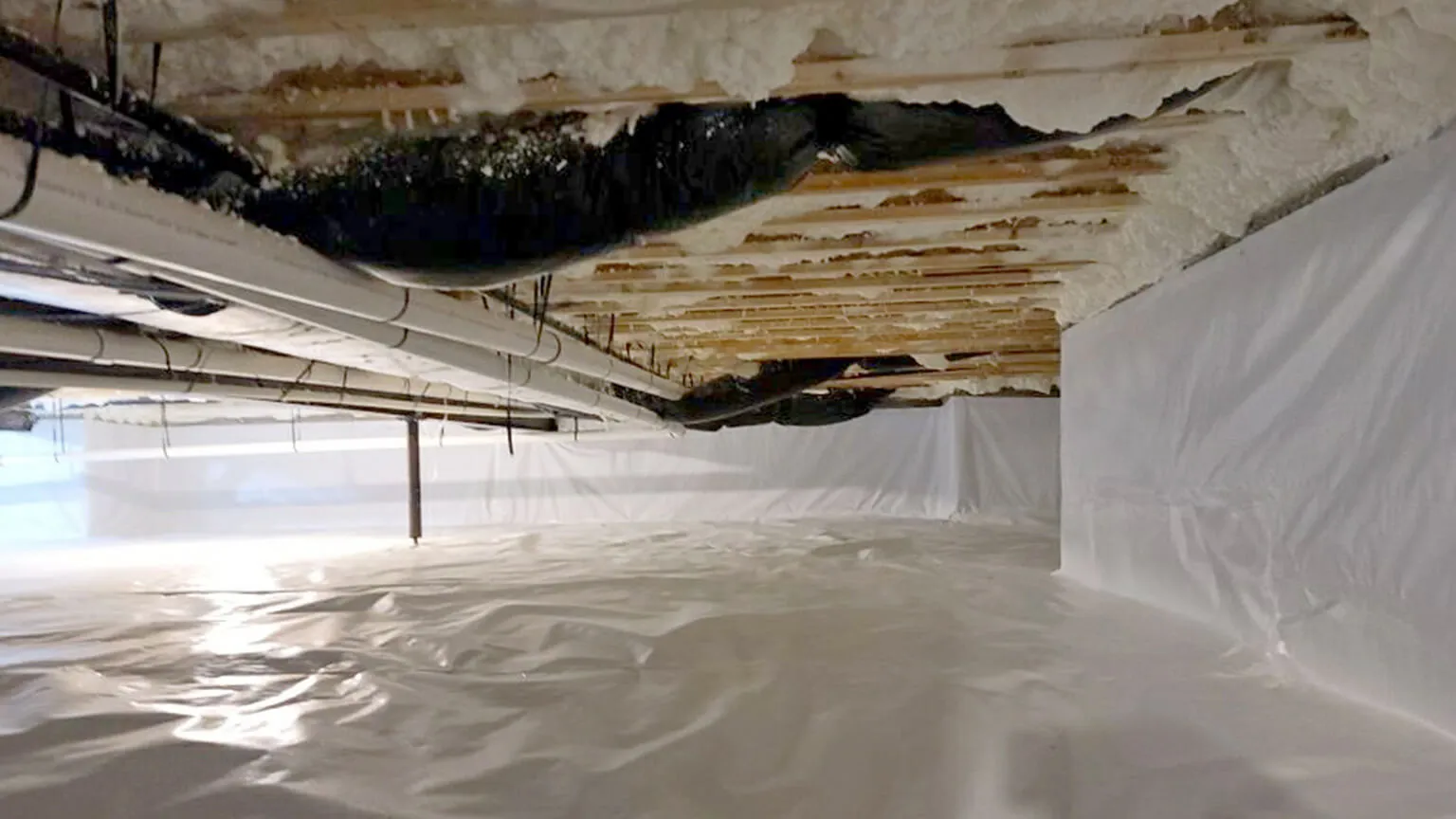
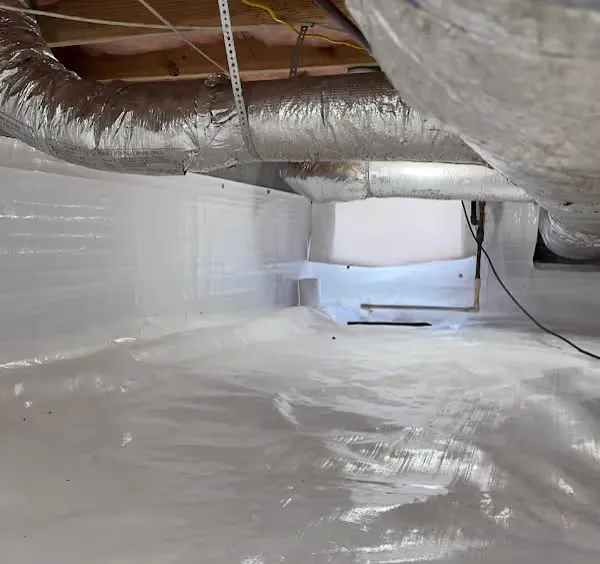
- Line everything. A reinforced liner goes across the dirt and up the stem walls, seams sealed, every pier wrapped.
- Close the vents. Once the ground is sealed, outside air has no drying job left — only a wetting one.
- Insulate the walls, not the ceiling. Foam on the stem walls holds the space near house temperature, which stops condensation.
- Control what’s left. A dehumidifier keeps humidity steady, and we set a gauge you can read without crawling anywhere.
Wall insulation instead of ceiling insulation catches people off guard. The Department of Energy’s guide to insulation and moisture control explains why a sealed, insulated crawl space performs better in a humid climate.
Most jobs run two to four working days. Pricing follows square footage, ceiling height, and whether water has to be moved, so our encapsulation cost breakdown walks through the drivers before you ever call. The crawl space repair page shows exactly what we install and why.
Plenty of Grayson homes have a walkout basement on one side and a crawl space on the other — two water stories under one roof. If that’s your house, our flooded basement repair guide covers the other half.
What does the first week, first year, and tenth year look like?
Good question, and it’s the one nobody answers. So here’s the honest timeline.
Week one. The smell fades. Not covered up — gone, because the source is sealed instead of masked. The dehumidifier pulls the space down into the fifties, and your thermostat’s humidity number finally sits still. Some folks notice their floors feel warmer before they notice anything else.
Year one. You stop thinking about it. Cooling runs shorter cycles, because dry air is easier to cool than damp air. Once a year you rinse the dehumidifier filter, glance at the gauge, and check that a plumber put the seam tape back. That’s the whole maintenance list.
Year ten. The liner is still doing its job, since reinforced liner sealed to the walls doesn’t sink into clay the way thin sheeting does. Better yet, when you sell, an inspector opens that hatch and writes one boring sentence. Boring is worth real money at closing.
A homeowner near Grayson City Park told us the strangest part was walking guests in the front door and not wondering what the hallway smelled like. That’s the real outcome — a house that stops asking for attention. If you’re comparing notes a few minutes up the road, our Dacula wet crawl space guide covers how similar homes behave there.
Where we work around Grayson
We’re based in Lawrenceville, about twelve minutes northwest, so we’re through this part of Gwinnett County constantly. That includes Grayson, Lawrenceville, Snellville, Loganville, Dacula, Auburn, Bethlehem, Lilburn, Suwanee and Duluth. We answer the phone from 7 a.m. to 8 p.m., seven days a week, because damp crawl spaces rarely wait for a Tuesday.
Questions Grayson homeowners ask us
If it’s damp, sagging or falling, it comes out — wet fiberglass holds moisture against the wood instead of protecting it. After that, insulation goes on the stem walls rather than back up between the joists. That keeps the whole space near house temperature, which is what stops condensation from forming again.
As a short-term patch it beats bare dirt, but it won’t last. Thin sheeting tears, sinks into red clay, and leaves every seam and pier open for vapor to slip through. A real system uses reinforced liner sealed to the walls and piers, with humidity controlled — that’s the part that makes it permanent.
Start upstairs. A musty smell, indoor humidity stuck above sixty percent, cold or springy floors, and rooms that feel sticky at 72 degrees all point the same direction. If you can open the hatch safely, look for fallen insulation, damp soil, or plastic that has sunk into the clay. Any one of those is worth a free look.
It means turning the space under your floor into part of your house instead of part of the outdoors. We handle the water first, then seal the ground and walls with a reinforced liner, close the vents, insulate the stem walls, and add a dehumidifier to hold humidity steady. The ground stops feeding moisture into your home, and it stays that way.
It depends on square footage, ceiling height, how much debris and old insulation has to come out, and whether drainage or a sump is part of the job. A small, dry, clean space sits at the low end, while a big space that needs water moved sits well above it. We measure, show you photos, and put a real number in writing — no flat price over the phone, because that number would be a guess.
Let’s find out what your Grayson crawl space actually needs
We’ll go under the house, take real moisture readings and photos you can see for yourself, then explain the fix in plain language. The inspection is free, the estimate is free, and nobody pressures you. If all you need is a downspout moved, we’ll tell you that and go home.
(678) 914-5112Serving Grayson and all of Metro Atlanta · $500 off projects over $3,500 · Live support 7am–8pm, 7 days a week