

Crawl Space Encapsulation Grayson: What It Costs and What to Expect
You’ve decided to hire somebody. Here’s what the work really includes, what moves the number up or down, what the warranty covers, and why a 20-year local name is the safer call.
What does crawl space encapsulation Grayson homeowners are quoted for actually cost, and what are you paying for? Straight answer: most jobs land in the low-to-mid four figures, and the price is driven by square footage, headroom, cleanout, and whether water has to be managed before anything gets sealed. That’s it. There’s no secret line item, and there’s no reason you should have to guess.
Here’s the thing, though. Before the number makes sense, the work has to make sense. So let’s walk through what happens under your house, in plain words, in the order it happens.
What is encapsulation, really?
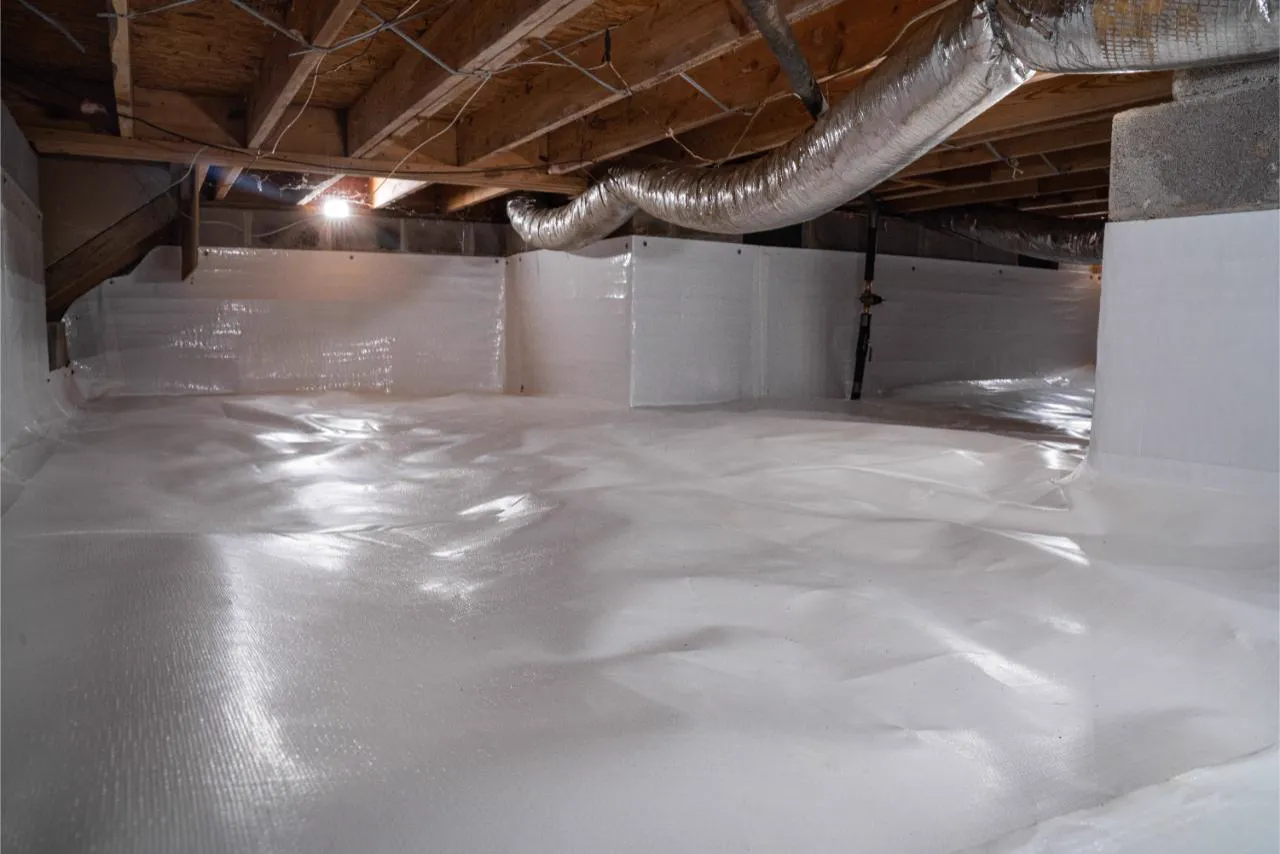
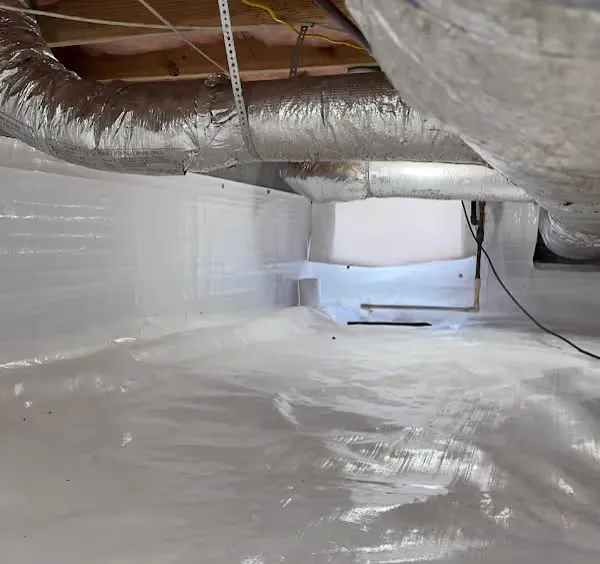
Picture a heavy white liner covering the whole dirt floor, running up the foundation walls, and wrapping every pier. Seams get overlapped and sealed. The top edge gets fastened to the wall so damp air can’t sneak around it. After that, the vents get closed, the access door gets sealed, and your crawl space stops being part of the yard and starts being part of the house.
Then comes moisture control. Most homes get a dehumidifier sized for the space, with a drain line that carries water off by itself, so you’re never down there hauling a bucket. Your crawl space shouldn’t require a chore chart.
Now, about those vents. Open foundation vents were required for decades on the theory that outside air dries a crawl space out. In a humid climate like ours, warm outside air hits cool surfaces under the floor and does the opposite — it condenses. That’s why sealing works and venting doesn’t, and it’s why so many houses built right through the 1990s and 2000s have the same damp story.
What does a real job look like, day by day?
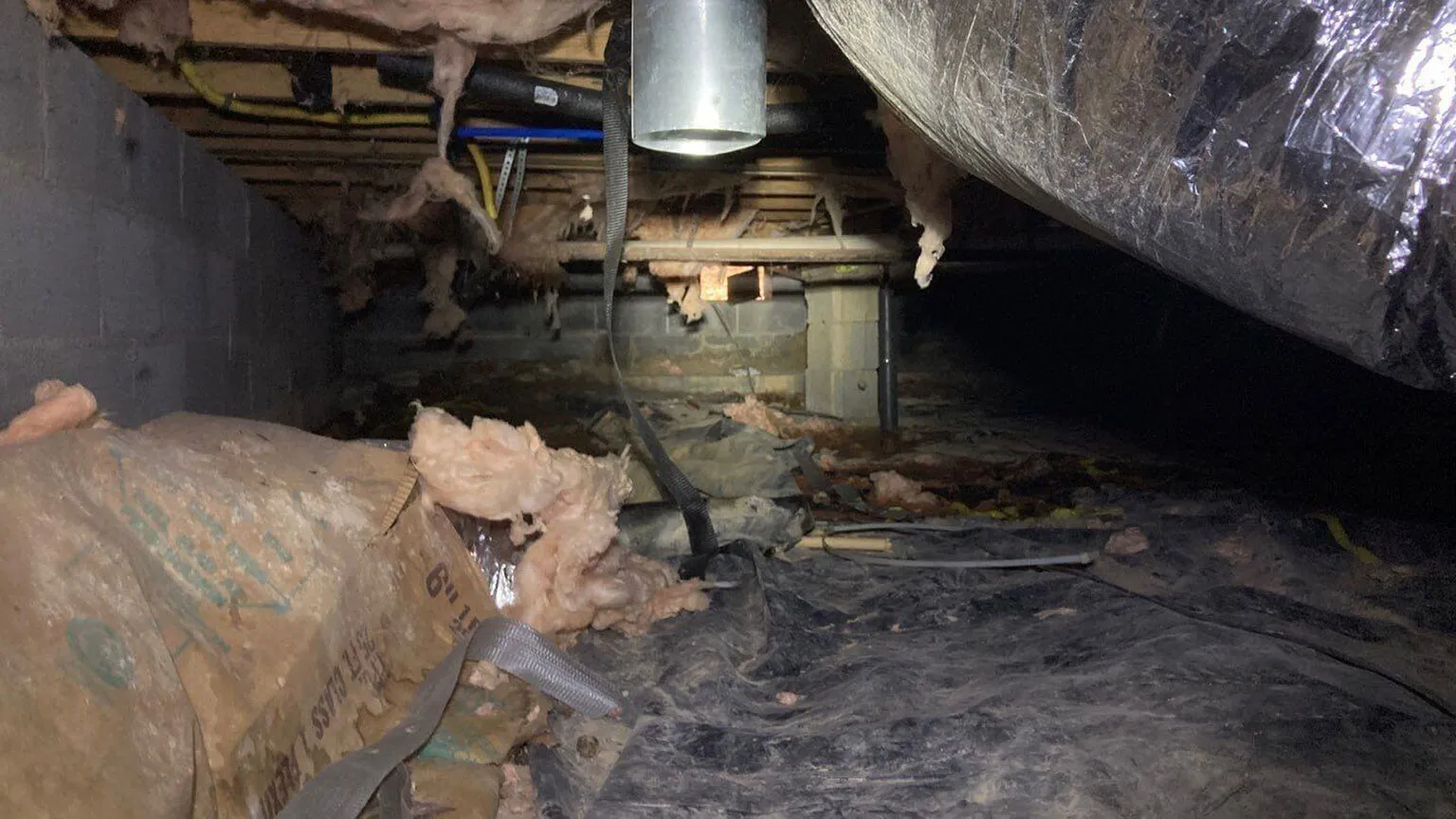
Day zero is the free inspection. We crawl the entire space, not just the first ten feet past the hatch, and we read the wood. Moisture readings, staining lines, rusted duct straps, insulation hanging down — all of it tells us where water is coming from and roughly how long it’s been happening.
Next comes cleanout. Old batt insulation gets pulled, debris and torn plastic go out to the trailer, and the dirt gets smoothed so the liner can lie flat. Any drainage work happens at this stage, because we’re not covering up a problem we haven’t solved yet.
After that, the liner goes down, up the walls, and around each pier, sealed as it goes. Vents get closed, the door gets sealed, and the dehumidifier gets set and drained. Most homes take two to four working days. One homeowner off Herrington Trace said the loudest part of the whole project was our radio, which we’re choosing to take as a compliment.
Do you need the expensive version?
Good news — usually not. This is the part nobody tells you before the estimate shows up, so let’s say it out loud: there are two very different jobs that both get called encapsulation, and the cheaper one covers most houses.
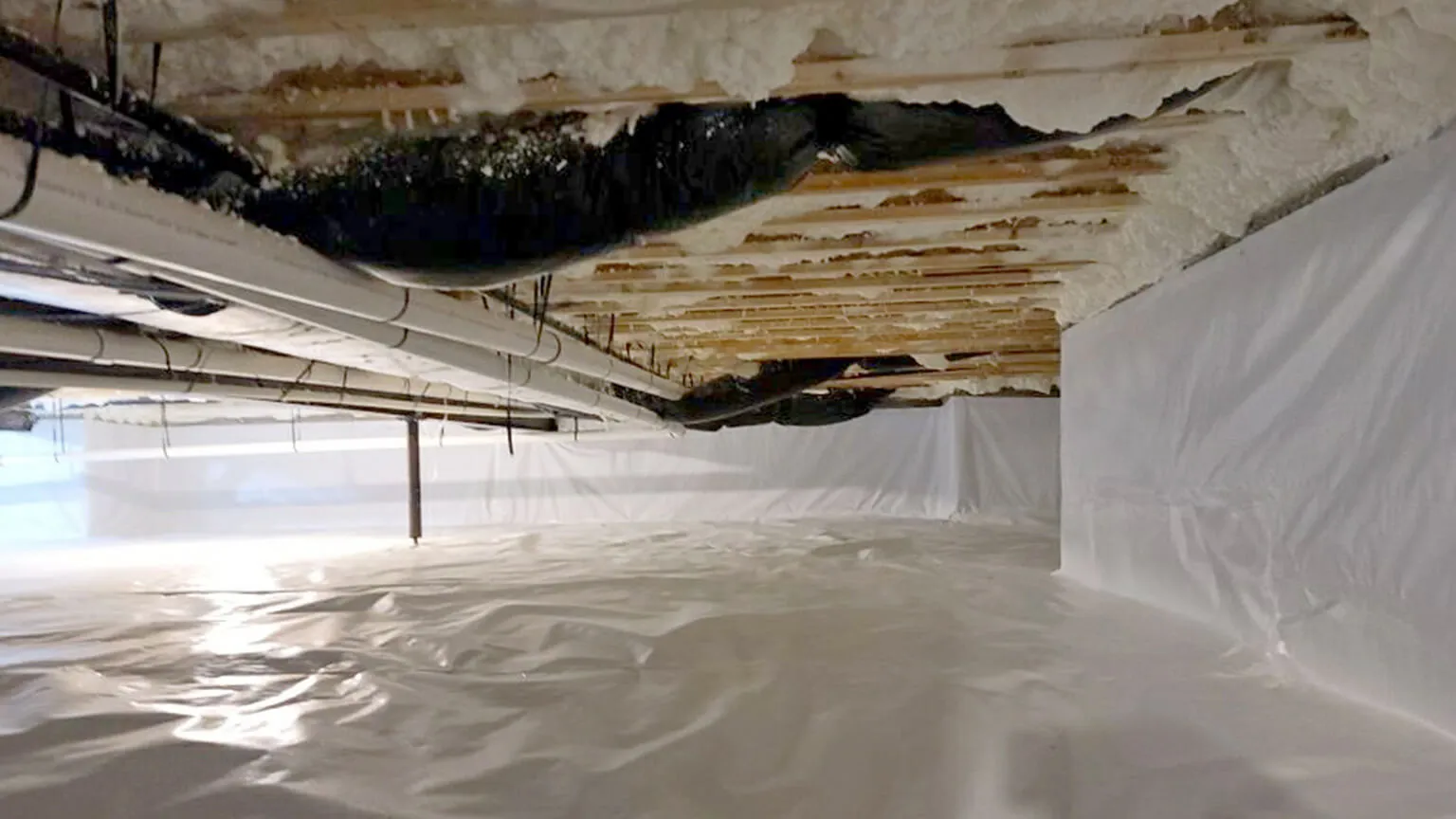
The first job is sealing and drying. Liner, sealed seams, closed vents, a dehumidifier. That’s it. If your crawl space is humid and musty but never actually holds standing water, this is your job, and it’s the one most homes around here need.
The second job adds water management underneath — a drain line around the perimeter, a sump pump, sometimes regrading outside. That’s real money on top, and it’s the right call when groundwater is genuinely pushing in. But it is not automatic, and quoting it on every house is how bids get inflated. If you’re seeing puddles instead of humidity, our guide to a wet crawl space explains why the order of operations flips.
So ask any company bidding your house one simple question: “Which of those two am I, and how did you decide?” A good answer points at moisture readings, staining height and grade. A weak answer points at a package name. We’d rather sell you the smaller job and be the people you call for the next thing.
Worth knowing
Encapsulation and drainage are two separate conversations. Plenty of the crawl spaces we inspect only need sealing and a dehumidifier. We tell you which one you have before money ever comes up.
What actually moves the price?
Mostly size, height, and how much has to come out before anything goes in. We won’t publish a flat number, because a single price covering a tight 900-square-foot space and a tall 2,200-square-foot space would be wrong for somebody. Still, you deserve to see exactly what we’re weighing.
Price drivers, biggest first
- Square footage. Liner, labor and crawling hours all scale with floor area. This is the biggest swing by far.
- Headroom and access. A space you can duck-walk through costs less to work in than an eighteen-inch belly crawl. That’s real labor, not a surcharge.
- Cleanout. Fallen insulation, old plastic and debris all have to leave first.
- Drainage needs. If groundwater shows up, a drain and pump go in under the liner, and the scope changes.
- Dehumidifier size. Bigger spaces need bigger units, plus a condensate line with somewhere sensible to drain.
- Extras. Subfloor insulation, duct sealing and a new access door are common, but none of them are automatic.
Small sealed spaces land at the low end. A large space with drainage, a pump and a commercial dehumidifier sits at the top, while most homes settle somewhere in the middle. Either way, you get one written number with the scope spelled out beside it — no verbal estimates, no “we’ll see when we get in there.” If you want to compare across town, our Dacula crawl space encapsulation guide runs the same math.
What’s included, what isn’t, and what’s the warranty?
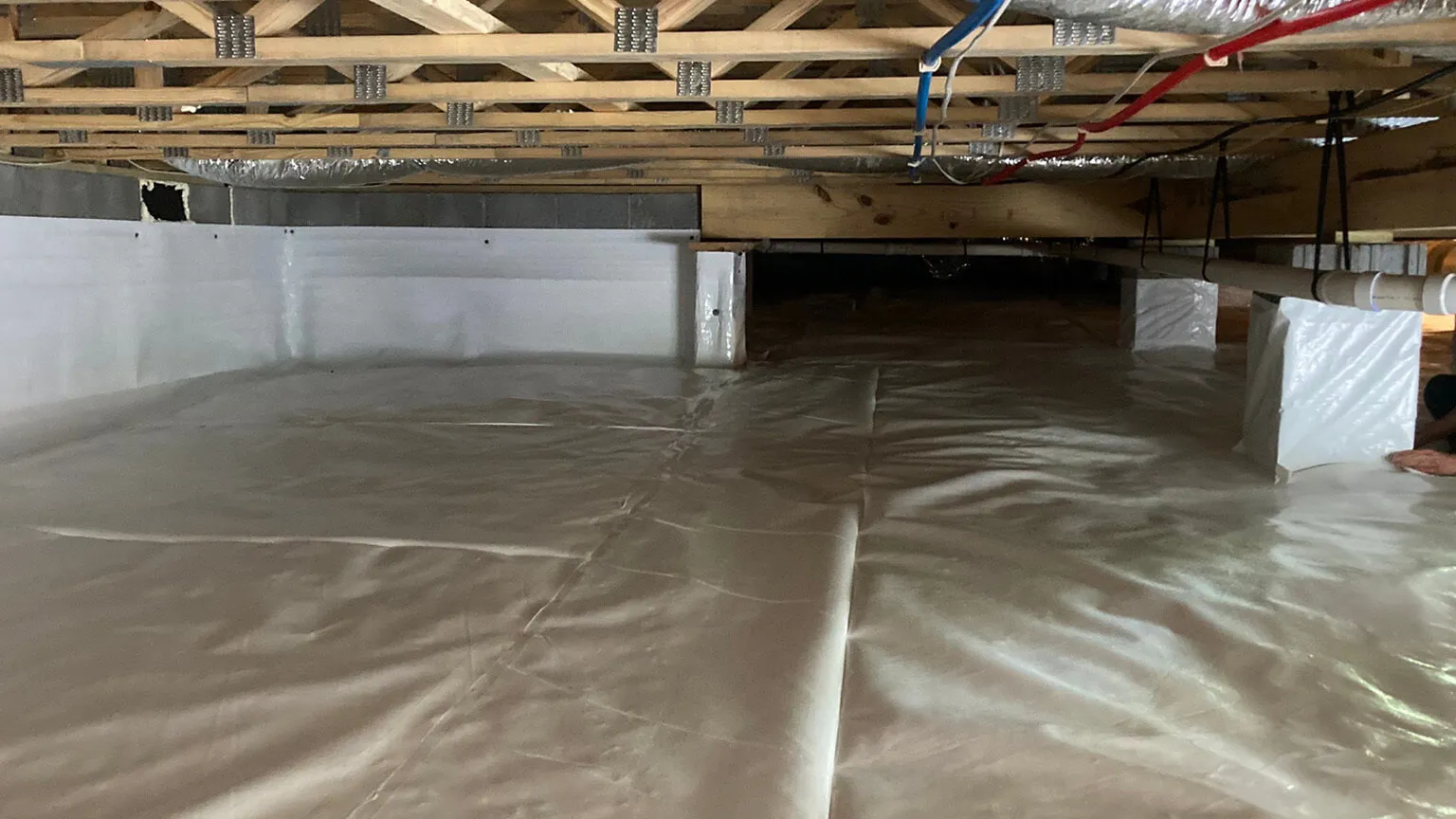
Included: the inspection, the estimate, the diagnosis, the liner and all sealing, vent and door closure, the dehumidifier and its drain, haul-off of everything we pull out, and photos of the finished work before we close it up. Ask any contractor for those photos. Nobody honest minds.
Not included, usually: mold remediation, structural repairs to damaged joists, HVAC replacement, and plumbing leaks we find along the way. We flag those during the walkthrough instead of mid-project, because surprises belong at birthday parties. Sagging framing or rotted supports become a crawl space repair conversation of their own, priced separately and explained first.
The warranty is written in plain English, short enough to read in one sitting, and it transfers with the house. That last part matters in the Grayson cluster, where families move up the road rather than out of town and buyers’ agents ask sharp questions. A homeowner in Hidden Falls handed ours straight to a buyer and got back to packing.
What if the problem isn’t where you think it is?
That happens more than you’d guess. A family near the Grayson Village district called us about a musty smell and a floor that felt cold in February. They were braced for the full drainage package, pump and all, because a neighbor had needed one.
We crawled it and found something different. The liner situation was bad, sure, but the real source was outside: the original grading had settled over twenty-plus years until the yard tipped back toward the house. Bigger yards in Grayson are great — until a heavy rain, and you realize all that water has to go somewhere, and your foundation is downhill of it.
So the fix started with dirt, not equipment. We corrected the slope away from the wall, then sealed and dried the space the normal way. No sump pump, no perimeter drain, and a bill well under what they’d budgeted. They told us later they’d have paid the bigger number without blinking, which is exactly why we’d rather be the ones who say no.
Picture the after: floors that feel warmer, a hallway that smells like nothing at all, and a space you’d actually store holiday bins in. Sealed crawl spaces also help your ducts and insulation do their jobs, which the U.S. Department of Energy’s guidance on insulation and moisture control explains without selling anything. For the health side, the CDC’s page on mold in the home covers it plainly too.
Why does hiring locally matter here?
Because we’ve already met your house. Grayson filled in mostly between the mid-1990s and 2012, on larger lots than the Gwinnett core, which means a whole town’s worth of original moisture barriers and original grading are aging out on roughly the same schedule. Twenty-plus years around Metro Atlanta means we’re not learning your foundation on your dime.
It also means we’re close. Our Lawrenceville shop is about twelve minutes up the road, and we run Grayson Highway (GA-20) past historic Grayson downtown most weeks anyway. A warranty visit isn’t a scheduling project. Same crews, same trucks, no subcontractor roulette — and around Grayson City Park, referrals travel faster than any ad we could buy, so we behave accordingly.
One more thing worth saying. If water is showing up lower in the house instead of under the floor, that’s a different job with a different fix, and our guide to flooded basement repair walks through it. Either way, the inspection is free and the answer is honest.
Where we work around Grayson
We’re based in Lawrenceville and we’re in this corner of Gwinnett constantly. That covers Grayson, Lawrenceville, Snellville, Loganville, Dacula, Grayson Village, Bay Creek, Ozora, Centerville and Between, plus the wider Gwinnett area. Whether your house sits up on a rise or down where the yard drains, we’ve likely worked on one just like it a few streets over — and there’s usually a truck nearby already.
Questions Grayson homeowners ask us
Most crawl spaces take two to four working days. Heavy cleanout adds a day, and drainage work adds another. You get the timeline in writing before we start, so you can plan around the driveway and the dogs.
Often it helps, but we won’t promise a number. Drier air is easier to cool, and ductwork in a sealed space works less hard than ductwork sitting in summer humidity. Most homeowners notice the comfort first and the bill second.
If it’s damp, sagging or falling out of the joists, it comes out and leaves with us. Wet batt insulation holds moisture against the wood instead of protecting it. Once the space is sealed and dry, we can talk about whether new subfloor insulation is worth adding.
Not for a real seal. Thin sheeting laid on dirt still lets moisture rise around every edge and every pier, so the space keeps breathing damp air even though it looks tidy. Real encapsulation uses a heavy liner fastened to the walls, sealed at the seams, and wrapped around each pier.
Common signs are a musty smell upstairs, cold floors in winter, insulation hanging down, or condensation on ductwork. Any one of those is worth a look. A free inspection settles it either way, and plenty of the spaces we check turn out to be fine.
Let’s find out what your Grayson crawl space actually needs
We’ll crawl the whole space, take real moisture readings, show you photos of what’s down there, and explain the fix in plain language. The inspection is free, the estimate is free, and nobody pressures you at the end of it.
(678) 914-5112Serving Grayson and all of Metro Atlanta · $500 off projects over $3,500 · Live support 7am–8pm, 7 days a week