

What the Best Crawl Space Grayson Companies Do Differently
Why these homes behave the way they do, what belongs in a real quote, and the questions that sort a careful crew from a fast one.
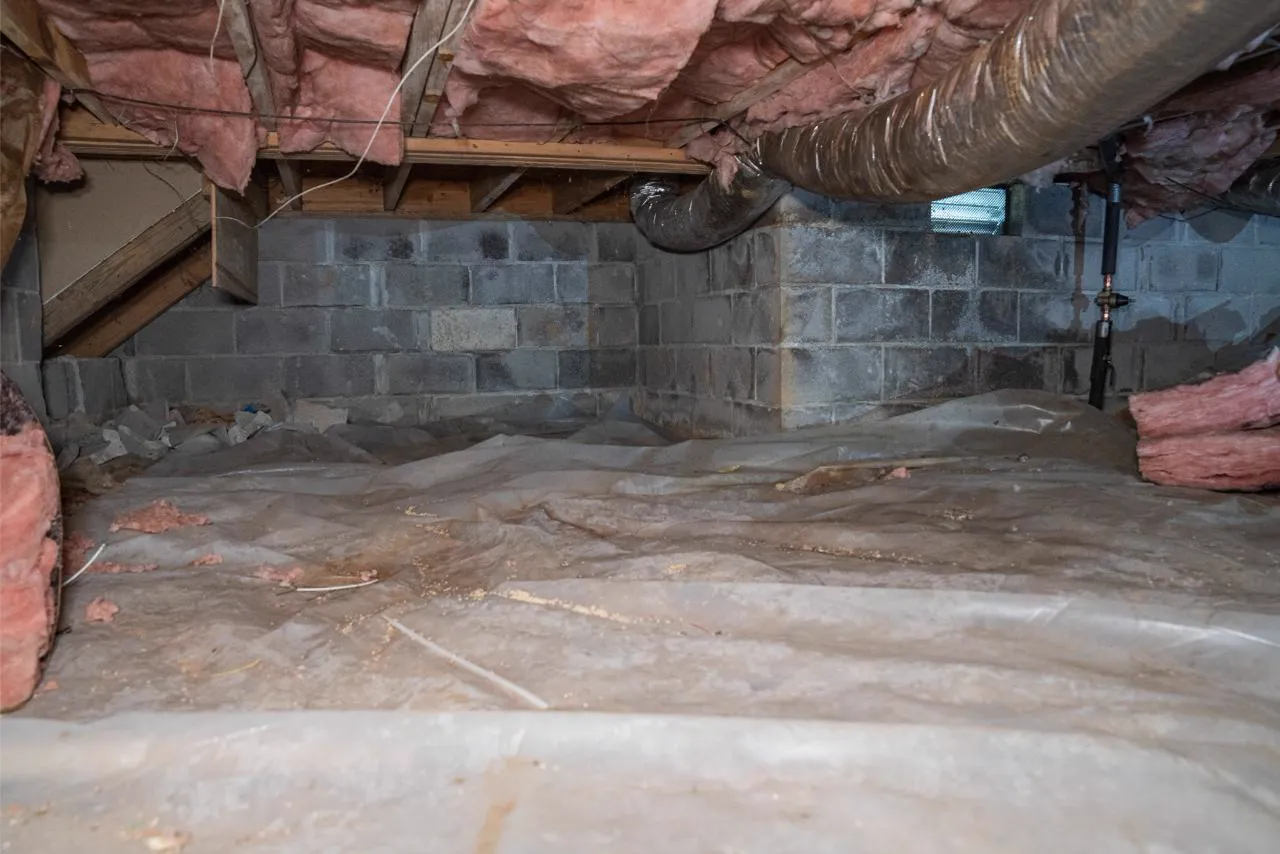
Here’s a number worth sitting with. A bare dirt crawl space can push somewhere near 15 gallons of water a day into your house as vapor, for every 1,000 square feet of exposed ground. That’s a bathtub’s worth of moisture rising through the floor every few days, and it’s why homeowners start hunting for the best crawl space Grayson company they can find after one bad summer.
Good news first: this is a very fixable problem, and we handle it constantly. The tricky part isn’t the repair. It’s that two companies can quote what sounds like the same job and be selling you two completely different things.
Where does all that water come from?
The ground, mostly. Red clay under a Georgia house holds moisture like a sponge, and that moisture doesn’t stay put. It evaporates upward all day long, so a space with no real barrier is basically a slow humidifier running under your living room.
Then the vents make it worse, which surprises people. Open foundation vents were required for decades on the theory that outside air dries a crawl space out. In our climate, though, warm humid air hits cool joists and lets go of its water instead. As a result, the very thing meant to dry the space is often what’s soaking it.
Bigger yards in Grayson are great — until a heavy rain and you realize all that water has to go somewhere, and your foundation is downhill of it.
What makes homes here different?
Three things, and they stack. Start with the lots, because Grayson has some of the biggest in Gwinnett. More open ground means more surface runoff, and all of that water has to find a low spot. Often the low spot is your house.
Next comes the soil. Red clay swells when it’s wet and shrinks when it dries, so water travels sideways instead of soaking straight down. Out toward the Alcovy River and the creek tributaries that feed it, ground water sits higher through spring than most folks expect.
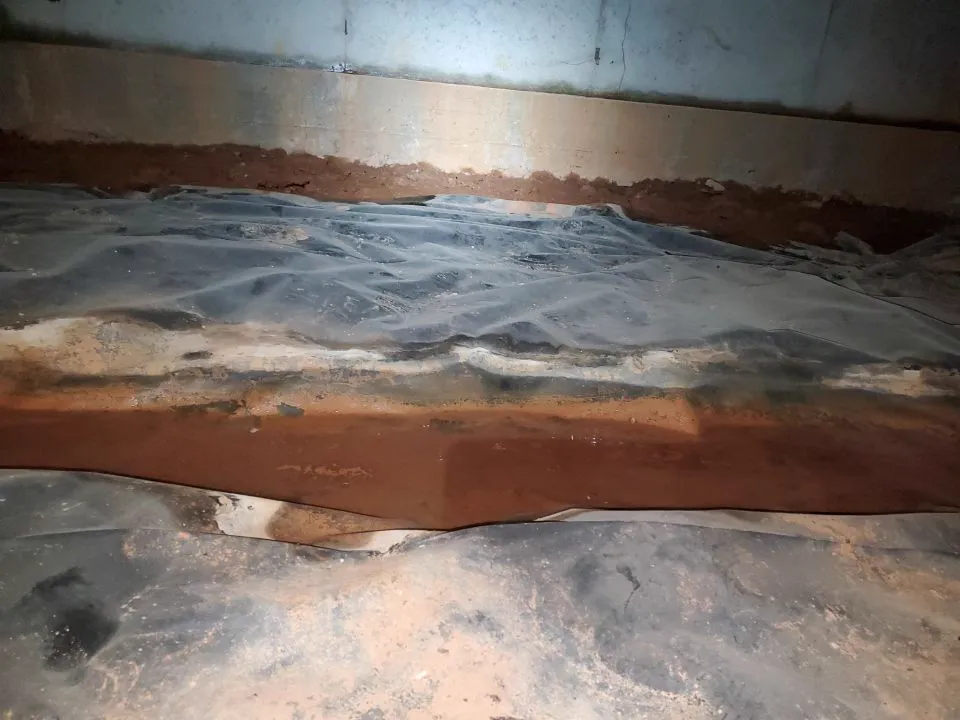
Then there’s age. Most of this city went up between about 1995 and 2012, which means a whole neighborhood’s worth of original moisture systems are aging out on the same schedule. Homes along the Rosebud corridor are showing first-generation waterproofing failures right now, and the grading that worked fine in 2001 has settled since.
One more local wrinkle: foundations here are mixed. Full basements are standard, many of them walkouts, while older rural parcels and bonus rooms still sit over crawl spaces. So a crew that only checks the basement misses half the story.
What should a good company do differently here?
Walk the yard before the crawl space, honestly. On these bigger lots the fix often starts thirty feet from the house, because downspouts dumping at the foundation and a flat spot in the grade feed everything underneath. If nobody stepped outside, nobody diagnosed anything.
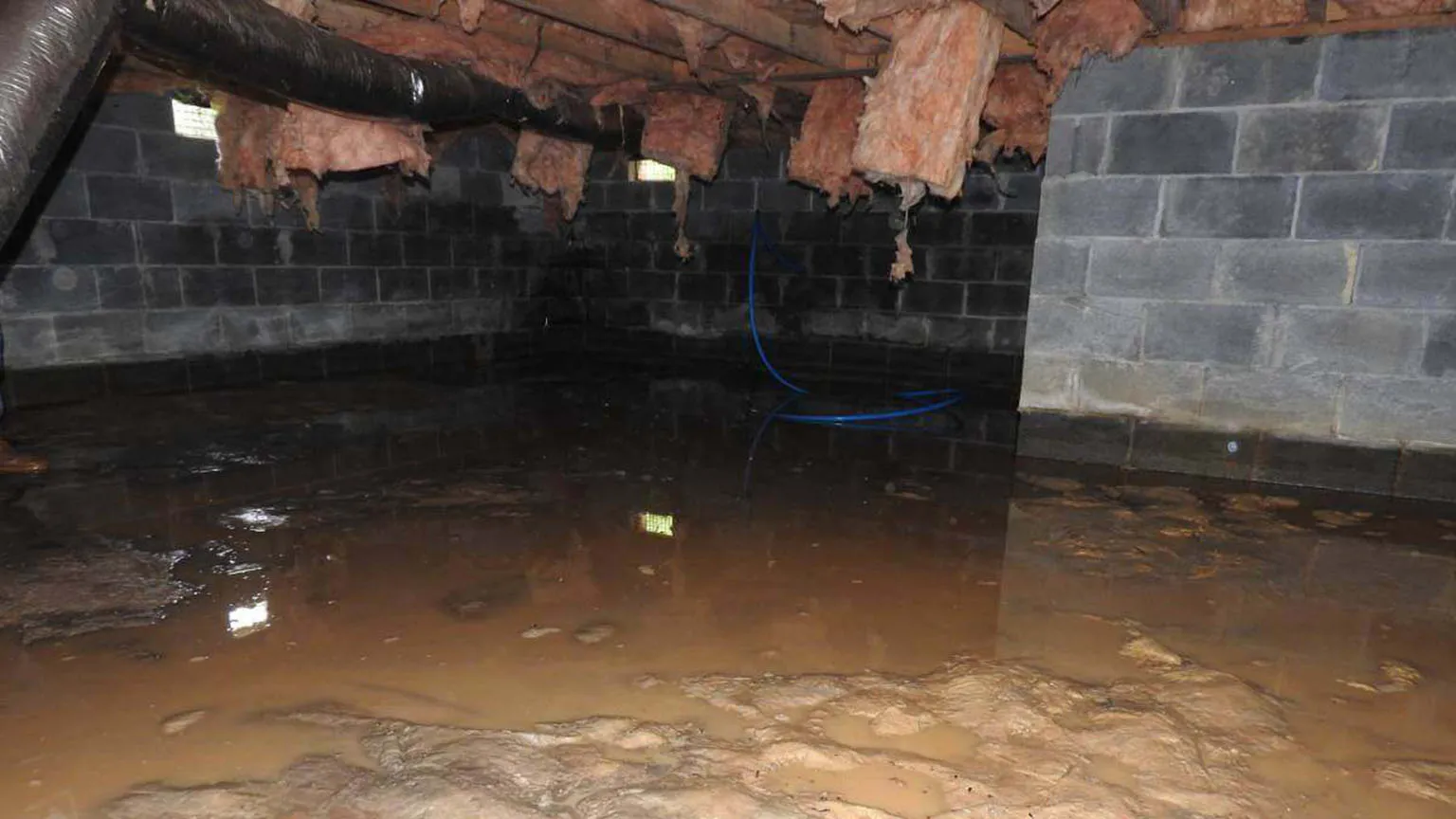
After that, water gets handled before the liner goes down. If there’s standing water under there, sealing a nice white cover over it just gives you an indoor pond with a lid. Drainage and a sump come first, then the liner, then the air.
Worth knowing
“Encapsulation” gets used for two very different jobs. One is a heavy reinforced liner sealed to the floor, up the walls and around every pier, with seams taped and vents closed. The other is a loose sheet of plastic laid on the dirt. Only one changes how the space behaves, so make sure your quote says which one you’re buying.
Insulation is the piece most quotes skip. Once vents are sealed, insulation belongs on the perimeter walls and rim joist rather than sagging between the floor joists. The U.S. Department of Energy’s guidance on insulation and moisture control lays out why that swap works better in a humid climate.
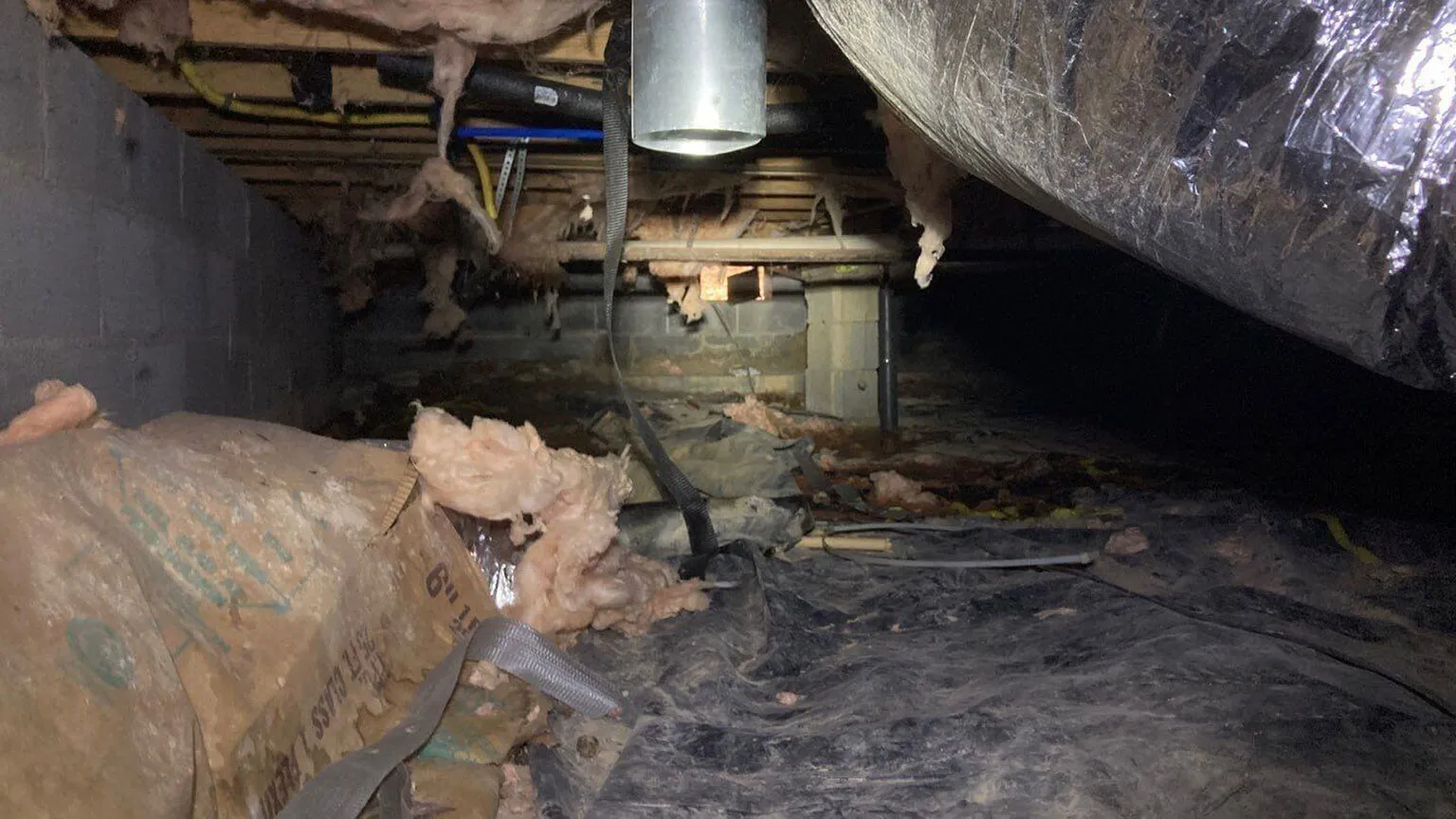
What does this look like from the water’s side?
Flip it around for a second. Water isn’t trying to ruin your house. It’s just following the cheapest path downhill, over and over, and it never gets tired or takes a weekend off.
Picture rain landing on a two-acre lot near Hidden Falls. Some soaks in. The rest runs across the clay, gathers in the low side of the yard, and pushes against whatever it meets. Your foundation isn’t a wall to water — it’s a slightly slower shortcut.
Vapor plays the same game vertically. Cool surfaces pull water out of warm air, and the coldest surfaces down there are your ducts and subfloor. That’s why drips show up exactly where you’d least want them.
Once you see it that way, the fix stops sounding mysterious. You’re giving water an easier route that doesn’t go through your home, then closing the doors it used to walk through. Grading, gutters, drainage, liner, sealed vents, managed air — that’s the whole plan, in order.
How do you read the estimate?
Line by line, with one question in mind: does this describe my crawl space? A real scope names your square footage, the materials and the equipment. A weak one says “encapsulate crawl space” and a price.
What should be spelled out in writing
- Liner thickness and reinforcement. In mils. That single line is the biggest quality gap between two similar-looking prices.
- Where the liner stops. Floor only, or sealed up the walls and around each pier.
- Vent treatment. Sealed and insulated, or just covered with a grate from outside.
- Water first. Interior drain, sump, basin and discharge point, if the inspection found standing water.
- The dehumidifier. Model, capacity and how it drains. Sizing should match your square footage.
- Insulation plan. What comes out, what goes back in, and where it lands.
- Exterior work. Downspout extensions, grading and where the discharge line ends up in the yard.
- Warranty, in plain words. What’s covered, how long, and whether it transfers to a buyer.
About price: a firm number over the phone is a guess, and you’d be the one paying for it. Small dry spaces sit at the low end, while a big footprint with drainage and a sized dehumidifier sits at the high end. Most jobs land somewhere between, which is why a written scope beats a “starting at” every time.
What should you ask, and what should worry you?
Five questions do most of the sorting. Ask how the liner attaches to the walls and piers. Then ask the thickness in mils, whether the vents are sealed or merely covered, how the dehumidifier was sized, and whether the warranty transfers when you sell.
Red flags are easier to spot than people think. Pressure to sign today is one. A discount that expires the moment the visit ends is another, and so is any talk about your home falling apart, which is a sales line rather than a diagnosis.
Watch for a crew that won’t go all the way in, too. If nobody crawled to the far corner, nobody actually knows what’s happening there. Also pause on a company that never mentions the outside, since gutters, downspouts and grading feed most of what we find underneath.
And one local note. Newer streets in the Grayson Village district have HOA rules about exterior discharge lines, so that should get sorted before day one rather than after. A crew that raises it first has clearly worked this side of Grayson Parkway before.
Why does any of this reach the rooms upstairs?
Here’s the stat that reframes the whole topic: researchers estimate roughly 40 to 50 percent of the air you breathe on your main floor came up from the crawl space first. Air rises through a house naturally, pulling whatever is below it along for the ride.
Which means the crawl space isn’t really a separate place. It’s the bottom of your air supply, and it’s currently the most humid room you own. That’s the real reason a closet smells like an old cabin while the crawl space door stays shut.
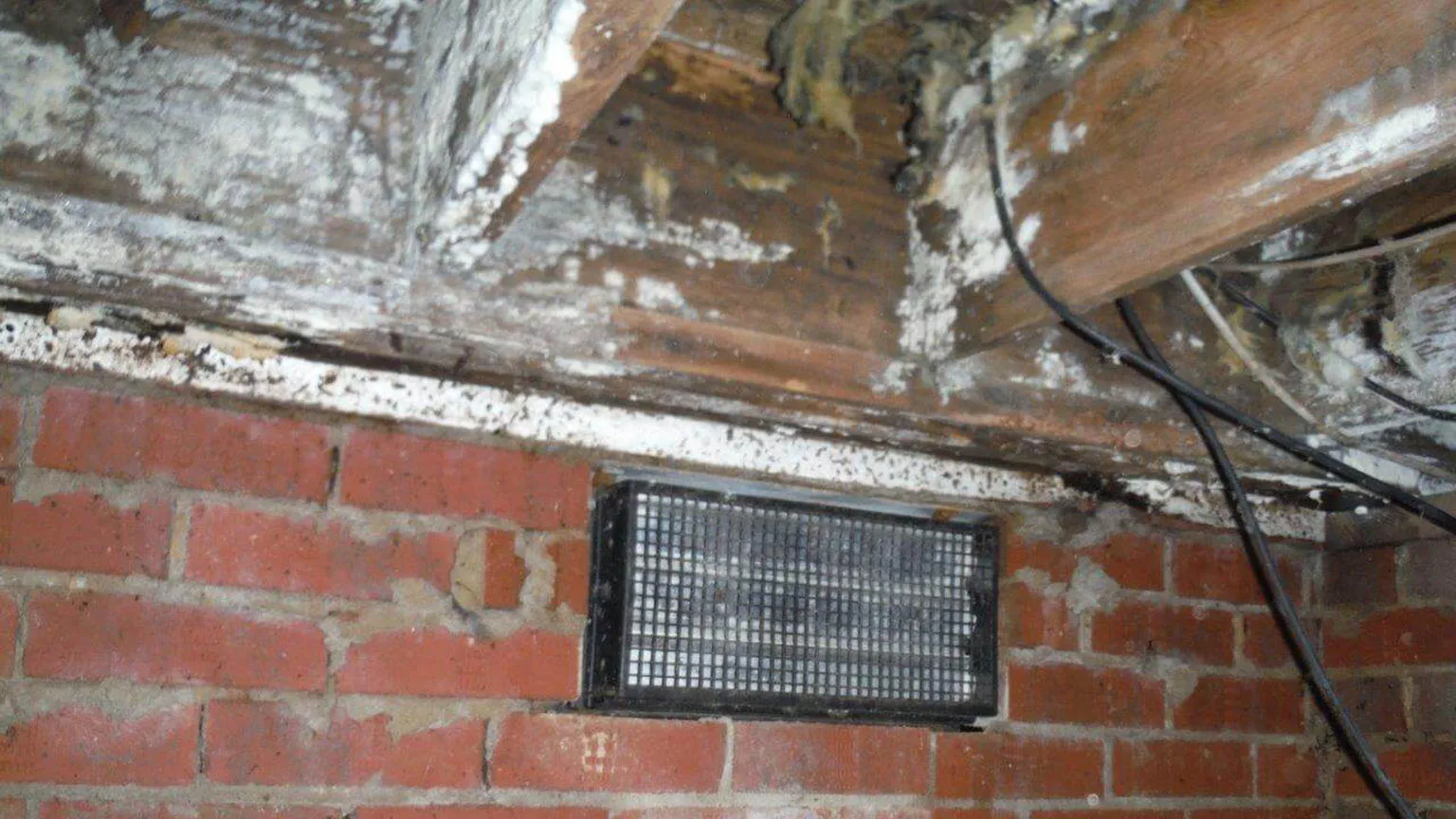
Other symptoms are quieter. Hardwood boards near an exterior wall cup a little, a bonus room feels stuffy, or someone’s allergies get louder at home than at school, and the EPA’s overview of mold and health explains why damp indoor air does that.
Fix the source and those fade on their own. Homeowners tell us the house smells like nothing a week later, which is the highest compliment a crawl space can get. Floors feel warmer in February, too, and the space below turns into storage you’d actually use.
Why we might be the right fit
We’ve been doing this over twenty years, and Grayson is about twelve minutes southeast of our Lawrenceville shop. Between jobs near Grayson High School and homes out toward the Alcovy River, we’re in this city most weeks, so odds are good we’ve worked under a house built the same year as yours.
That history matters for one plain reason: a warranty is only as strong as the company behind it. If something needs a second look in year eight, you’re calling the same local crews who did the work. We’ll also tell you when the fix is smaller than you feared.
Want to compare notes first? Our local guide to crawl space encapsulation walks through symptoms and options, and the full crawl space repair systems we install are laid out step by step. Neighbors down the road get the same breakdown for Dacula best crawl space work. If the lower level worries you more, start with our piece on flooded basement repair, since seepage after a long spring rain is the other thing we see all over town.
Where we work around Grayson
Our shop sits in Lawrenceville, so this stretch of Gwinnett is a short drive. We work throughout Grayson, Lawrenceville, Snellville, Loganville, Dacula, Bethlehem, Auburn, Centerville and Between, plus the wider Gwinnett and Walton area. Anywhere along Grayson Highway, Rosebud Road or Grayson Parkway, we’ve usually got a truck nearby.
Questions we get around town
Closed, once the space is properly sealed and conditioned. Open vents made sense decades ago, but in a humid Georgia summer they mostly invite wet air in to condense on cool wood. Closing them only helps as part of a full encapsulation, though, not as a standalone move.
Usually yes, because that smell rides air moving up from below. Once the moisture source is handled and any growth is cleaned, most homeowners notice a real difference within a week or two. If the smell hangs on, something else is holding water and we’ll help you track it down.
Most homes are a two to four day job. Clean-out and old material removal takes the first day, then drainage if it’s needed, then the liner and the dehumidifier. Bigger footprints with heavy water work run longer, and we’ll give you the schedule in writing before we start.
Often, yes. Your ducts stop running through a hot, damp box, so the system doesn’t fight as hard in July or January. Savings vary by house and by how leaky the space was, so we’d rather show you the before-and-after humidity readings than promise a percentage.
Wet or sagging batts come out and get hauled off, since damp insulation holds moisture instead of blocking it. After the space is sealed, insulation goes on the perimeter walls and rim joist where it does more good. Dry batts in good shape sometimes stay, and we’ll tell you which you have.
Let’s go look under your Grayson home
The inspection is free, the estimate is free, and nobody pressures you afterward. We’ll show you photos of what’s actually down there, explain what it takes to fix, and say plainly if the answer is simpler than you expected.
(678) 914-5112Serving Grayson and all of Metro Atlanta · $500 off projects over $3,500 · Live support 7am–8pm, 7 days a week