

How to Hire the Best Crawl Space Decatur Company for an Old House
Why hundred-year-old bungalows behave differently underneath, what belongs in a real written scope, and the questions that sort careful crews from fast ones.
Here’s the thing nobody tells you when you start calling around for the best crawl space Decatur has to offer: the vents in your foundation wall were never doing what everybody said they were doing. For decades, code required them because outside air was supposed to dry the space out. In a Georgia summer, warm outside air hits cool wood and does the opposite. It condenses.
So if your crawl space is damp, it isn’t because your house failed. It’s because the original plan for it was wrong. Good news, though: that’s a very fixable thing, and the fix has been figured out for a while now.
Why does that one detail matter so much?
Because it changes who you should hire. A company that still treats open vents as a good thing will “fix” your crawl space by adding more airflow, and you’ll be back in the same spot next July. A company that understands the physics closes the vents and manages the air instead.
That’s the first sorting question, and it’s free to ask. Plenty of crews around town answer it well. Some don’t, and the difference shows up years later rather than on the invoice.
A Decatur bungalow was built before basement waterproofing existed as a trade. These houses have stood a hundred years — and the fix has to respect that, not fight it.
What do Decatur homes have in common?
Age, mostly. This is the oldest housing stock we work under anywhere in Metro Atlanta, heavy on 1920s through 1950s craftsman bungalows, tudors and mid-century ranches. Underneath a lot of them you’ll find hand-laid stone, brick or block, plus a dirt-floor cellar that has never had a barrier of any kind over it.
Then there’s the ground. Red clay here has been dug up, filled and regraded for a century, so water travels sideways along old trench lines instead of soaking straight down. Add the tree canopy — those enormous oaks and poplars near Medlock Park drink and move an incredible amount of water — and moisture rarely arrives where you’d expect it.
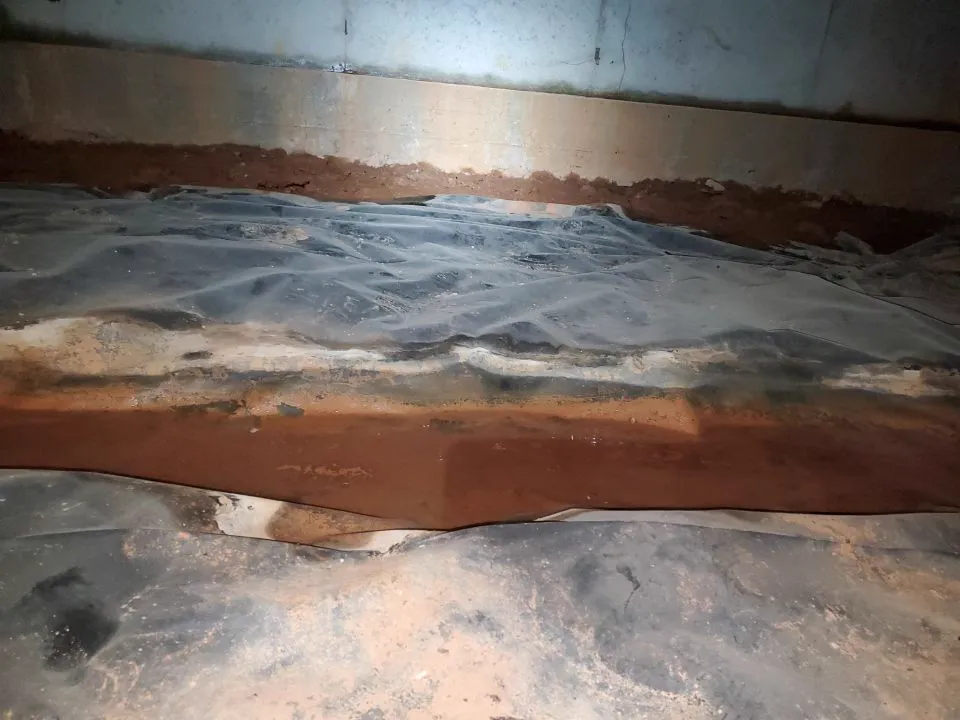
Grade is the other local wrinkle. A hundred years of added soil, mulch and landscaping has buried the original grade on many of these lots, so the dirt outside now sits higher than the crawl space floor inside. Water goes where gravity sends it. As a result, homes in Clairemont and Glenwood Estates often need a little exterior work before anything happens underneath.
What does the work actually involve?
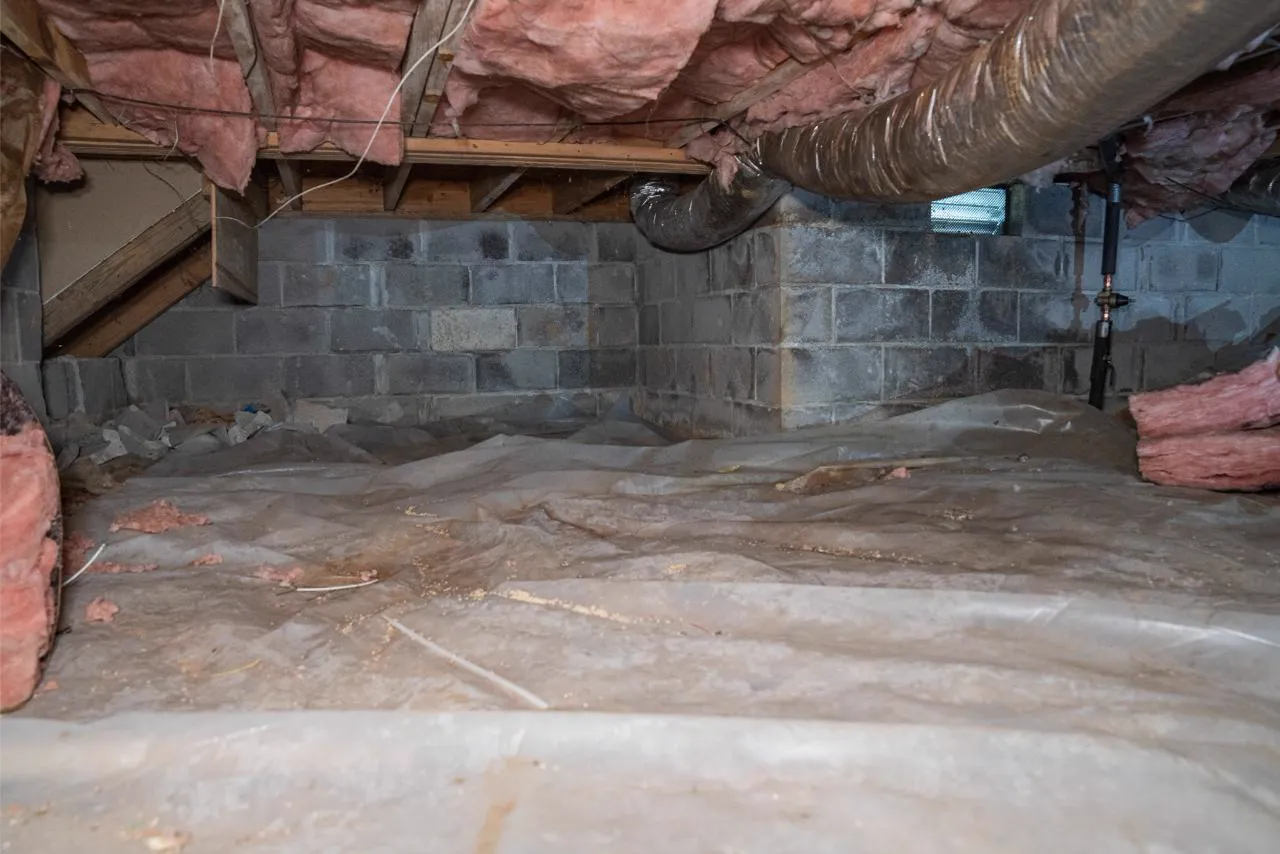
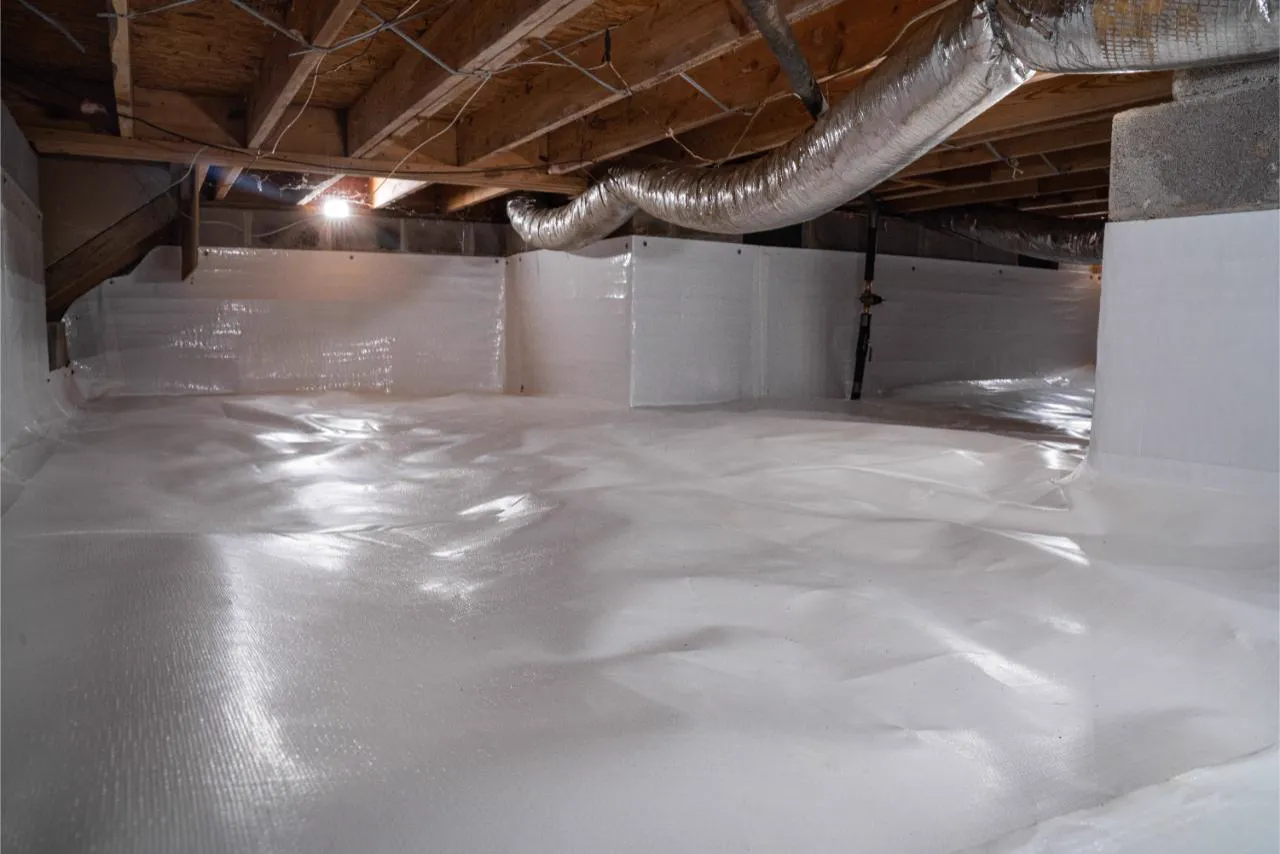
Real talk: the word “encapsulation” gets used for two very different jobs. One is a heavy reinforced liner sealed across the dirt, run up the walls, wrapped around every pier, with seams taped and vents sealed. The other is a sheet of plastic laid loose on the ground.
Both land on estimates under the same word. Only one changes how the space behaves, because sealing to the walls and piers is what makes the crawl space part of your house rather than a hole under it.
Worth knowing
Liner thickness matters more than color. A thin sheet tears the first time somebody crawls in to service a duct, while a reinforced liner takes knees, tools and years. So ask for the thickness in mils, then compare that one line across every quote you have.
Old stone and brick foundations need one extra step, too. Mortar that’s been there since the Coolidge administration crumbles when you drive a fastener into it, so the liner gets terminated with a mechanical detail that works with the wall instead of chewing it up. That’s a craft question, not a materials question.
Water comes first either way. If a corner puddles after every long rain, a liner over the top just builds a very tidy pond with a lid. So drainage and a sump go in before the liner, never after.
What actually decides whether it lasts?
Real talk again, because this is the part of the job that determines whether you’re happy in year ten: it’s the source, not the seal. A gorgeous white liner is the visible half. The invisible half is figuring out where the water was coming from in the first place, and here that’s usually something outside the crawl space entirely.
In these older neighborhoods, we find it in the same handful of places. Downspouts dumping at the wall. Buried grade sloping back toward the house. Failing century-old clay sewer and drain lines soaking the soil right at the footing, which is a quiet one and very common along the older blocks off North Decatur Road.

A crew that skips the walk outside is guessing indoors. That’s why our inspection starts in the yard with the gutters and the grade, then goes under the house. It takes twenty extra minutes, and it’s the difference between a fix and a delay.
Once the source is handled, the rest holds. Homeowners stop thinking about the crawl space, which is honestly the goal. Nobody wants a relationship with the area under their floor.
How do you read the estimate?
Line by line, with one question in mind: does this describe my house? A real scope names square footage, materials and equipment. A weak one says “encapsulate crawl space” and a number, which tells you nothing you can compare.
What should be spelled out in writing
- Liner thickness and reinforcement. In mils. This is the biggest quality gap hiding behind two similar prices.
- Where the liner terminates. Floor only, or sealed up the walls and around each pier.
- How it attaches to old masonry. Stone and soft mortar need a different detail than poured concrete.
- Water and drainage first. Interior drain, sump, basin and where the discharge actually goes.
- The dehumidifier. Model, capacity, and how it drains on its own.
- Insulation plan. What comes out, what goes in, and where it lands.
- Warranty in plain words. What’s covered, how long, and whether it transfers to a buyer.
On price, be a little suspicious of a firm number given over the phone. Small dry spaces sit at the low end, while a big footprint with drainage, a sump and a sized dehumidifier sits well above that. Most jobs land somewhere between, so what you want is a written scope rather than a “starting at.”
What should you ask, and what should worry you?
Five questions do most of the sorting. Ask how the liner attaches to stone or brick walls. Then ask the thickness in mils, whether the vents get sealed or only covered, how the dehumidifier was sized, and whether the warranty transfers when you sell. Any company bidding on the best crawl space Decatur homeowners can get should answer all five without hedging.
Red flags are easier to spot than people expect. Pressure to sign today is one. A discount that expires when the visit ends is another, and so is dramatic talk about your house coming apart, which is a sales line rather than a diagnosis.
Watch for a crew that won’t crawl to the far corner, too. If nobody went back there, nobody knows what’s happening back there. Also pause on anyone who never looks outside, since gutters and grading feed most of what we find.
One more, and it’s specific to this town. If a company talks about “just replacing” original masonry or ripping out old framing, keep interviewing. These houses have earned some respect, and most of what’s down there can be kept and protected instead.
What does this have to do with the air upstairs?
Quite a lot, and this is the part people connect last. Air moves upward through a house naturally, so a real share of what you breathe in the living room started under the floor. That’s why the musty smell shows up in a hall closet while the crawl space hatch stays shut all year.
The rest of the signs are quieter. Heart pine floors near an exterior wall cup a little. A back bedroom feels stuffy, or someone’s allergies get louder at home than at the office, and the CDC’s overview of mold and your home explains why damp indoor air does that.
Insulation is the other half nobody mentions. Once the vents are sealed, insulation belongs at the perimeter walls and rim joist instead of sagging between floor joists, and the U.S. Department of Energy’s guidance on insulation and moisture control explains why that swap works. Better yet, the payoff shows up on the power bill.
Fix the source and the symptoms fade on their own. Homeowners tell us the house smells like nothing a week later, which is the best compliment a crawl space can get. Floors feel warmer in February, too, and the space below turns into storage you’d actually use.
Why we might be the right fit
We’ve done this for more than twenty years, and Decatur is about thirty-five minutes southwest of our Lawrenceville shop. Between jobs near Legacy Park and houses a few blocks off Your DeKalb Farmers Market, we’re in DeKalb most weeks, so odds are good we’ve worked under a house built the same year as yours.
We’ll also tell you when the answer is smaller than you feared, because that happens more than you’d think. And since the same crews have been here for years, a warranty call in year eight reaches the people who did the work. That’s the whole pitch, honestly.
Want to read a little more first? Our local guide to crawl space encapsulation walks through symptoms and options, and the full crawl space repair systems we install are laid out step by step. Folks up our way get the same breakdown for Lawrenceville best crawl space work. If the lower level worries you more than the dirt does, start with our piece on flooded basement repair, since seepage through old stone walls after spring storms is the other thing we see all over this town.
Where we work around Decatur
Our shop sits in Lawrenceville, so DeKalb is a straight shot down the road for us. We work throughout Decatur, Avondale Estates, Tucker, Brookhaven, Clarkston, Stone Mountain, Scottdale, Atlanta and Chamblee, plus the wider DeKalb area. Anywhere near Scott Boulevard, Clairmont Road or Ponce, we’ve usually got a truck close by.
Questions we get around town
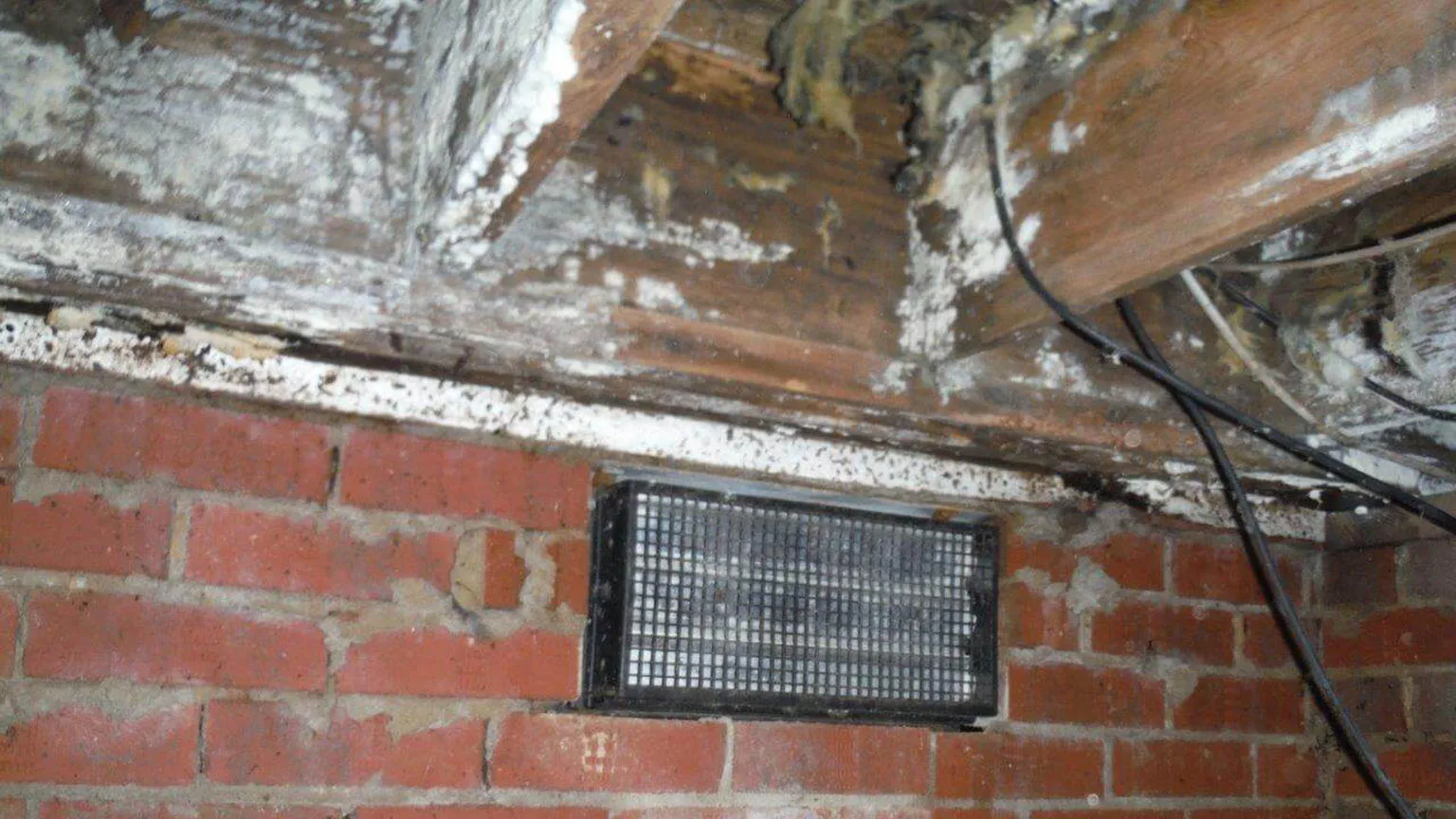
Trust your nose and your floors. A musty smell in a closet, cupping hardwood, cold rooms over the crawl space, or a hatch that feels swampy in summer all point the same direction. If you can get a light down there, damp dirt, sagging insulation and white growth on the wood are the visual versions of the same story.
It’s a heavy liner sealed across the dirt floor, run up the walls and wrapped around the piers, with the seams taped and the vents sealed. Any standing water gets drained first. After that the space stays dry and conditioned, so it behaves like part of your house instead of a damp hole under it.
It depends on square footage, whether water has to be drained first, and the dehumidifier size. Older homes with stone walls and dirt cellars sometimes need extra prep, which moves the number. Small dry spaces land at the low end, while a large footprint with drainage and a sump sits well above that, so we give you a written scope after the inspection rather than a phone guess.
In our climate, almost always. Once the vents are sealed the space needs its air managed, so a unit sized to the square footage holds humidity steady year round. It should drain on its own, too, because nobody wants to remember a bucket under the house.
Closed, once the space is properly sealed and conditioned. Open vents were required for decades on the idea that outside air dries things out, but warm humid air hitting cool wood condenses instead. Sealing them only works as part of a full encapsulation, though, not on its own.
Let’s go look under your Decatur home
The inspection is free, the estimate is free, and nobody pressures you afterward. We’ll show you photos of what’s actually down there, explain what the fix involves, and tell you plainly if it’s simpler than you expected.
(678) 914-5112Serving Decatur and all of Metro Atlanta · $500 off projects over $3,500 · Live support 7am–8pm, 7 days a week