

Wet Basement Sugar Hill Homeowners Keep Googling: The Real Cause, and the Fix
Most people blame the wall. On a hill this steep, the wall is almost never the one causing trouble. Here’s what is.
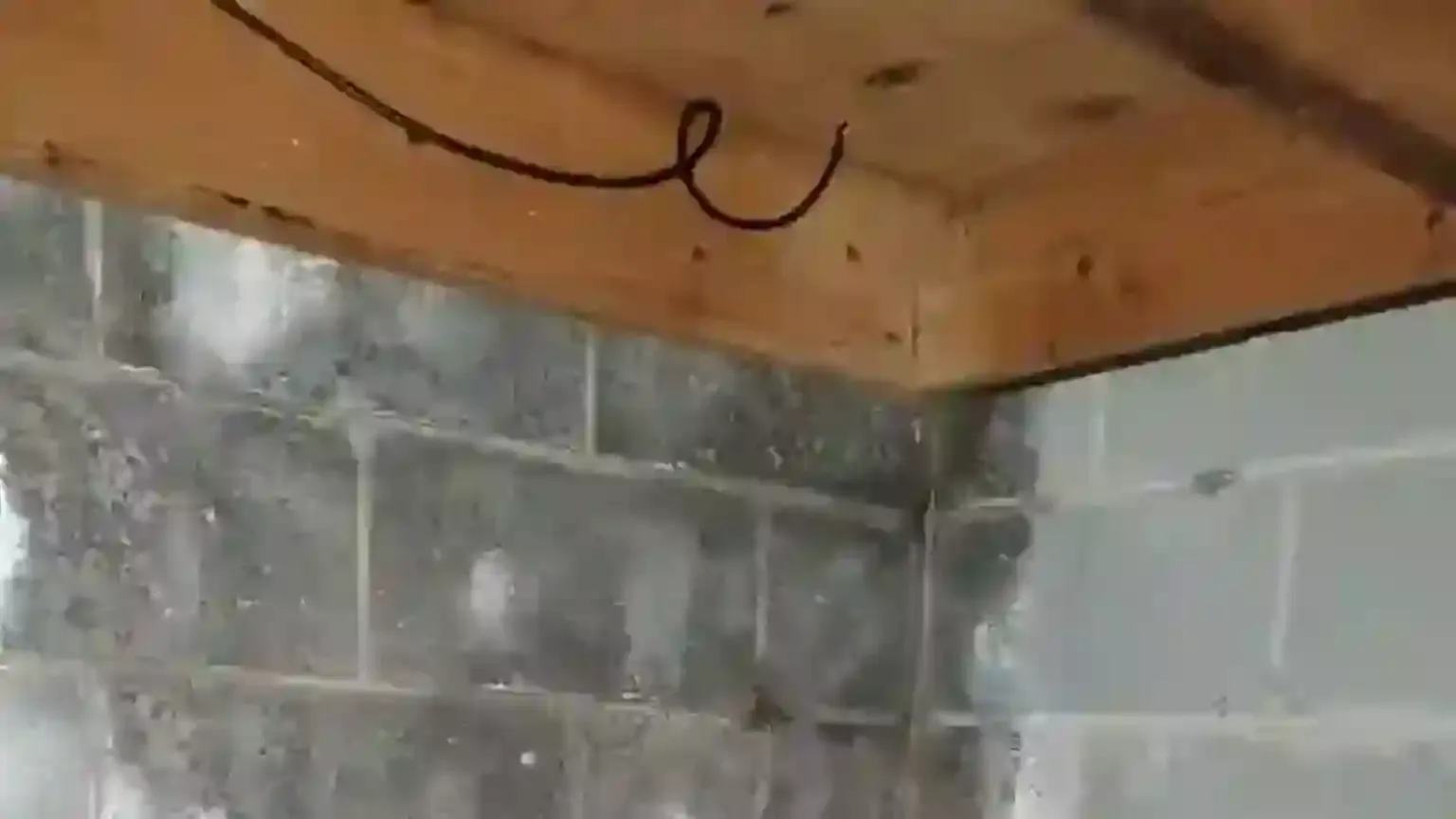
Almost everybody believes the same thing: if the basement is wet, there must be a crack. Find it, seal it, done. But that’s not how a wet basement Sugar Hill homeowners live with usually works, because concrete is porous. Water moves through solid, uncracked concrete by capillary action, so a wall can be soaking wet without a single visible crack.
Good news right away: this is one of the most common things we look at, and it’s very fixable. So let’s take it apart slowly, because you deserve to understand your own house before anybody hands you a number.
Why doesn’t sealing the crack work?
Think of a wall like a stack of sponges. Under pressure, water works through the material itself, not just through gaps. A crack does make things worse, but sealing it only pushes water sideways to the next weak spot. That’s why people paint a wall, feel great for a season, then watch the damp show up two feet to the left.
Here’s the thing: the water was never the wall’s fault. Something outside was delivering more of it than the ground could carry away. Fix that, and the wall stops being interesting — which is how a basement wall should be.
What is the hill actually doing to your house?
Sugar Hill is named for a hill, and it earns it. The land drops hard toward Lake Lanier and the Chattahoochee below Buford Dam, so water doesn’t sit here — it runs, and it runs toward whatever is downhill. If your house is that downhill thing, your house is the destination.
That’s also why walkout and daylight basements are the norm here rather than the exception. A walkout is a wonderful thing to own, and we’d take one too. But that door sits at the bottom of a slope, so in a heavy spring storm the doorway and nearby window wells become the low point of the whole yard.
Then there’s rock. Under many of these slopes it sits closer to the surface than people expect. Water soaks down through the clay, hits that shelf, and turns sideways until it meets something vertical — usually your basement wall. Storms here arrive fast, so the National Weather Service Peachtree City office is a handy bookmark.
Worth knowing
Seepage and structural movement are two separate conversations. We’ll tell you clearly which one you have — and if it’s only seepage, we’ll say so before anybody talks money.
Is yours mild, or is it something bigger?
Fair question, and you can get most of the way there yourself in about ten minutes. None of this is bad news. It simply shows where you sit on the scale, so you spend the right amount instead of guessing.
Reading the signs
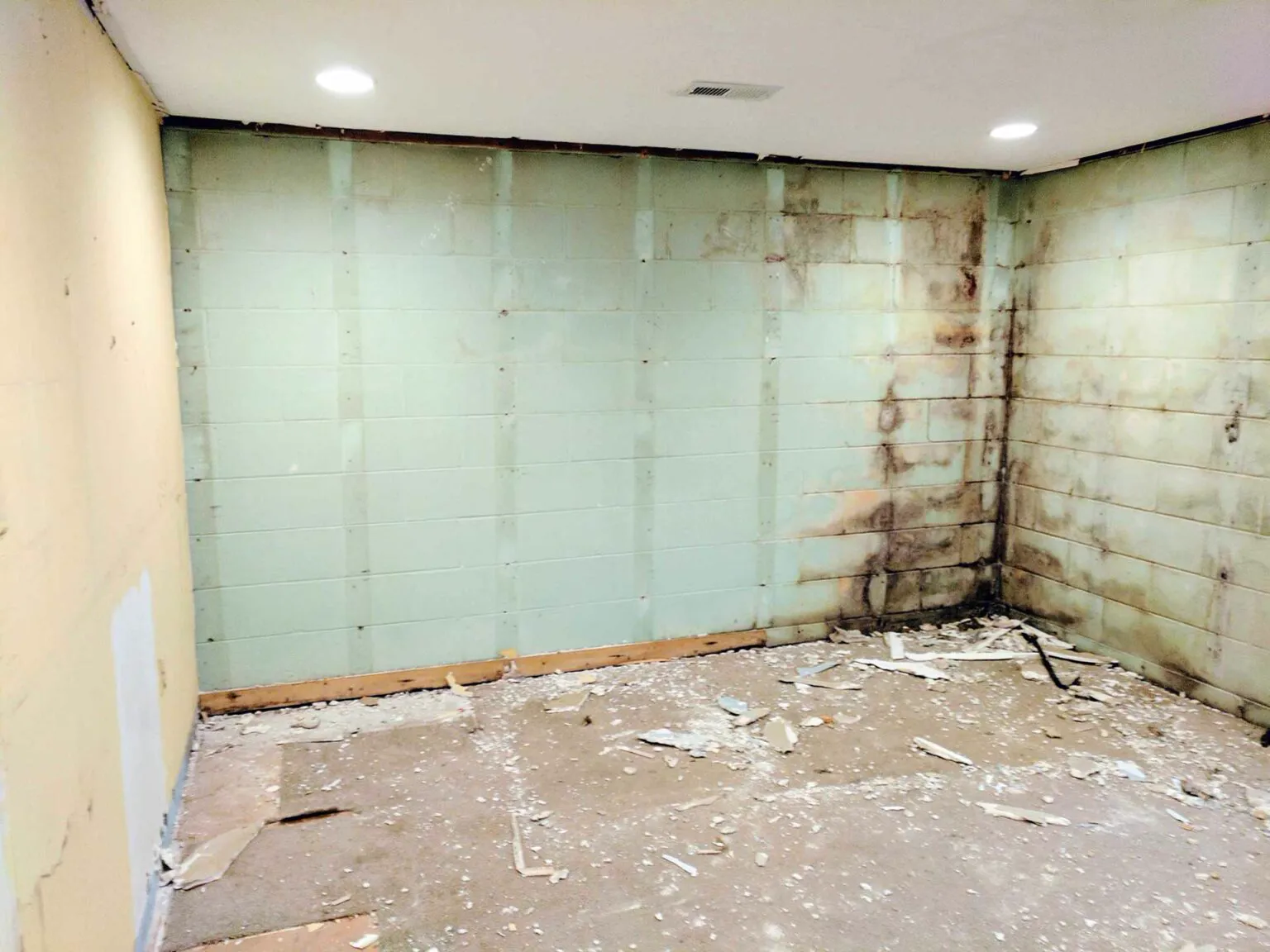
- Musty smell, no visible water. Moisture is showing up as vapor. Mild, and often solved outside.
- White chalky bloom on the block. Efflorescence. Water passed through and left its minerals behind.
- Damp patch after a big rain. Very common, and one downspout is often doing all the damage.
- Water sneaking in at a walkout door or window well. That’s a grading and drainage story, not a wall story.
- Standing water that hangs around for days. Time to have somebody look. Still fixable, just a bigger scope.
What if you leave it alone? Nothing dramatic happens overnight. Moisture problems just widen slowly — stored things get ruined, humidity climbs upstairs, and simple repairs stop being simple. For the indoor-air side of that, the EPA’s guide to moisture control explains it clearly and isn’t selling anything.
So what do most companies skip?
Ready for the part that rarely makes it into an estimate? On steep lots the retaining wall is often the real culprit, and almost nobody looks at it.
Plenty of homes around the Waterside area have a wall holding back the uphill side of the yard. That wall needed drainage behind it: stone, a pipe, somewhere for water to go. After twenty or thirty years the pipe silts up or gets crushed. Then the wall stops draining and starts storing, and every gallon leans downhill toward your foundation.
You can usually spot it. A wall that bulges, leans, or weeps after rain is telling you it’s full. Good news, though — this one’s very solvable, and catching it early costs far less than catching it late. Sometimes the honest fix is a new drain line and better grading, not a big interior system.
Most of the time the wall isn’t failing. Something outside the wall is handing it more water than the ground can carry away — and that’s a much friendlier problem to own.
We had a homeowner near Sugar Hill Golf Club braced for a full perimeter job. After we walked the uphill side, the answer was a dead drain behind an old block wall plus two downspouts emptying beside the foundation. Smaller fix, smaller number, same dry basement.
How does it actually get fixed?
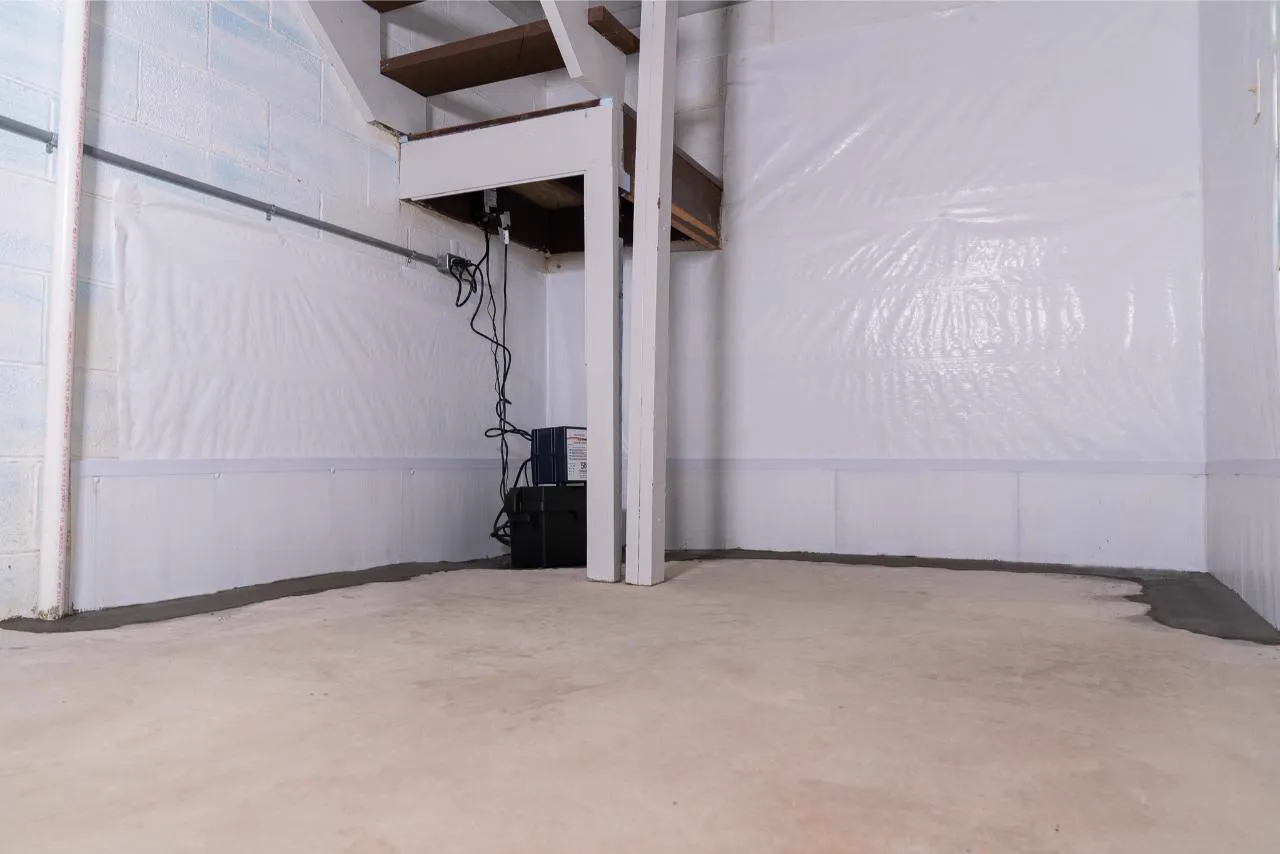
Simpler than most people expect. The old approach fought water at the wall with coatings and patches, which is a raincoat on a submarine. Interior drainage does the opposite — it collects water below the slab and routes it to a sump before it ever touches your floor. Here’s the order we work in.
- Walk the outside first. Grade, downspouts, retaining walls, window wells, the walkout door. Sometimes the whole fix lives in the yard.
- Read the foundation. Poured concrete and block behave differently, and a daylight basement gets planned differently than a full one.
- Open a narrow strip of slab. Only along the walls that need it, and only for a day of noise.
- Set perforated pipe in clean stone, below floor level. Depth is the whole ballgame.
- Route it to a sump or a gravity discharge. On a hill this steep, gravity often does the work for free.
- Close it up. Fresh concrete, wall liner where it’s called for, and our mess in our truck.
Most systems here run two to four working days. Add a day for a finished space, and another if the walkout side needs regrading. Pricing follows scope, so our waterproofing cost breakdown covers what moves the number. The basement waterproofing page shows what we install.
Which other rooms does this quietly affect?
Here’s what surprises people most: a damp basement rarely stays a basement problem. Air moves upward, so whatever the lowest level smells like eventually reaches the main floor. That musty note in the hall closet? It often started fifteen feet below.
Humidity travels the same way. When the lower level runs wet, the whole house runs damp, so your air conditioner works harder drying air that keeps getting resupplied. Hardwood can cup along the seams, and doors that closed fine in January start sticking in June.
Storage takes the quietest hit. Holiday bins, photos, that guitar somebody swore they’d play again — all of it sits in the room with the moisture. Still, it’s the kind of thing you’d rather handle once than think about every spring.
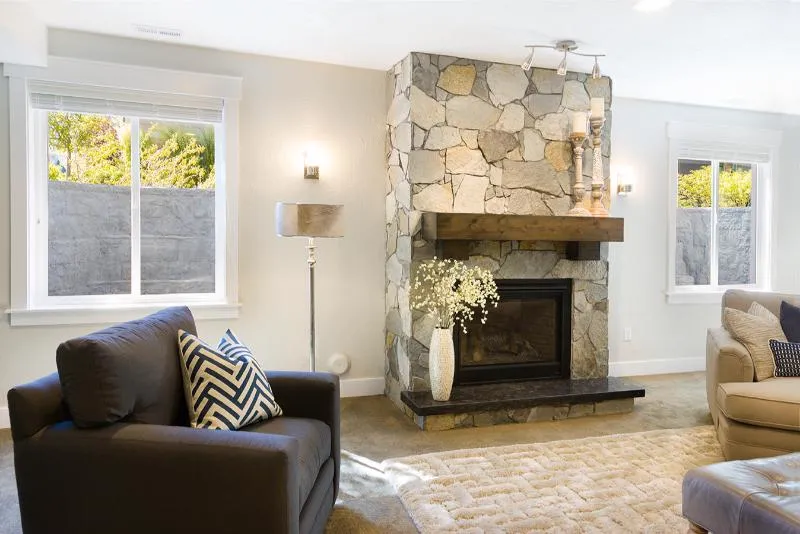
Because so many homes around The Bowl district and the downtown Sugar Hill infill sit on tight, steeply cut lots, the lower level is usually real living space. That makes drying it out less of a repair and more of a room you get back. Some of these houses also have a crawl area alongside the basement, and in that case crawl encapsulation is the better system there.
What should you ask for in an estimate?
Four things, and any honest contractor hands them over without flinching. First, what they found outside. Second, the depth and route of the drainage, written down. Third, where the water discharges — on a hill, that answer matters. Fourth, a warranty you can read in one sitting.
If a price arrives over the phone with no walk-through, that’s a guess, and you’d be the one paying for it. Ask questions too. Folks up here ask good ones, especially second owners of nineties homes just now meeting the original drainage. For comparison, our Lilburn wet basement guide shows how flatter lots behave.
What does life look like once it’s dry?
Quieter, mostly. The smell fades within days once the source is cut. Your sump cycles after storms, which is the system working rather than a problem. By the second weekend, boxes go back downstairs.
A year later, you stop checking that corner after rain. Ten years later, the pipe and stone under the slab still work, because nothing down there wears out. Only the pump has a service life, like a water heater. That’s the real win — not just a dry floor, but knowing you spent your money on the right thing, once.
Where we work around Sugar Hill
We’re based in Lawrenceville, about twenty minutes south, and we’re up Suwanee Dam Road and along the lake side constantly. That covers Sugar Hill, Buford, Suwanee, Cumming, Gainesville, Flowery Branch, Duluth, Dacula, Braselton and the wider Gwinnett area. Steep lots, walkout basements and stubborn retaining walls are normal work for us — not a surprise we charge extra to be surprised by.
Questions Sugar Hill homeowners ask us
Usually within a few days, and often sooner outside of storm season. Give us a call and we’ll find a window that fits your schedule, including evenings. The inspection is free, so there’s no reason to sit and wonder about it.
It depends on how much wall is affected, how deep we have to go, and whether the real fix is outside. A single problem corner is a modest job, while a full perimeter system on a walkout basement lands much higher. We give you a written number after we walk the house, never over the phone, and projects over $3,500 get $500 off.
Most jobs run two to four working days from start to cleanup. Finished spaces add about a day because we open and rebuild the bottom section of wall. If regrading or a retaining wall drain is part of the plan, we’ll tell you upfront how that changes the schedule.
Only what’s sitting along the walls we’re working on, roughly a four-foot strip. Everything else can stay put, and we cover it before any concrete gets cut. If you need a hand shifting something heavy, just ask the crew.
Sometimes, but they’re two different jobs. Drainage handles water, while a crack may also need repair or reinforcement depending on what caused it. We look at both during the inspection and tell you plainly whether yours is cosmetic, active, or worth watching for a season.
Let’s find out what your Sugar Hill basement really needs
We’ll walk the house with you, show you where the water is coming from, and explain the fix in plain language — steep lots and walkout doors included. The inspection is free, the estimate is free, and nobody pressures you at the end of it.
(678) 914-5112Serving Sugar Hill and all of Metro Atlanta · $500 off projects over $3,500 · Live support 7am–8pm, 7 days a week