

How to Hire the Best Basement Waterproofing Dacula Has for a Big-Lot Home
Why the patch didn’t hold, what a good crew does differently on an acre, and the questions to ask before you sign.
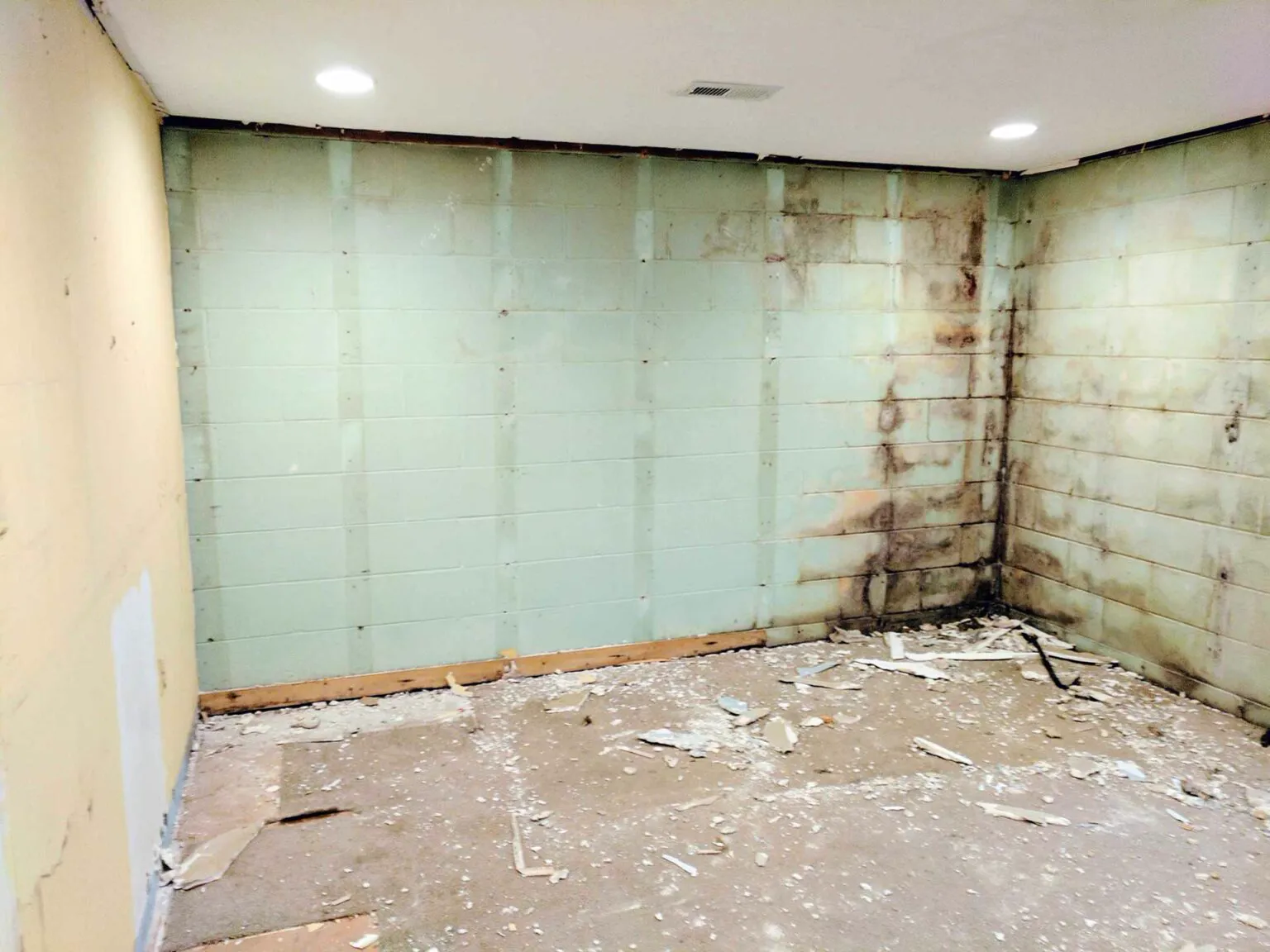
Somebody already tried. There’s a gray smear of hydraulic cement on the wall, or a fresh coat of waterproof paint, and for about two months it looked like a win. Then the spring storms came back and so did the damp. That’s why most people start hunting for the best basement waterproofing Dacula has to offer only on their second try — the first fix treated the stain instead of the source.
Good news, though. That’s a normal place to start, and it’s very fixable. You just got sold a bandage for a plumbing-sized problem.
Why don’t patches hold?
Because a patch argues with pressure, and pressure always wins. When soil outside the wall is soaked, it pushes water toward the one dry place it can find — your basement. So a coating on the inside face has to hold back that entire push with about a sixteenth of an inch of product. It’s a raincoat on a submarine.
What makes a Dacula house different?
Land, mostly. Out toward Dacula the lots get bigger, and so does the amount of water that has to go somewhere when a storm rolls through. An acre out past Freeman’s Mill Park sheds a small creek’s worth of runoff, and all of it is looking for the low spot.
Then there’s the dirt. Most of these subdivisions went up on former farmland between the late 1990s and the mid 2010s, and grading equipment packed that ground hard. Compacted red clay doesn’t drink water — it sheds it. As a result, runoff travels the surface until it finds a foundation to pool against.
Add the terrain. The Apalachee and Mulberry basins run through this area, so plenty of lots sit with seasonal high water underneath them for weeks at a time. That’s groundwater, not a leak, and the U.S. Geological Survey explains how shallow water tables behave better than any sales brochure will.
One more Dacula wrinkle: septic. A drain field keeps a patch of soil wet on purpose, which is fine until it sits uphill of the house. We’ve walked lots in Rabbit Hill where the field and the basement were basically neighbors.
What should a good company be doing differently here?
Walk the whole property first. On an acre the answer sits outside more often than people expect, so a crew that starts in the basement is starting in the middle of the story.
A good inspection checks where the roof water lands, whether the yard has any path for runoff, and where the septic field sits. After that comes the low corner, because there’s always a low corner.
Worth knowing
Seepage and structural movement are two different conversations. Plenty of block walls seep while staying perfectly sound. You should be told which one your house has before anyone mentions a number.
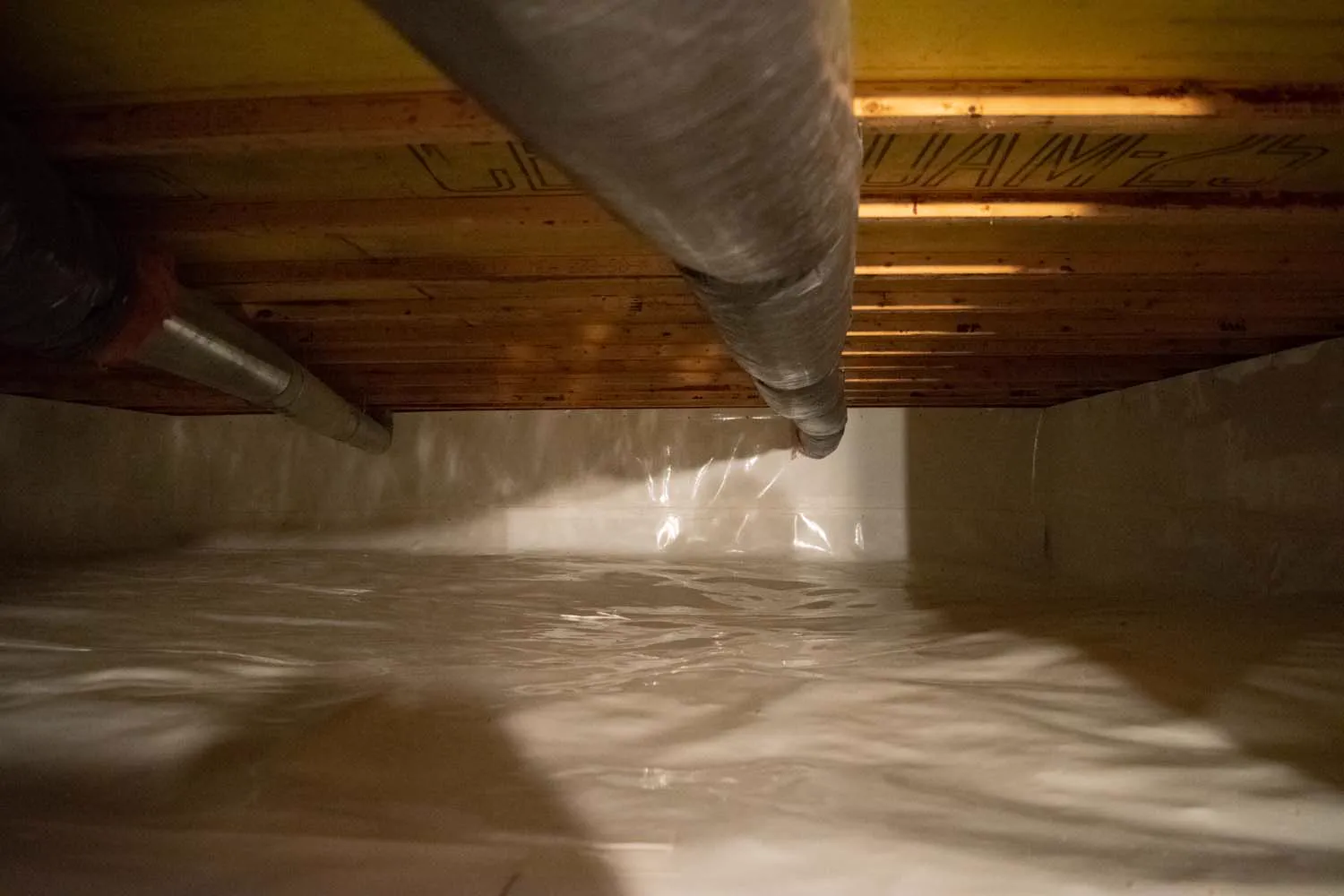
The system itself is not exotic. Interior drainage collects water below the slab and routes it to a sump before it ever reaches the floor, instead of trying to block it at the wall. In other words, it stops fighting the push and gives the water an easier job to do. That single idea is the difference between a fix that holds and a patch that doesn’t.
What does this look like from the water’s side?
Flip it around for a second. Pretend you’re the rain, landing on a two-acre lot off Hamilton Mill Road at four in the afternoon in April.
First you hit the roof, and about half of you gets funneled into four downspouts. Those dump you at the corners of the house, six feet from the wall, which is nice and convenient — for you. Meanwhile the rest of you lands on compacted clay that won’t absorb much, so you sheet across the yard instead.
Next you find the lowest point, maybe where the grade behind the garage flattens out. Since you can’t soak in fast, you pile up. Now a wet column of soil leans on the foundation — still no leak, just pressure building politely.
Then you find a seam. The cove joint, where the wall meets the slab, is the most common entry point in a Georgia basement, and it’s the path of least resistance every single time. So you take it. Not because the wall is bad, but because you were never given anywhere better to go.
That’s the whole story, and it’s honestly good news. Give water a better route and it takes it. Water has no loyalty to your basement floor.
How do you read an estimate without a degree in this?
Read the scope, not the total. A real estimate names the walls, the linear feet, the drainage depth, the discharge point and the outside work. If all you got was a price and a signature line, that’s a guess wearing a nice font.
What a solid Dacula estimate spells out
- Linear feet, and which walls. One wall versus a full perimeter is the biggest price swing there is.
- Depth of the drainage. Below the slab, not beside it. Bargain bids quietly cross that line.
- Discharge location. On a big lot this matters twice as much — water has to leave, not tour the yard and come back.
- Exterior corrections. Grading, downspouts and yard drainage should be priced honestly, even when they’re the cheap part.
- Septic and well setbacks. Any crew working out here should already be asking where both are.
- Sump details. Pump size, discharge line, and whether a battery backup makes sense for your lot.
Prices swing widely because houses do, so get your number in writing after somebody actually stands in your basement. For the mechanics themselves, our guide to how these systems work in Dacula homes walks through them step by step, and the basement waterproofing page shows exactly what we install.

What should you ask before you hire anybody?
Five questions do most of the work. Ask each company the same ones, then compare the answers instead of the totals — that’s how the best basement waterproofing Dacula offers sorts itself out from the rest.
Five questions worth asking
- “What did you find outside?” A crew that skipped the yard on an acre lot skipped the source.
- “Where does the water discharge?” They should walk you out and point at the actual spot.
- “Will you photograph the pipe before the concrete goes back?” Yes should come instantly.
- “How do you handle my septic field?” Vague answers here are expensive later.
- “Who’s on my job?” Same crews every day, or a sub you meet on the morning of?
Red flags are simpler than folks expect. A firm price quoted over the phone means nobody measured anything, and pressure to sign today is a sales tactic. Real talk: if one bid lands far under the others, ask what got left out. Usually it’s drainage depth.
One more. Rainfall here arrives in bursts rather than drizzle, and you can see that pattern in the records the National Weather Service office in Peachtree City keeps. Any company that treats a Dacula acre like a townhouse lot hasn’t looked at that pattern.
Ever had a diagnosis surprise you?
Happens more than you’d think. A homeowner in Daniel Park called about a wet spot along the back wall, sure the foundation had cracked. Two seasons of patching, one stubborn stain, and a plan to dig the whole wall up.
So we walked the lot first. The wall was fine — sound block, no movement, no crack worth naming. What we found instead was a builder-installed French drain, twenty years old and packed solid with silt and roots. It had quietly quit, so every storm dumped its whole load a few feet from the house.
The fix wasn’t what he expected, and it cost less than the excavation he’d braced for. We rebuilt the yard drainage with a proper outlet, extended two downspouts past the flat spot, and set interior drainage along the one wet wall. The wall he wanted to demolish never got touched.
He told us the strangest part was the first big April storm afterward. He stood at the window with coffee and watched it rain — no flashlight, no trip down the stairs. That’s the real product here. Not “the leak stopped,” but “the next storm isn’t something I have to think about.”
Why are we a fit for Dacula homes?
Because we think about the property, not just the wall. Folks out here already manage septic, wells and a yard that takes real work, so they don’t need a contractor who stares at eight feet of block and calls it a day.
You’ll also get answers. We’ll show you the water path, explain why one wall gets treated and another doesn’t, and hand you photos from under the slab before the concrete goes back. If your house has a crawl space on the rural fringe instead of a full basement, the honest answer is often crawl space encapsulation. And if you’re comparing us against outfits farther north, our Sugar Hill waterproofing company guide covers the same ground for that market.
We’re twelve minutes east of our Lawrenceville shop, so we’re out this way constantly — Chandler Walk, the Harbins corridor, the streets near Tribble Mill Park.
Where we work around Dacula
Our crews cover Dacula, Lawrenceville, Grayson, Buford, Auburn, Winder, Braselton, Hoschton, Bethlehem, Sugar Hill and Snellville, plus the wider Gwinnett area. Whether you’re on a subdivision lot off Hamilton Mill Road or a couple of acres out on the rural side, we know how these homes behave when the water table comes up.
Questions Dacula homeowners ask us
It depends on where the water starts. Surface runoff and roof water usually call for exterior corrections, while a high water table is handled best by interior drainage below the slab. On many Dacula lots the right answer is some of both.
The buried parts have nothing to wear out, so clean stone and pipe below a slab keep working for decades. The sump pump is the one piece with a service life, and it usually gets replaced around the ten-year mark. Exterior drainage just needs the outlet kept clear.
Yes, and you should get it in writing before work starts. Ask what it covers, how long it runs, and whether it transfers if you sell. We’re licensed and insured, and we go over the terms during the estimate rather than after.
Usually, yes. We open a narrow strip of flooring and the bottom of the wall along the run we’re treating, then put it back neatly. Add about a day to the schedule for the extra care, and plan on repainting the base trim afterward.
A dry basement with a transferable warranty removes a question every buyer asks, and it opens up square footage you can finish. That helps at resale. More importantly, you get to use the space now.
Let’s walk your Dacula property together
We’ll look at the whole lot, show you where the water is going, and explain the plan in plain language. Free inspection, free estimate, no pressure.
(678) 914-5112Serving Dacula and all of Metro Atlanta · $500 off projects over $3,500 · Live support 7am–8pm, 7 days a week