

Waterproofing Cost Suwanee: A Step-by-Step Breakdown of the Whole Job
Start at the finished basement, then work backward through every step, every price driver, and every thing you can skip.
Start at the end for a second. The floor is dry after a long spring storm, a white liner runs clean along the wall, and the room smells like nothing at all. That’s the whole point of any waterproofing cost Suwanee homeowners end up paying — not pipe, not concrete, just a room you never have to worry about again.
So let’s work backward from that picture — every step it takes to get there, what each part adds to the bill, and how long you’ll live with the noise.
What does the finished job actually look like?
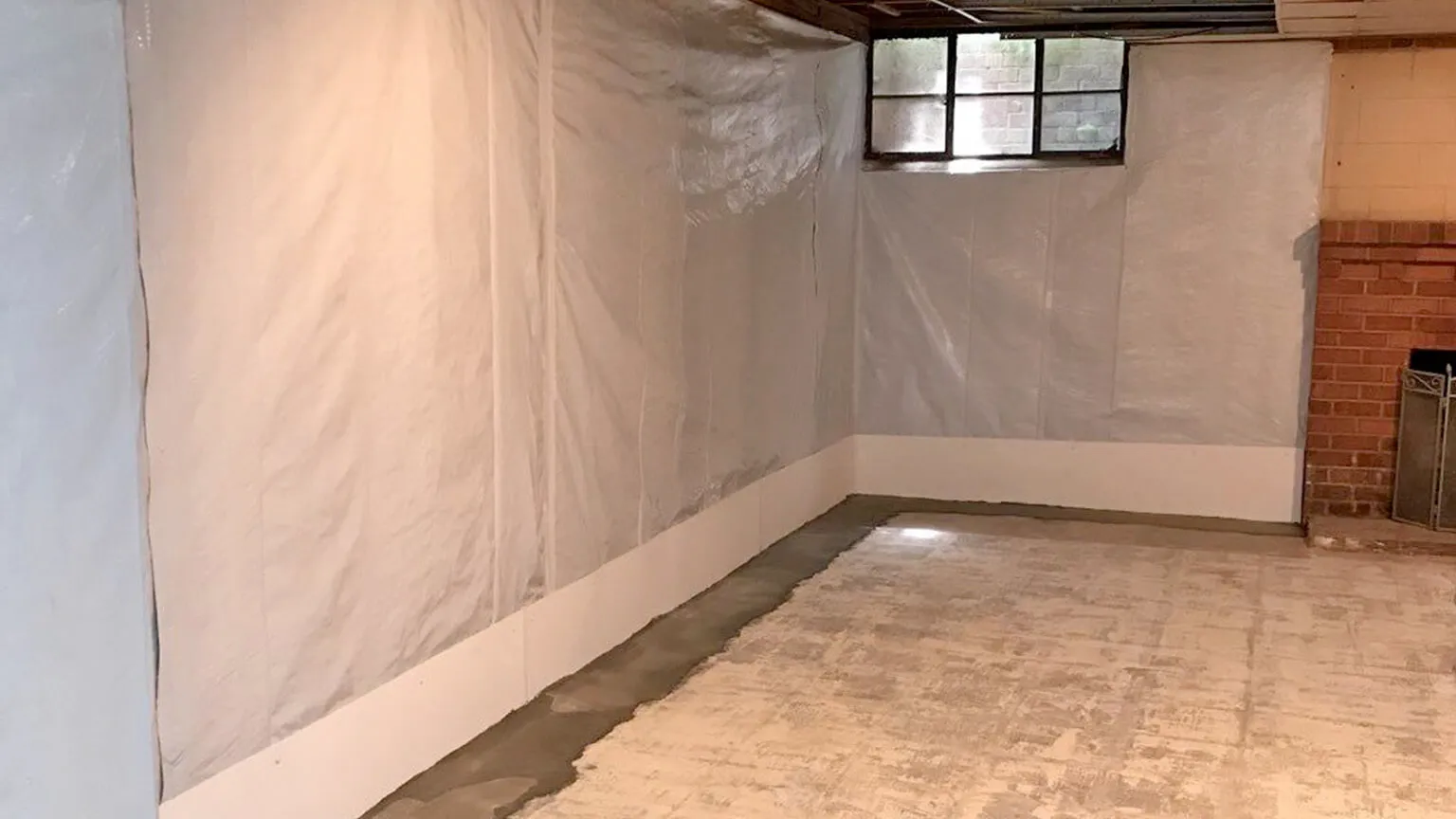
Down at floor level you’ll see a clean seam of fresh concrete along the base of the wall, with bright dry panels above it. Honestly, the best compliment a finished basement gets is that nobody notices it.

Here’s the part that matters more than the look. That channel sits below the floor slab, so water gets caught before it ever reaches the room. Because of that, the system works in year twelve the same way it worked in week one, and you get a basement that’s genuinely protected instead of one holding its breath every time the sky turns gray.
Good news
A wet basement almost never means your foundation is in trouble. They’re two separate conversations, and most Suwanee homes we walk into only need the first one. We’ll say plainly which one you’re in.
How does the job go, step by step?
Every house is a little different, but the shape of the work stays the same. Here’s the order, start to finish:
- The free inspection. We walk the outside first — grading, downspouts, where roof water lands. Then we come inside and read the walls and the floor seam. This takes about an hour.
- The written scope. You get a real number with the work spelled out. Not a range, and not a “starting at” price that grows later.
- Prep day. Everything within about four feet of the working walls moves toward the middle of the room, and we cover what stays put.
- Opening the channel. A narrow strip of slab comes up along the affected walls. It’s loud and dusty, but it’s usually done inside a day.
- Setting the drainage. Perforated pipe goes into clean stone below floor level, so water is collected under the slab instead of on top of it.
- The sump and the discharge. Everything routes to a basin, and the pump pushes water well away from the house — not right back beside the foundation.
- Closing up. Fresh concrete over the channel, wall liner where it’s needed, and our mess hauled off. Leaving debris in your driveway isn’t a finish.
Most full-perimeter jobs run two to four working days, while smaller single-wall repairs often wrap in one.
What does this look like from the water’s side?
Flip the whole thing around for a minute. If you were the water, you wouldn’t be attacking anything — you’d just be falling, soaking in, and sliding downhill until something stopped you. Suwanee sits on rolling ground that drains toward Suwanee Creek, so downhill often means straight at somebody’s basement wall.
Then there’s the clay. Piedmont red clay swells when it gets wet, and swollen clay leans on your foundation with real force. That force pushes moisture through solid concrete, because concrete is porous even when it’s perfectly sound. The USGS explains how groundwater moves through soil better than we can in one paragraph, and it’s a genuinely interesting read.
Now, where does water finally get in? Nine times out of ten it’s the cove joint — the seam where the basement wall meets the floor slab. That seam is the single most common water entry point in a Georgia home, and it’s not a defect. It’s simply where two pours meet.
We stopped trying to block water years ago. Now we give it an easier path than the one running through your house.
That shift changes what you’re buying. Sealants and waterproof paint fight pressure at the wall, and pressure always outlasts a coating. Drainage below the slab doesn’t fight anything — it just offers water a faster exit, and water takes it every time. If you’re weighing methods against each other, our rundown of waterproofing options lays them side by side.
So what actually moves the price?
Straight answer: the number comes down to how much wall is involved and how hard that wall is to reach. Anybody quoting a flat price over the phone is guessing, and you’d be paying for the guess. Still, you deserve to know what we’re looking at, so here it is.
What pushes the number up or down
- Linear feet. One wall versus a full perimeter is the biggest single factor by a wide margin.
- Access. An open basement is quick work. A finished space with a bar, a bath and built-ins means careful demo before the real job starts.
- Sump and backup. Some homes have a serviceable basin already. Plenty of houses around the Town Center district have the original pump from 1999, and that one’s living on borrowed time.
- What’s happening outside. Sometimes regrading and moving two downspouts solves most of it. That’s a smaller invoice, and we’ll tell you so.
- Walkout doors and window wells. Very common in Suwanee, and they need their own detail work.
- Wall condition. Cracks or bowing get handled first, because waterproofing over a moving wall is money spent twice.
Small drainage corrections land at the low end. A full perimeter with a new sump, a battery backup and a finished room to work around sits at the high end. Curious how the same job prices out one county over? We break down Peachtree Corners waterproofing cost the same way.
What do you need to do to get ready?
Not much, thankfully. Clear about four feet along the working walls, unplug anything down there, and pick a spot for the crew to run a hose and a cord. Pets do better upstairs on jackhammer day, and so do people working from home.

What can you honestly do yourself?
Quite a bit, actually — and we’d rather you save the money where you can. Extending downspouts eight to ten feet from the house makes a real difference. Cleaning gutters, rebuilding a settled flower bed so it slopes away, and adding a splash block all fall in weekend territory.
Here’s where it stops. Anything below the slab needs equipment and a plan for where the water goes, so cutting concrete yourself usually creates a second problem. Sealing the cove joint from inside seems like the obvious move, but pressure just moves the leak a few feet down the wall. In other words, DIY is great at keeping water away from the house and not great at handling water that’s already under it.
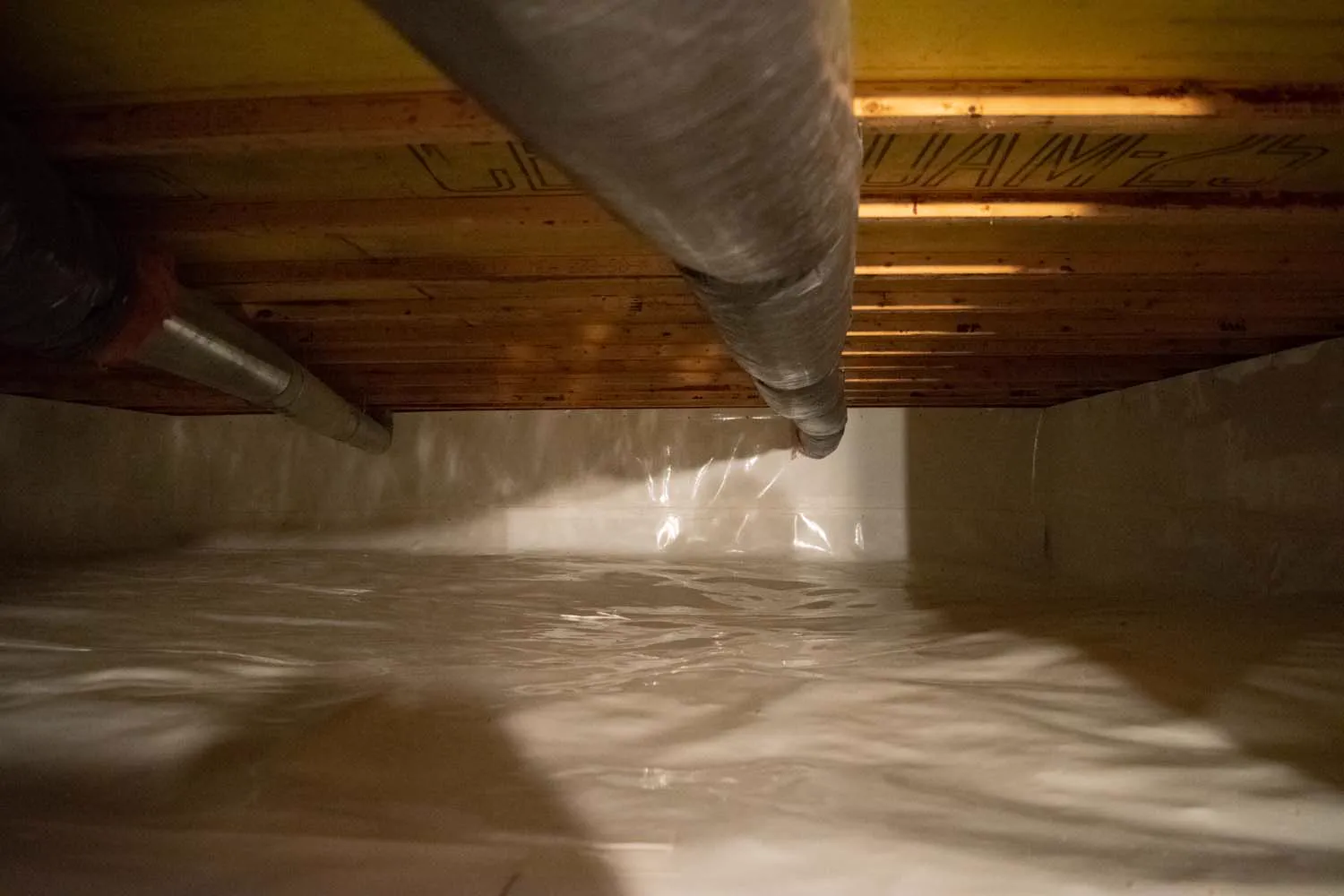
The same rule holds next door. If your low spot is a damp crawl space instead of a basement, a vapor barrier from a big-box store won’t hold up, and full crawl space encapsulation is the honest answer.
What should you do every year once it’s fixed?
Good systems still like a little attention. Put twenty minutes on the calendar each spring and again each fall, and run through this:
- Test the pump. Pour a bucket of water into the basin and watch it kick on and shut off cleanly.
- Check the backup battery. Original pumps around here fail during the exact storm that knocks the power out, which is a rough way to learn the lesson.
- Walk the discharge line. Make sure the outlet is clear and still pointed away from the house.
- Clean the gutters. Twice a year near pines, which is most of Suwanee.
- Look at the grading. Soil settles, and a bed that sloped away in 2005 may lean toward the wall now.
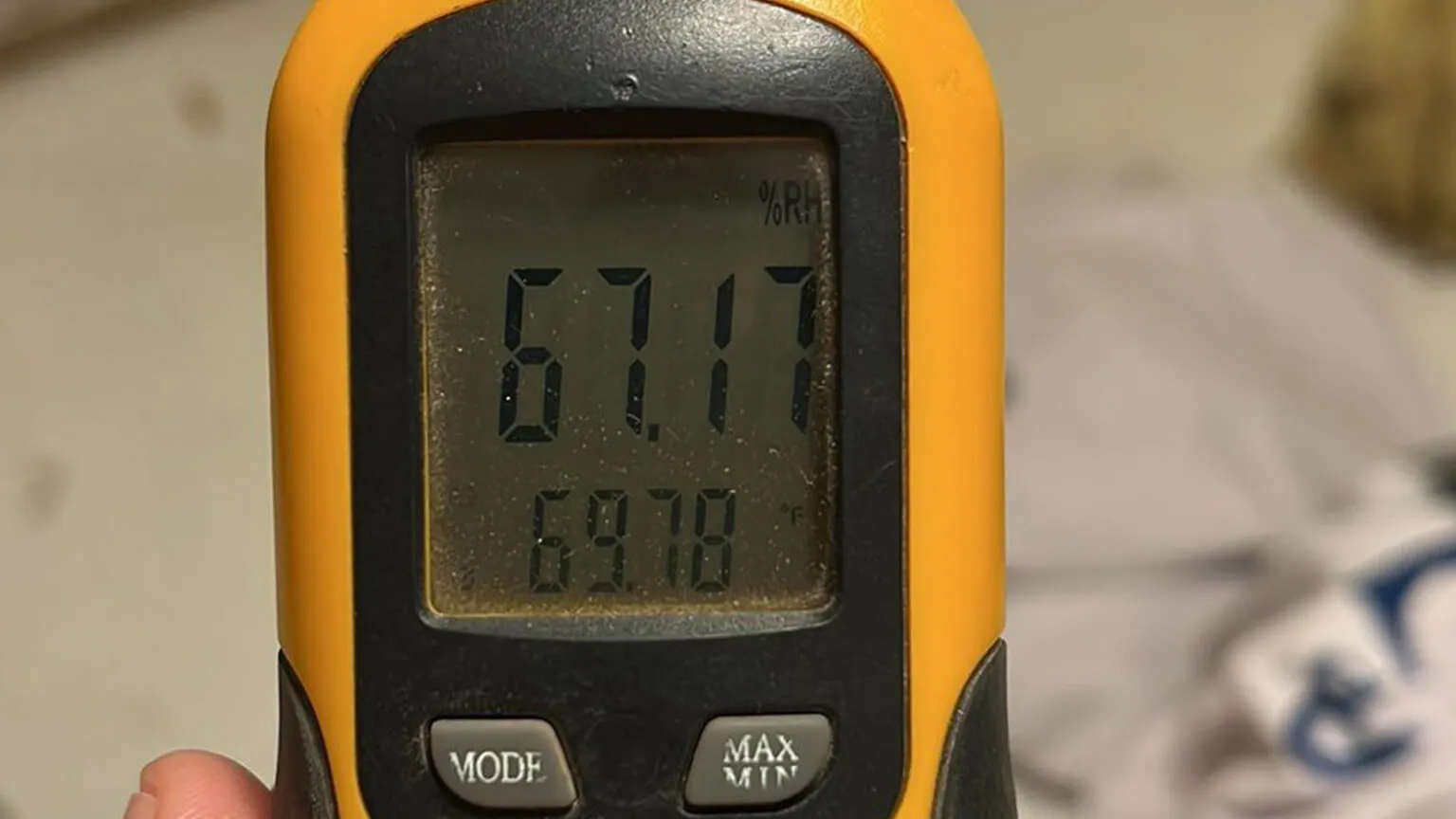
- Read the humidity. A cheap meter reading in the low fifties means the dehumidifier is earning its keep.
That’s the whole list. Do it consistently and the system will quietly outlive your mortgage.
How do you know it was done right?
Ask for four things. First, a written warranty you can read in one sitting. Second, photos of the stone and pipe before the pour, because afterward nobody can verify it. Third, a discharge line you can walk to. Finally, a hard rain — the real test arrives on its own schedule.
Why hire someone local for this? Because Suwanee grew up in one fast wave in the late nineties and early two-thousands, and those homes are all hitting their first real waterproofing failure at the same time. We’ve worked on walkouts in Harvest Park, older systems near The River Club, and sloped lots on both sides of I-85. Families in the North Gwinnett High School cluster mostly want the same thing: a dry playroom and one less thing to think about on a Saturday near Suwanee Town Center Park.
Want the deeper technical version? Our page on basement waterproofing covers the systems we install, and the EPA’s guide to moisture control is a solid neutral second opinion.
Where we work around Suwanee
We’re based in Lawrenceville, about fifteen minutes south, so Suwanee is an easy run for our crews. We also cover Duluth, Buford, Sugar Hill, Johns Creek, Cumming, Norcross, Grayson, Dacula and Snellville, plus the rest of Gwinnett County. Same trucks, same crews, same county — odds are we’ve already got one nearby.
Questions Suwanee homeowners ask us
Usually within a few days, and often sooner outside of storm weeks. Someone answers the phone from 7 a.m. to 8 p.m., seven days a week, so you’re not leaving a message and hoping. The inspection itself takes about an hour and costs nothing.
It depends on how many feet of wall are involved, how easy that wall is to reach, and whether you need a sump. A small drainage correction is a modest job, while a full perimeter with a new pump in a finished basement sits much higher. After we walk the house you get one written number with the scope spelled out.
Most full-perimeter interior systems take two to four working days. Single-wall repairs are often finished in one. Exterior grading and drainage depend on the weather, so we build a little extra room into that schedule.
Only the perimeter. Clear about four feet along the walls we’re working on and pull shelving toward the middle of the room. You don’t need to empty the space, and we’ll help with the heavy pieces.
Sometimes, but they’re really two different jobs. Drainage handles the water, while a crack that’s still moving needs its own repair first. Sealing a wall that hasn’t stopped shifting only buys you a season, so we’ll tell you which situation you’re in during the inspection.
Let’s find out what’s really going on down there, Suwanee
The inspection is free, the estimate is free, and nobody pressures you at the end of it. We’ll show you where water is getting in and what it takes to stop it — even when the answer turns out simpler than you expected.
(678) 914-5112Serving Suwanee and all of Metro Atlanta · $500 off projects over $3,500 · Live support 7am–8pm, 7 days a week