

Basement Waterproofing in Alpharetta: What It Costs and What You Actually Get
A plain-English look at the work, the price drivers, the warranty, and how the first ten years actually go.
Here’s the part nobody tells you: most basement waterproofing Alpharetta homes need has nothing to do with the age of the house. It has to do with the age of the drainage. A 1998 home in a tidy subdivision can look flawless from the curb and still be running on waterproofing that quietly wore out years ago.
Good news, though — that’s a very normal, very fixable thing. Alpharetta’s boom-era subdivisions have simply reached the age where the original systems are tired, and tired is not the same as broken. So let’s walk through what the real fix involves, what moves the cost, and what you get in writing when it’s done.
So what is waterproofing, in plain words?
Ask three companies and you’ll get three answers, which is why this feels murky. Ours is short: waterproofing means giving water an easier path than the one it’s taking through your house right now.
That’s the whole idea. Water is lazy and it never quits, so it takes the easiest route. Under Alpharetta, that route runs through red clay over weathered granite — clay that drains slowly and holds water against your walls for days after a storm.
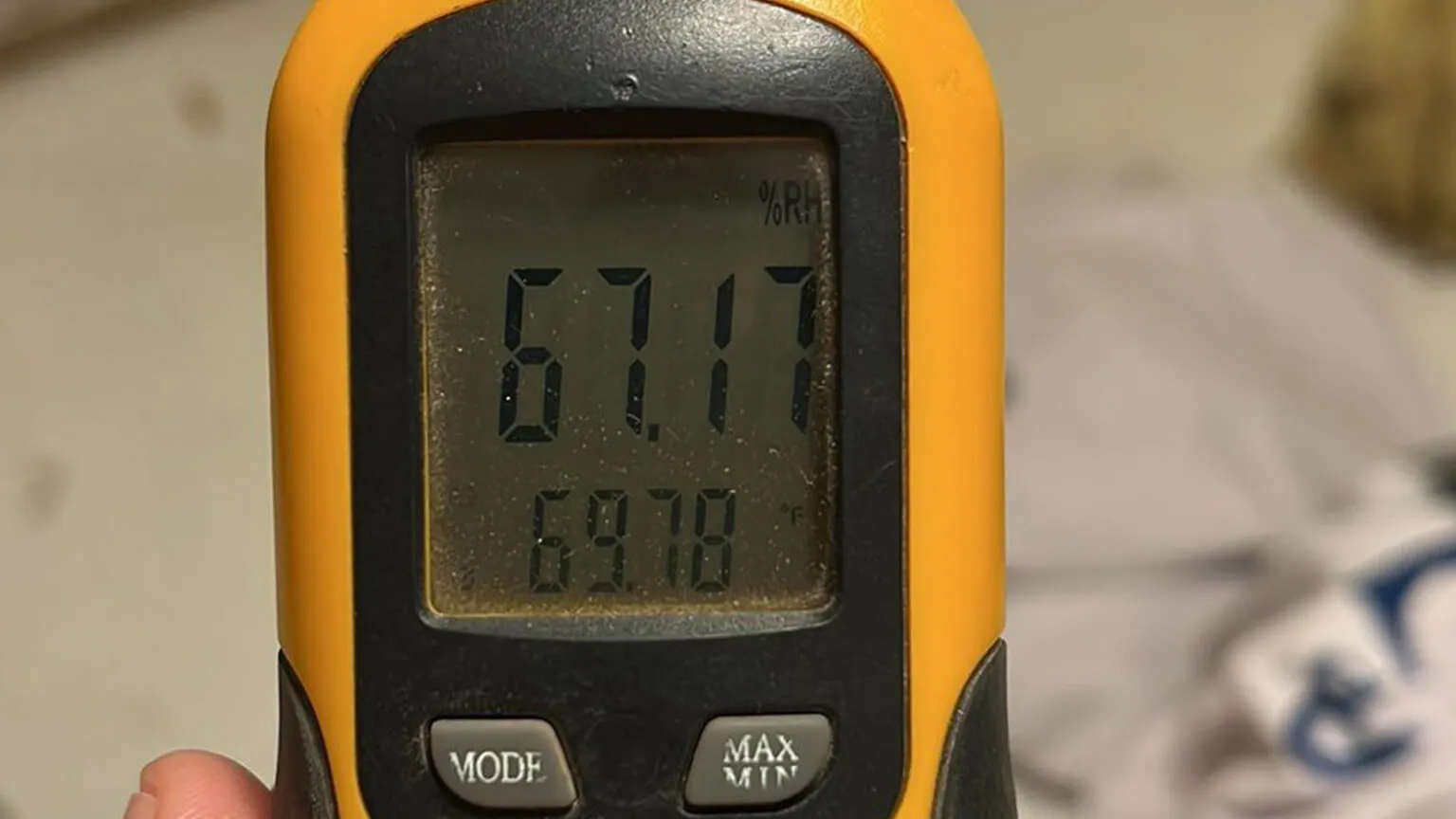
Wet clay swells, and swelling clay pushes. That push has a name — hydrostatic pressure — and it’s strong enough to move water through solid concrete with no crack in sight. Concrete looks sealed, but it’s porous, so water wicks through it like a paper towel.
Good news
A wet basement and a failing foundation are two different conversations, and most homes we look at only need the first one. Either way, we’ll tell you plainly which one you’re in — before we quote anything.
What does a real job look like start to finish?
Most interior systems follow the same shape, so you can picture the whole week before anybody shows up with a jackhammer:
- We find the source first. Before pricing anything, we walk the outside — grading, downspouts, where roof water lands. Then we walk the inside. Fairly often the fix is smaller than expected, because the problem was outdoors all along.
- We open a channel at the perimeter. A narrow strip of slab comes up along the affected walls. It’s loud and dusty, but usually a day or two of work.
- Drainage goes in below the slab. Perforated pipe in clean stone, set under floor level, so water is collected before it reaches your floor instead of after.
- Everything routes to a sump. The pipe carries water to a basin, and the pump pushes it well away from the house — not beside the foundation, where it would circle back for another try.
- We close it up and clean up. Fresh concrete over the channel, wall liner where it’s called for, and our mess hauled off. Debris left in your driveway isn’t a finish.
Notice what’s missing from that list? Nobody painted anything. Waterproof paint is fine for what it is, but it’s a coating, and a coating can’t beat pressure. It’s a raincoat on a submarine.
Twenty years in, the thing that changed how we work is simple: we stopped trying to block water and started routing it.
Early on, the instinct was to seal — find the hole, close it, done. But water wins that fight eventually, since the pressure never stops and sealant always ages. So now we assume water will arrive, and we build it a better way out.
Want the detail that sounds small and absolutely isn’t?
It’s a seam — the cove joint, where your basement wall meets the floor slab. Those two pieces of concrete were poured at different times, so they never truly bonded, and that hairline seam runs your whole perimeter.
In Georgia homes, that joint is the most common place water gets in. Not the dramatic crack. Not the window well. A seam most homeowners have never looked at.
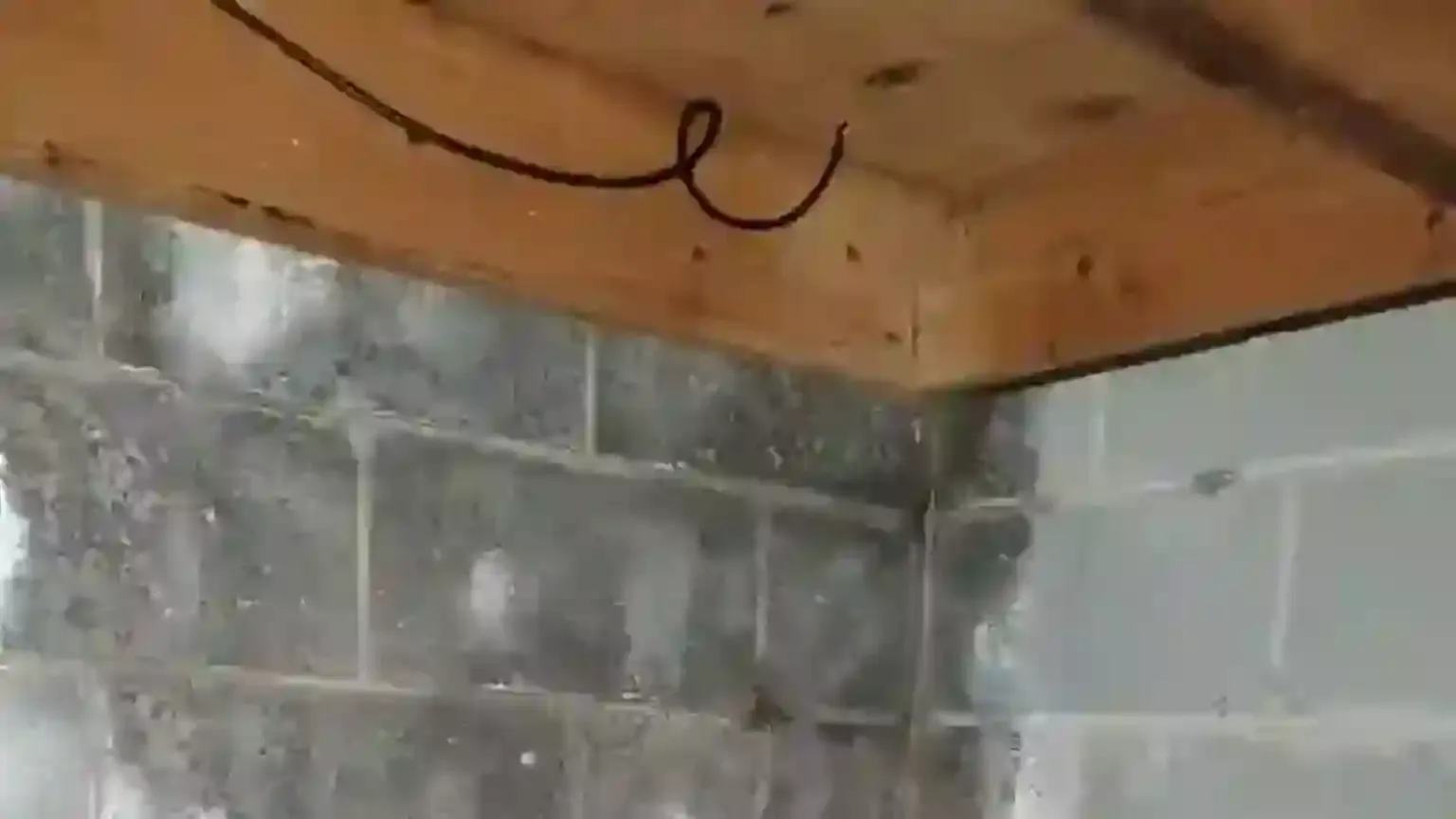
Here’s why that matters while you’re picking a company. If someone quotes a crack injection and nothing else, they’ve priced the door instead of the doorway. The crack gets sealed, and next spring water arrives along the joint two feet over.
The fix is straightforward once you know where to aim. An interior system intercepts water right at that seam and carries it below the slab, which is why it works on walls that never cracked at all. We handled exactly this for a homeowner near Milton Park — no visible crack anywhere, just water along the joint after every long rain. Knowing where it comes from makes the rest of the decision much easier.
Okay — what does it cost?
Straight answer: it depends on how much wall is involved and how hard it is to reach. Anyone who gives you a flat number over the phone is guessing, and you’d be paying for that guess. Still, here’s what moves the number.
What drives the price up or down
- Linear feet. One wall is a very different job than a full perimeter. This is the biggest factor by far.
- Access. An open basement is simple. A finished one with a home office, a bar and built-ins costs more, because there’s careful work before the real work.
- Whether you need a sump. Some homes have a serviceable basin already. Plenty of 1990s systems around here are undersized or living on borrowed time.
- What’s happening outside. Sometimes regrading and moving downspouts solves most of it. That’s a smaller invoice, and we’ll say so out loud.
- Wall condition. Cracking or bowing means structural work comes first, since waterproofing over a moving wall is money spent twice.
- Groundwater. Lots near the Big Creek floodplain genuinely sit in wetter soil, so those systems get sized for it.
- Backup power. A battery backup adds cost. It also runs during the storm that knocks the power out — which is the exact storm that floods basements.
Small drainage corrections land at the low end. A full perimeter system with a new sump and battery backup in a finished basement sits at the high end. Most basement waterproofing Alpharetta homes need lands in the middle, and after we walk yours you get a written number with the scope spelled out — not a range, and not a “starting at.”
What’s included, and what isn’t
Included: the inspection, the diagnosis, the system, concrete work, cleanup, haul-off, and warranty paperwork. Not included unless we spell it out: rebuilding finished walls we opened, landscaping repair on exterior digs, and electrical if your sump needs its own circuit. It’s all on the estimate on purpose, because surprises are great at birthday parties and terrible on invoices.
What do the next ten years actually look like?
Fair question, and it rarely gets answered. Most companies stop the story at “we install it,” so here’s the longer view.
The first week. The floor is patched, dust settles, and the room smells like fresh concrete for a few days. Run a fan and it clears fast. Then the first real rain hits, you go look, and the floor is dry — a strangely great feeling for something so boring.
The first year. You’ll get a full cycle of Georgia weather: spring storms, a late-summer tropical system, then winter freeze-thaw. That’s the honest test. Humidity drops too, so the musty smell at the bottom of the stairs fades for good. Plenty of folks around Nesbit Ferry finish the space that same year, because now it’s worth finishing.
Year ten. The drainage is stone and pipe under the slab, so nothing down there wears out. The pump is the part with a service life, so plan on a replacement near the ten-year mark, the same way you’d plan for a water heater. One moving part, one predictable swap.
About the warranty
You get it in writing before work starts, not after. Ask us to explain what’s covered in one sentence — if a company can’t, the paper isn’t worth much. A warranty is only as strong as the people behind it, too.
Why does hiring local matter here?
Because in year six, you want to call the crew that did the work, not a call center three states away. We’ve done basement waterproofing Alpharetta homeowners trust for 20+ years, so we’ve likely worked a house in your subdivision already. We know how the sloped lots behave off Mansell Road, and the poured walls out in Hopewell Plantation act differently than older block does.
That’s also why the same crews show up every time. You’ll see our trucks near Wills Park on a Saturday and along the Big Creek Greenway on weekday mornings, since we work the same places you live.
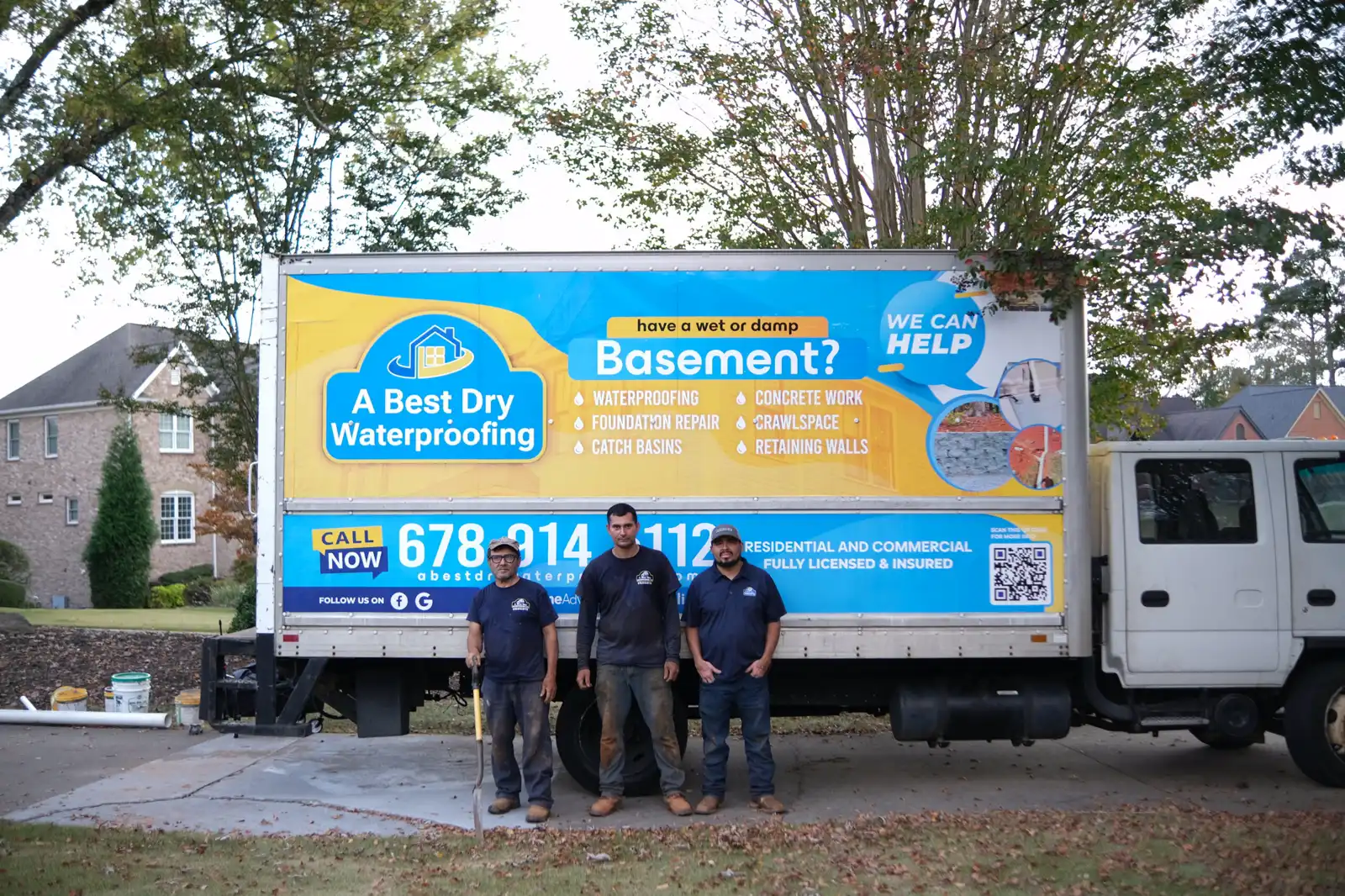
Still sorting out what you’re seeing down there? Our guide to what causes a wet basement walks the symptoms one by one, and the systems we install are laid out on our basement waterproofing page. If your home has a dirt crawl instead, crawl space encapsulation is usually the better answer, and we cover the same ground for Duluth basement waterproofing. For neutral reading, the EPA’s guide to moisture control is worth ten minutes, and local rainfall records live with the National Weather Service in Peachtree City.
Where we work around Alpharetta
We’re about 25 minutes east in Lawrenceville, so Alpharetta is an easy run for our crews. We also work Milton, Johns Creek, Roswell, Cumming, Duluth, Sandy Springs, Suwanee and Norcross, plus the wider Fulton area. If you’re along the GA-400 corridor, odds are we already have a truck nearby.
Questions Alpharetta homeowners ask us
Sometimes, but they’re really two jobs. Drainage handles the water, while a crack that’s still moving needs its own repair first. Sealing a wall that’s shifting only buys you a year. We’ll show you which situation you’re in during the inspection.
Neither is automatically better — it depends on where water enters and what sits on the soil outside. Exterior work stops water before it touches the foundation, but it means digging, and a patio or mature landscaping changes the math fast. Interior drainage is less disruptive and fits most Alpharetta basements.
The drainage is built to last the life of the house, because it’s stone and pipe below the slab with nothing to wear out. The pump is the part with a service life, so plan on replacing one around the ten-year mark. That’s the same rhythm as a water heater.
Yes, and you get the paperwork before work starts rather than after. Ask us to walk you through exactly what’s covered and for how long. If we can’t explain it in one sentence, it isn’t doing you much good.
Usually, yes. We open only the lower portion of wall and floor along the affected perimeter, so the rest of the room stays put. It adds time and cost compared to an open basement, but you keep your finished space and we’ll map out exactly what gets opened before we start.
Let’s find out what’s really going on down there, Alpharetta
The inspection is free, the estimate is free, and nobody pressures you at the end. We’ll show you where water is getting in and what it takes to stop it — even if the answer is simpler than you expected.
(678) 914-5112Serving Alpharetta and all of Metro Atlanta · $500 off projects over $3,500 · Live support 7am–8pm, 7 days a week